

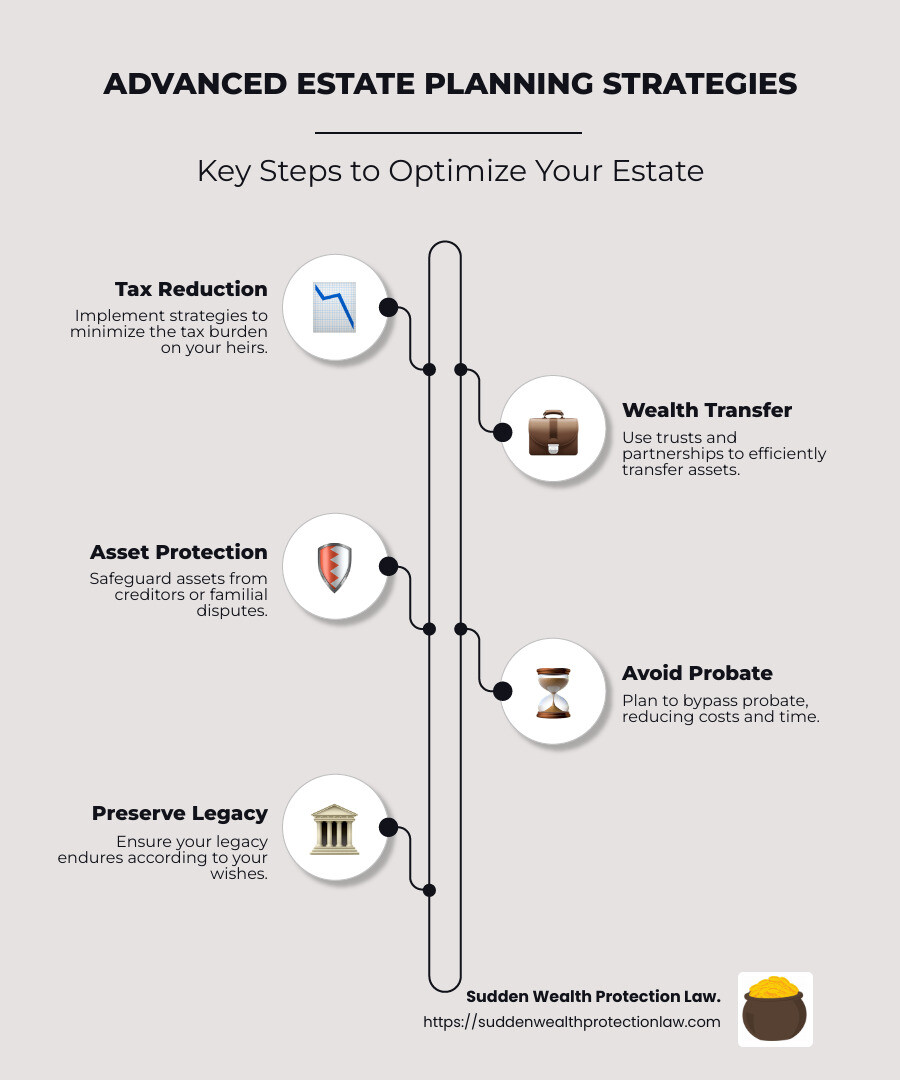
Advanced estate planning strategies offer a sophisticated approach to managing your estate, focusing on tax minimization, wealth transfer, and asset protection. If you’re navigating complex goals or have a significantly large estate, these strategies could be invaluable. Here are some advanced tactics you might explore:
- Tax reduction techniques to minimize the burden on heirs
- Trusts and partnerships to transfer wealth efficiently and safely
- Strategies for protecting assets against creditors or familial disputes
Estate planning is not just about drafting a will; it’s about ensuring that your legacy is preserved and your wishes carefully honored. Proper planning helps avoid probate hassles, reduces potential taxes, and protects your family’s wealth from unexpected losses or disputes.
As Paul E. Deloughery, founder of Sudden Wealth Protection Law, I bring over 25 years of experience in helping families develop robust estate plans. My personal journey and professional expertise in advanced estate planning strategies enable me to guide you effectively in securing your family’s future.
Advanced Estate Planning Strategies
When it comes to advanced estate planning strategies, there are three main pillars to consider: tax minimization, wealth transfer, and asset protection. These strategies are designed for those with complex estate needs or high-value estates.
Tax Minimization
One of the most crucial goals in estate planning is to minimize taxes. This ensures that more of your wealth is passed on to your beneficiaries rather than being consumed by taxes.
- Annual Gifting: You can give up to a certain amount each year (currently $17,000 per recipient) without incurring federal gift tax. This reduces the size of your taxable estate over time.
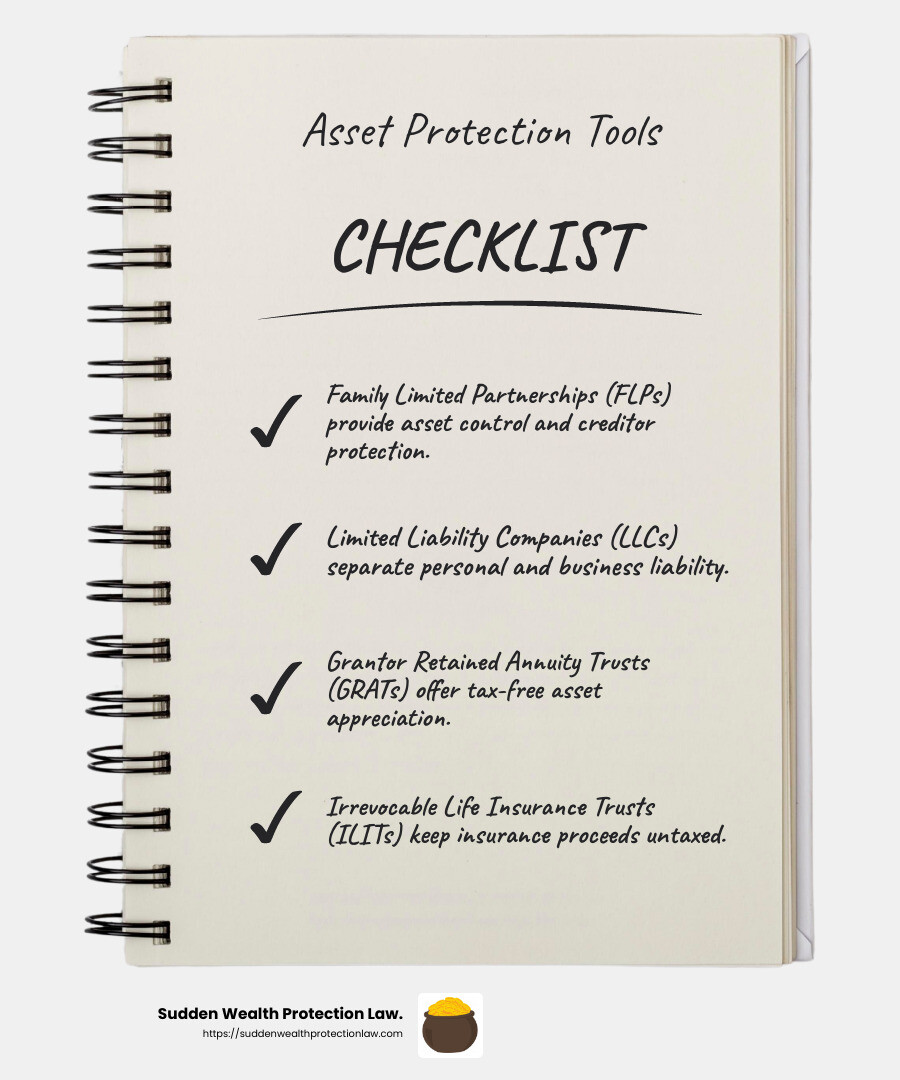
- Grantor Retained Annuity Trusts (GRATs): By transferring assets into a GRAT, you can freeze the value of your estate for tax purposes while receiving an annuity. Any appreciation in the trust’s assets benefits your heirs tax-free.
- Irrevocable Life Insurance Trusts (ILITs): These trusts keep life insurance proceeds out of your taxable estate, providing liquidity to cover estate taxes or other expenses.

Wealth Transfer
Efficient wealth transfer ensures that your assets are passed to your heirs as smoothly and cost-effectively as possible.
- Generation-Skipping Trusts: These trusts allow you to transfer wealth to your grandchildren, bypassing your children and avoiding certain taxes.
- Spousal Lifetime Access Trusts (SLATs): A SLAT allows one spouse to gift assets to a trust for the benefit of the other spouse, removing those assets from the taxable estate while still providing access.
Asset Protection
Protecting your assets from creditors, lawsuits, or family disputes is another key goal of advanced estate planning.
- Family Limited Partnerships (FLPs): By transferring assets into an FLP, you can retain control while reducing the taxable value of your estate. This also provides protection from creditors.
- Limited Liability Companies (LLCs): Holding assets in an LLC separates personal liability from business liability, offering an extra layer of protection.
Advanced estate planning is not just for the ultra-wealthy. It’s about smartly managing your estate to ensure your legacy is preserved and your family’s future is secure. With the right strategies, you can minimize taxes, transfer wealth efficiently, and protect your assets from unforeseen challenges.
Tools to Benefit Charities and Preserve Wealth
When it comes to supporting charitable causes while preserving your wealth, there are some powerful tools you can use. These tools not only help you give back but also offer tax benefits and protect your assets. Let’s explore three key options: Charitable Remainder Trusts, Donor Advised Funds, and Charitable Lead Trusts.
Charitable Remainder Trust (CRT)
A Charitable Remainder Trust is a smart way to support a charity and potentially boost your income. Here’s how it works:
- Income Stream: You transfer assets into the CRT and receive an income stream for a set period or for your lifetime. This income can be a fixed amount or a percentage of the trust’s assets, known as a Charitable Remainder Annuity Trust (CRAT) or Charitable Remainder Uni-Trust (CRUT), respectively.
- Tax Benefits: You get an immediate tax deduction for the present value of the remainder that will eventually go to charity. Plus, the assets are out of your taxable estate, which can save on estate taxes.
- Flexibility: You can even serve as the trustee and manage the investments, and you have the option to change the charitable beneficiary if needed.
Donor Advised Funds (DAFs)
A Donor Advised Fund is a flexible and simple way to manage your charitable giving:
- Immediate Tax Deduction: When you contribute to a DAF, you get an immediate tax deduction, even if the funds are distributed to charities later.
- Advisory Role: You can advise on how the funds are invested and which charities receive the donations. This allows you to involve your family in philanthropic decisions.
- Estate Planning Benefits: Contributions to a DAF remove the assets from your estate, helping to reduce estate taxes.
Charitable Lead Trust (CLT)
A Charitable Lead Trust is another effective way to support a charity while planning for your beneficiaries:
- Charity First: In a CLT, the charity receives income from the trust for a set number of years. After this period, the remaining assets go to your beneficiaries.
- Estate Tax Reduction: Because the assets eventually go to your heirs, their value is discounted for gift tax purposes, reducing potential estate taxes.
- Irrevocable Structure: CLTs are irrevocable, meaning the assets aren’t part of your estate, further minimizing estate taxes.
These tools not only help you contribute to causes you care about but also preserve your wealth and provide financial benefits. Next, let’s look at tools that benefit future generations and ensure your legacy continues.
Tools to Benefit Future Generations
Thinking about the future is important, especially when it comes to passing on your wealth. Advanced estate planning strategies can help ensure that your legacy lives on for generations. Let’s explore three key tools: Generation Skipping Trusts, Dynasty Trusts, and Grandchildren’s Trusts.
Generation Skipping Trust (GST)
A Generation Skipping Trust is designed to leave assets to your grandchildren or even more distant descendants, bypassing your children. Here’s why it can be beneficial:
- Tax Advantages: By skipping a generation, you can avoid the estate taxes that would normally apply when assets pass from your children to your grandchildren. This trust uses the $1 million tax exemption to maximize the wealth passed down.
- Flexibility: While the trust primarily benefits the grandchildren, your children can still access the assets if needed, ensuring that the family remains financially secure.
Dynasty Trust
A Dynasty Trust is created to last for multiple generations, potentially forever, depending on state laws. Here’s how it works:
- Long-Term Wealth Preservation: This trust allows you to pass on wealth without the burden of estate taxes for each generation. In Maryland, for example, a dynasty trust can be set up to last in perpetuity.
- Value Transmission: You can set conditions for distributions, so money is only given to financially responsible heirs. This helps instill values and ensures that your legacy is used wisely.
Grandchildren’s Trust
A Grandchildren’s Trust focuses specifically on benefiting your grandchildren. Here’s why it might be a good choice:
- Education and Support: These trusts often cover educational expenses and other needs, helping your grandchildren get a strong start in life.
- Controlled Distributions: You can set rules for when and how the money is distributed, ensuring that it is used for important milestones like college or buying a home.
These tools offer powerful ways to support your family for generations to come. They not only provide financial security but also help pass on your values and ensure that your legacy is preserved. Next, let’s explore tools that can boost the value of gifts to your family.
Tools to Boost the Value of Gifts to Family
When it comes to gifting assets to family members, you want to maximize the value while minimizing taxes. Here are some advanced estate planning strategies to consider: Family Limited Partnerships (FLPs), Limited Liability Companies (LLCs), and Recapitalizing Corporations.
Family Limited Partnerships (FLPs)
FLPs are a popular tool for transferring wealth within a family. Here’s why they are effective:
- Discounted Value: By transferring assets into an FLP, you can take advantage of valuation discounts. These discounts, such as those for minority interest and lack of marketability, can reduce the taxable value of the assets by 30-40%.
- Asset Protection: FLPs can protect family assets from creditors. If one partner faces financial trouble, creditors cannot easily access the family’s shared assets.
- Control: The person who sets up the FLP can retain control over the assets, even as they transfer ownership to family members.
Limited Liability Companies (LLCs)
Using an LLC in estate planning offers several benefits:
- Tax Efficiency: Similar to FLPs, LLCs allow for discounted valuations of shares transferred to heirs. This can significantly reduce estate and gift taxes.
- Control and Flexibility: Parents can manage the LLC, making decisions about the assets, while children hold non-managing shares. This structure keeps control with the older generation while transferring wealth.
- Protection: Like corporations, LLCs offer liability protection, shielding personal assets from business debts or legal claims.
Recapitalizing Corporations
Recapitalization involves restructuring a company’s debt and equity mixture, which can be a strategic estate planning move:
- Preferred and Common Shares: By recapitalizing, you can create different classes of stock, such as preferred and common shares. This allows you to transfer common shares to family members while retaining preferred shares for yourself, which often come with voting rights.
- Tax Benefits: This approach can help reduce the estate’s taxable value, as the common shares transferred to heirs can be valued lower than preferred shares.
- Succession Planning: Recapitalization can help in planning for business succession, ensuring a smooth transition to the next generation while keeping control within the family.
These tools are designed to improve the value of your gifts to family members, ensuring that more of your wealth stays with your loved ones. By strategically using these advanced estate planning strategies, you can effectively manage your assets and provide for future generations.
Next, let’s address some frequently asked questions about advanced estate planning strategies.
Frequently Asked Questions about Advanced Estate Planning Strategies
What is the 5 by 5 rule in estate planning?
The 5 by 5 rule is a key concept in estate planning, often found in trust documents. It allows beneficiaries to withdraw the greater of $5,000 or 5% of the trust’s value each year. This provision offers flexibility and access to funds without triggering tax consequences. It’s particularly useful for providing beneficiaries with some liquidity while keeping the bulk of the trust’s assets protected and growing.
What are the 5 components of estate planning?
Estate planning involves more than just drafting a will. Here are the five essential components you should consider:
1. Will: This is the cornerstone of any estate plan. It specifies how your assets will be distributed after your death and can also name guardians for minor children.
2. Trust: Trusts can help manage and protect your assets both during your life and after your death. They can also reduce estate taxes and avoid probate.
3. Beneficiary Designations: These are crucial for assets like life insurance policies and retirement accounts. Make sure they’re up-to-date to ensure your assets go to the intended recipients.
4. Living Will: Also known as a living will, this document outlines your wishes for medical treatment if you become incapacitated.
5. Power of Attorney: This allows someone you trust to make financial or medical decisions on your behalf if you’re unable to do so.
What is considered high net worth for estate planning?
A high-net-worth individual typically has $1 million or more in liquid assets. This level of wealth often necessitates advanced estate planning strategies to minimize taxes, protect assets, and ensure efficient wealth transfer. High-net-worth individuals must consider complex issues such as estate taxes, generation-skipping transfer taxes, and asset protection. Engaging with an experienced estate planner is crucial to steer these complexities and optimize your estate plan.
These frequently asked questions provide a glimpse into the intricacies of advanced estate planning strategies. Understanding these concepts can help you make informed decisions about protecting and transferring your wealth.
Conclusion
At Sudden Wealth Protection Law, we understand that every family’s estate planning needs are unique. Our personalized legal solutions are designed to ensure that your family’s wealth is protected and preserved for generations to come. We specialize in asset protection strategies that not only safeguard your financial assets but also empower your loved ones to be responsible stewards of their inheritance.
Advanced estate planning strategies can be complex, but with the right guidance, they don’t have to be overwhelming. Our experienced team is here to simplify the process, offering compassionate and expert advice custom to your specific circumstances. Whether you’re looking to minimize taxes, transfer wealth efficiently, or protect your assets from unforeseen risks, we’re committed to helping you achieve peace of mind and favorable outcomes.
Don’t leave your family’s future to chance. Let us help you create a comprehensive estate plan that aligns with your goals and values.
Schedule a strategy session with us today and take the first step toward securing your family’s legacy.

