

Arizona estate tax can be a confusing topic for many residents trying to steer the intricacies of estate planning. Here’s what you need to know right away:
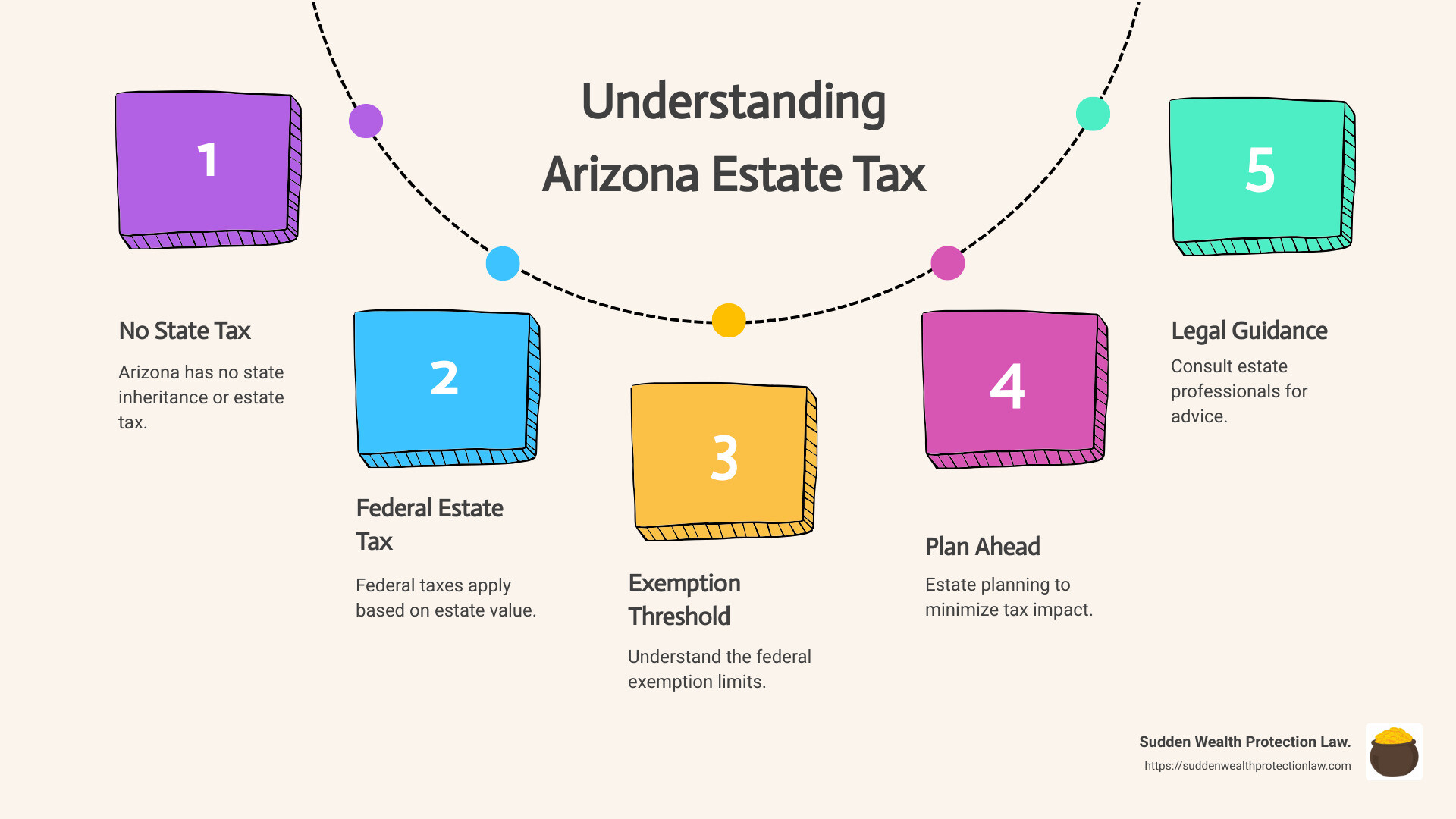
- No Inheritance or Estate Tax in Arizona: Arizona does not have a state inheritance tax or estate tax.
- Federal Estate Tax Applies: Residents may still be subject to federal estate taxes based on the value of the estate.
Despite the absence of state-level estate taxes, Arizonans must still consider federal obligations. Understanding these tax nuances is crucial to protect your assets and ensure your family’s financial security.
I’m Paul E. Deloughery, with over 25 years of experience in estate law right here in Arizona. I help individuals and families comprehend the complexities of Arizona estate tax, ensuring smooth wealth transfer and peace of mind.
Quick arizona estate tax terms:
– does arizona have an inheritance tax
– how much can you inherit without paying taxes in arizona
Understanding Arizona’s Estate Tax
When it comes to Arizona estate tax, the good news is that Arizona residents don’t have to worry about a state-level estate tax. Since January 1, 2005, Arizona has not imposed any estate tax, thanks to changes brought about by the Economic Growth and Tax Relief Reconciliation Act (EGTRRA). This act phased out the “pick up tax” that states like Arizona used to collect.
No State Estate Tax
Arizona’s decision to eliminate its estate tax means that residents can transfer their estates without worrying about state-level taxes. This provides a significant relief for those planning their estates, as they can focus solely on federal estate tax obligations.
Arizona Inheritance Tax Waiver
In addition to not having a state estate tax, Arizona also does not impose an inheritance tax. This means that beneficiaries in Arizona do not have to pay taxes on the assets they inherit from a deceased person’s estate. However, if you inherit property from someone living in a state with its own inheritance tax, you might still be subject to that state’s laws.

Federal Estate Tax Still Applies
Even though Arizona residents are free from state estate taxes, they must still consider federal estate tax implications. As of 2022, the federal estate tax exemption is $12.06 million for individuals and $24.12 million for married couples. Estates exceeding these thresholds may be subject to a federal tax of up to 40%.
Understanding these distinctions is crucial for effective estate planning. While Arizona offers an inheritance tax waiver and no state estate tax, federal obligations remain. Proper planning can help mitigate these taxes and ensure your assets are passed on according to your wishes.
Federal Estate Tax Implications
While Arizona residents can breathe easy knowing there’s no state estate tax, the federal estate tax is a different story. This tax is something you need to keep on your radar if your estate’s value is above a certain threshold.
Exemption Threshold
As of 2022, the federal estate tax exemption is set at $12.06 million for individuals and $24.12 million for married couples. This means if your estate’s value is below these amounts, you won’t owe any federal estate tax. However, if your estate exceeds these limits, you could face a tax rate of up to 40%.

Tax Planning
Given the substantial exemption threshold, most estates won’t owe federal estate taxes. In fact, 99.5% of estates won’t be affected by this tax. However, if your estate is close to or exceeds the exemption limit, smart tax planning is essential.
Here are some strategies to consider:
-
Marital Deduction: You can transfer an unlimited amount of assets to your spouse tax-free. This means you can effectively double your exemption as a married couple.
-
Charitable Donations: Assets left to a charity are not taxed. This can be a meaningful way to reduce your estate’s taxable value.
-
Gifting: You can give away up to $14,000 per year per recipient without affecting your exemption. This can significantly lower your estate’s value over time.
Importance of Professional Guidance
Navigating the federal estate tax can be complex, especially with the potential for changes in tax laws. Working with experienced estate planning professionals can help you make informed decisions and take advantage of available tax-saving strategies.
By understanding and planning for the federal estate tax, Arizona residents can ensure their estates are managed effectively, minimizing tax liabilities and maximizing the wealth passed on to their beneficiaries.
Next, we’ll explore how capital gains tax can impact inherited property and what you need to know to manage these implications.
Capital Gains and Inherited Property
When you inherit property, understanding capital gains tax is crucial. This tax comes into play when you sell the inherited property, and it can significantly impact your financial outcome.
Fair Market Value
The value of the property at the time of the original owner’s death is known as the fair market value. This becomes your “cost basis” for tax purposes. For instance, if you inherit a house that was worth $300,000 when the previous owner passed away, that’s your starting point for calculating any gains.
Property Sale and Capital Gains
If you decide to sell the inherited property, the capital gains tax will be based on the difference between the sale price and the fair market value at the time of inheritance.
Here’s how it works:
-
No Gain or Loss: If you sell the property for the same amount as the fair market value, you won’t owe any capital gains tax.
-
Capital Gain: If you sell it for more than the fair market value, you’ll owe tax on the profit. For example, selling the property for $350,000 means you have a capital gain of $50,000.
-
Capital Loss: Conversely, selling below the fair market value results in a capital loss. This can offset other gains and reduce your overall tax burden.
Long-Term Capital Gains Rate
Inherited property usually qualifies for the long-term capital gains rate, which is lower than the short-term rate. This is beneficial since you’ll likely pay less tax compared to selling property held for a shorter period.
Strategic Considerations
-
Timing the Sale: Holding onto the property for over a year can ensure you’re eligible for the long-term rate, potentially saving you a significant amount in taxes.
-
Evaluating Market Conditions: Selling when the market is favorable can maximize your profits.
Understanding these elements helps Arizona residents make informed decisions about inherited property. In the next section, we’ll dig into other tax considerations for Arizona residents, including income from retirement accounts and investments.
Other Tax Considerations for Arizona Residents
When it comes to taxes in Arizona, understanding how different types of income are taxed is essential. Here’s a breakdown of what to consider:
Retirement Accounts
Retirement accounts like IRAs, 401(k)s, and 403(b) plans are common sources of income for many Arizona residents. If you inherit one of these accounts, you will not face immediate taxation. Instead, taxes are due only when you withdraw funds. This allows you to delay tax payments, potentially saving money if you plan withdrawals strategically.
-
Ordinary Income Tax Rates: Withdrawals from these accounts are taxed at your ordinary income tax rate, which depends on your total income and tax bracket.
-
Required Minimum Distributions (RMDs): If you inherit a retirement account, you must be aware of RMD rules. These dictate the minimum amount you must withdraw each year, starting at a certain age, to avoid penalties.
Income from Investments
Investments such as stocks, bonds, and rental properties can generate income that is subject to taxation. Here’s what you need to know:
-
Dividends and Interest: Income from dividends and interest is typically taxed as ordinary income. The rate you pay depends on your tax bracket.
-
Rental Income: If you inherit a rental property, any rental income you receive is also subject to ordinary income tax. You can, however, deduct certain expenses related to the property, which can lower your tax bill.
Tax-Sheltered Annuities
Annuities provide a steady income stream and can be a part of your retirement strategy. They have specific tax implications:
-
Tax on Growth: When you inherit an annuity, you may owe taxes on the amount it has grown over time. This growth is considered ordinary income.
-
Structured Payouts: If you choose to receive payments over time, taxes will be applied to each payment, spreading out your tax liability.
Understanding these tax considerations can help Arizona residents plan their financial future more effectively. In the next section, we’ll answer some frequently asked questions about Arizona estate tax, providing clarity on common concerns.
Frequently Asked Questions about Arizona Estate Tax
How much can you inherit in Arizona without paying taxes?
In Arizona, there is no state inheritance tax. This means you can inherit any amount from an Arizona estate without worrying about paying state taxes on it. However, it’s important to be aware of the federal estate tax. As of 2023, the federal estate tax exemption is $12.92 million per individual. If an estate exceeds this amount, it may be subject to federal estate taxes, but this affects only a small percentage of estates.
Is there capital gains tax on inherited property in Arizona?
When you inherit property in Arizona, you won’t pay taxes immediately. However, if you decide to sell the property, you might face capital gains tax. The good news is that the tax is based on the property’s fair market value at the time of the original owner’s death. This means if you sell the property for more than this value, only the increase (or “gain”) is taxable. This can significantly reduce the taxable amount compared to the original purchase price.
Does Arizona have probate tax?
Arizona does not impose a probate tax. However, the probate process is a legal procedure to settle an estate, which might involve court fees and administrative costs. During probate, the estate’s assets are inventoried, debts are paid, and the remaining assets are distributed to beneficiaries. While there is no specific probate tax, the estate may still be subject to the federal estate tax if it exceeds the exemption threshold. It’s crucial to understand these procedures to ensure a smooth transition of assets.
These insights into Arizona’s estate tax landscape can help you steer the complexities of inheritance and estate planning. For more personalized advice, consulting with an estate planning expert is always a smart move.
Conclusion
Navigating estate taxes and inheritance can be complex, but with the right guidance, it doesn’t have to be overwhelming. At Sudden Wealth Protection Law, we specialize in estate planning custom to the unique needs of Arizona residents. Our goal is to provide personalized legal solutions that protect your family’s assets and ensure a seamless transition of wealth.
Whether you’re planning your estate to minimize taxes or dealing with an inheritance, we offer compassionate, expert guidance to help you make informed decisions. Our unique approach includes strategies like the Asset Vault Trust, which offers maximum flexibility and protection for your assets.
Understanding the nuances of Arizona estate tax and federal estate tax implications is crucial. Our team, led by founding attorney Paul Deloughery, is dedicated to empowering families and business owners to become responsible stewards of their wealth. We aim to provide peace of mind and favorable outcomes for our clients through personalized strategies and expert advice.
If you’re ready to take control of your estate planning, we invite you to learn more about our estate planning services. Let us help you protect your legacy and ensure your loved ones are well taken care of.

