

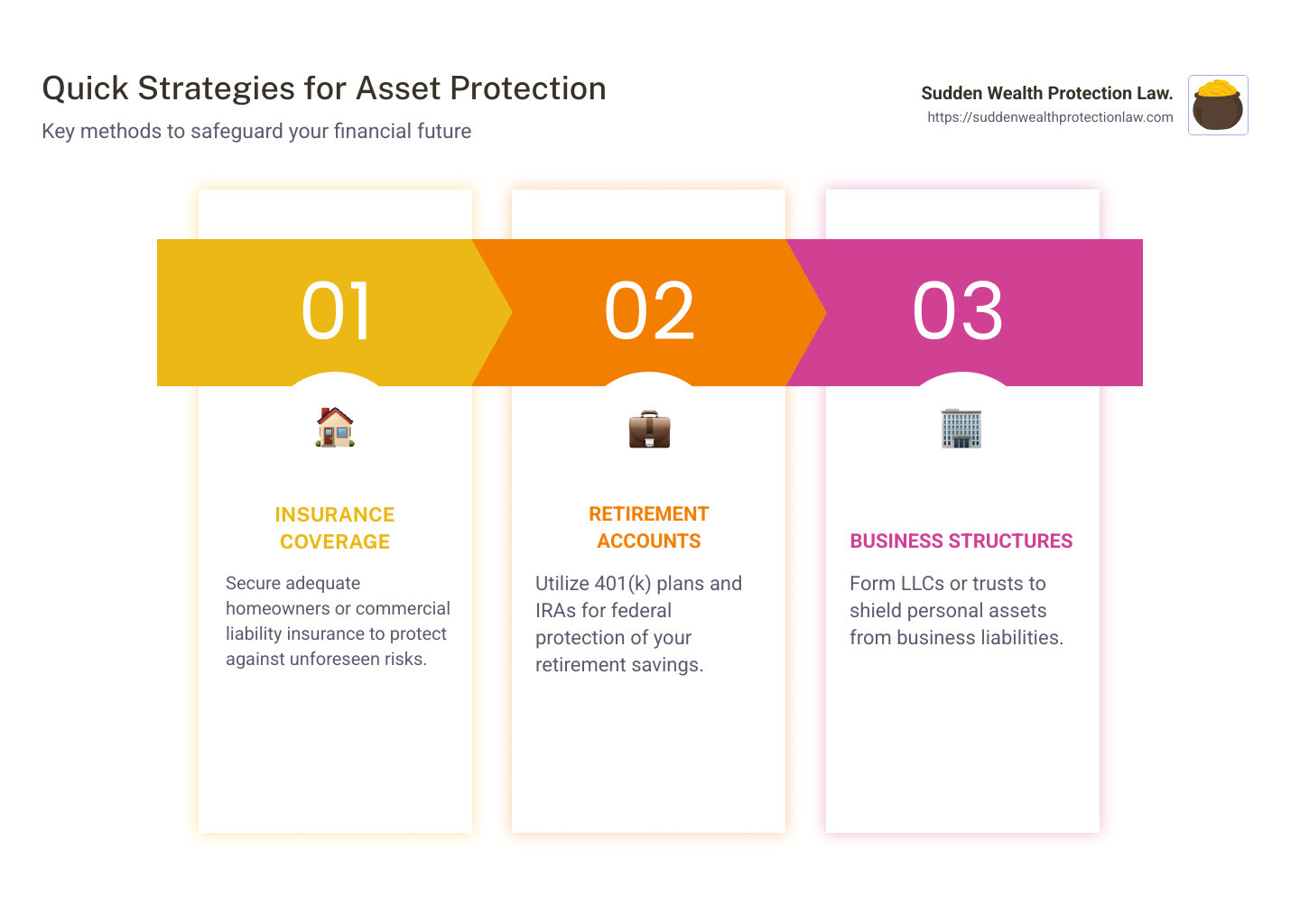
Protecting assets from creditors is crucial for safeguarding your financial future. If you’re concerned about potential risks to your assets, here are some quick strategies you can consider:
- Insurance: Ensure you have adequate coverage like homeowners or commercial liability insurance.
- Retirement Accounts: Use accounts like 401(k)s for strong protection under federal law.
- Business Structures: Consider forming LLCs or trusts to help shield your assets.
Asset protection is a proactive step in financial planning that can protect you from unanticipated or unjustified claims. By recognizing potential threats such as lawsuits, taxes, and creditor claims, you can create a robust plan that not only shields your assets but also secures your family’s future. To put it simply, it’s about ensuring stability amid uncertainties.
I’m Paul E. Deloughery, founder of Sudden Wealth Protection Law. With over 25 years of legal experience in protecting assets from creditors, I’m dedicated to helping individuals like you steer these complexities with confidence. Stay tuned as we dive deeper into strategies to keep your assets safe.
Relevant articles related to Protecting assets from creditors:
– Advanced estate planning strategies
– Estate planning best practices
– Family business succession planning
Understanding Asset Protection
Asset protection is like building a fortress around your wealth. It’s about using smart strategies to guard your money, property, and other assets from being taken by creditors. Imagine it as a safety net that keeps your financial future secure, even when unexpected troubles arise.
Why Asset Protection Matters
Anyone can face unexpected lawsuits or creditor claims. These claims can come from accidents, business disputes, or even personal liabilities. Without proper protection, your hard-earned assets could be at risk. That’s why asset protection is essential. It helps ensure that your wealth stays with you and your family, not in the hands of others.
The Core of Asset Protection
The key to effective asset protection is to act before any claims are made. Once a lawsuit or claim is filed, it might be too late to shield your assets effectively. By planning ahead, you create legal barriers that make it difficult for creditors to access your assets.
How Asset Protection Works
Think of asset protection as a multi-layered strategy. It often starts with basic measures like insurance, which covers potential liabilities. But insurance alone isn’t enough. More advanced strategies involve using legal structures like trusts and business entities to keep your assets out of reach from creditors.
For instance, transferring assets to an irrevocable trust can be a powerful move. This type of trust takes the assets out of your name, making them less accessible to creditors. Similarly, forming a Limited Liability Company (LLC) can protect personal assets from business-related claims.
The Goal: Financial Security
The goal of asset protection is to provide financial security. It’s about ensuring that no matter what happens, your assets remain protected. This security allows you to focus on building a future for you and your loved ones, without the constant worry of losing everything to a lawsuit or creditor claim.
By understanding and implementing effective asset protection strategies, you can create a financial plan that stands strong against life’s uncertainties. Whether it’s through insurance, trusts, or business structures, taking proactive steps today can safeguard your tomorrow.
Effective Strategies for Protecting Assets from Creditors
When it comes to protecting assets from creditors, a combination of strategies can create a robust defense. Let’s explore some of the most effective ways to safeguard your wealth.
Purchase Insurance
Insurance acts as your first line of defense. By having adequate insurance, you can cover potential liabilities that may arise from accidents or lawsuits. This includes umbrella policies, which provide extra liability coverage beyond your standard policy limits. For professionals like doctors and real estate agents, errors and omissions insurance is crucial. It protects against claims of negligence or inadequate work.
Transfer Assets
Transferring assets can be a strategic move to protect them from creditors. One popular method is placing assets in an irrevocable trust. Once assets are in this trust, they are no longer legally yours, making them inaccessible to creditors. However, it’s important to transfer assets before any claims are made, as courts can reverse transfers deemed fraudulent.
Use Business Entities
Forming a business entity like a Limited Liability Company (LLC) or a limited partnership can shield personal assets from business liabilities. These structures separate your personal wealth from business operations, ensuring that creditors can only go after the business’s assets. LLCs offer flexibility and protection, making them a popular choice for many entrepreneurs.
Retirement Accounts
Retirement accounts, especially those that are ERISA-qualified, offer significant protection from creditors. These include 401(k)s and certain pension plans, which are safeguarded under federal law. IRAs also provide protection, but the level varies depending on state laws. It’s wise to contribute the maximum to these accounts to build a secure nest egg that remains protected.
Homestead Exemptions
Many states offer homestead exemptions, which protect a portion of your home equity from creditors. The amount of protection varies by state, with some offering unlimited protection. Understanding your state’s laws can help you maximize this exemption and keep your home safe from creditor claims.
By implementing these strategies, you can create a layered approach to asset protection. Each tactic adds a layer of security, ensuring that your wealth is well-guarded against potential threats.
Advanced Asset Protection Techniques
When basic strategies aren’t enough, it’s time to consider advanced techniques for protecting assets from creditors. Two powerful options are Domestic Asset Protection Trusts (DAPTs) and Offshore Trusts. Both offer unique advantages, but they also come with complexities.
Domestic Asset Protection Trusts (DAPTs)
DAPTs are self-settled spendthrift trusts designed to protect your assets from creditors. They allow you to place assets in a trust while still benefiting from them. However, not all states permit DAPTs. As of 2024, about 20 states, including Nevada and Delaware, have laws that allow these trusts.
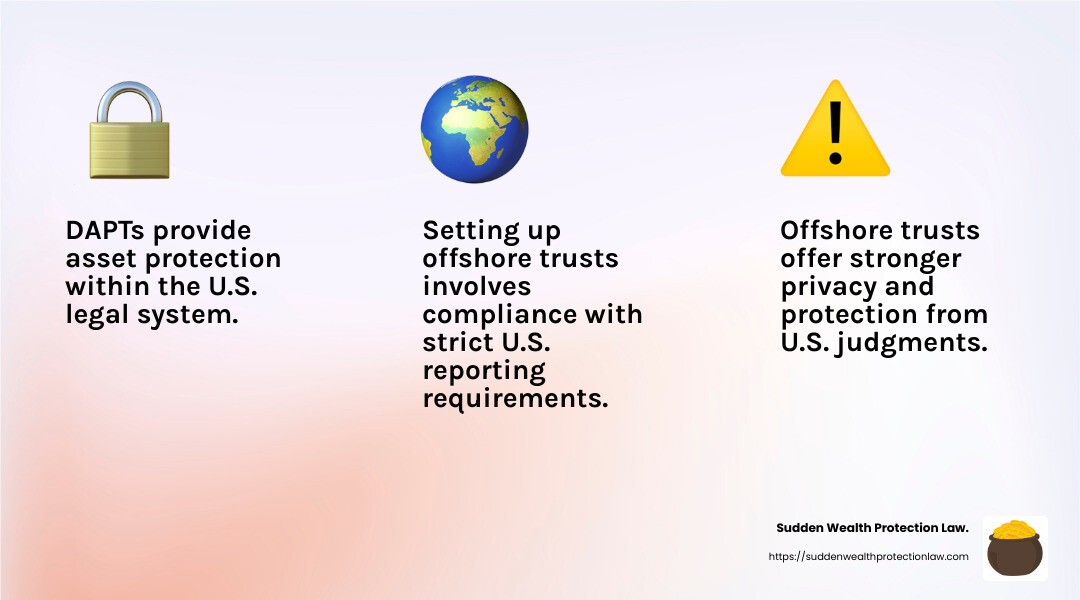
The main advantage of a DAPT is that it keeps your assets within the U.S. legal system, providing a level of familiarity and ease of management. But remember, your assets are still subject to U.S. court orders and federal laws. So, while DAPTs offer protection, they are not foolproof.
Offshore Trusts
For those seeking even more protection, offshore trusts might be the answer. These trusts are established in foreign jurisdictions known for their strong asset protection laws, like the Cook Islands or the British Virgin Islands. Offshore trusts offer a higher level of privacy and can be more resistant to U.S. court judgments.
However, setting up an offshore trust can be complex and costly. There are also potential risks, such as political or economic instability in the foreign jurisdiction. Additionally, U.S. owners must comply with strict reporting requirements, including filing forms like Form 3520 and Form 3520-A, to avoid hefty penalties.
In conclusion, while both DAPTs and offshore trusts provide robust asset protection, they require careful consideration and expert guidance. Consulting with an attorney familiar with state and international laws can help you steer these advanced techniques effectively.
Frequently Asked Questions about Protecting Assets from Creditors
How do I protect my assets from being seized?
Protecting your assets from being seized by creditors involves using various strategies. One effective approach is forming business entities like a Limited Liability Company (LLC). An LLC separates your personal assets from your business assets, reducing personal liability. This means if your business faces legal trouble, your personal belongings, like your home or car, are generally protected.
Another strategy is purchasing insurance. Having adequate liability coverage can shield you from personal financial loss if you’re sued. Consider an umbrella insurance policy for extra protection; it covers claims that exceed your regular insurance limits.
What is the best form of asset protection?
Choosing the best form of asset protection depends on your specific needs and circumstances. For many, an irrevocable trust is a top choice. Once assets are placed in this type of trust, they are no longer considered part of your personal estate, making it difficult for creditors to claim them. This is because you no longer have legal ownership, even though you might still benefit from the assets.
On the business side, an LLC is often recommended. It combines the liability protection of a corporation with the tax benefits and simplicity of a partnership. This structure helps protect your personal assets from business-related lawsuits or debts.
Can creditors go after personal assets?
Yes, creditors can go after personal assets, but there are ways to minimize this risk. If you operate as a sole proprietor or in a general partnership, your personal assets are at risk if the business incurs debt or legal issues.
However, forming an LLC offers a layer of protection. The LLC structure limits personal liability, meaning creditors can typically only pursue the assets owned by the LLC, not your personal property. It’s crucial to maintain proper separation between personal and business finances to uphold this protection.
Using an irrevocable trust is another way to protect personal assets. Once assets are in the trust, they are legally separate from your personal estate, making it difficult for creditors to access them. However, once placed in an irrevocable trust, you cannot easily change or revoke the terms, so careful planning is essential.
In summary, while creditors can pursue personal assets, using strategies like forming an LLC or setting up an irrevocable trust can significantly reduce this risk.
Conclusion
In today’s unpredictable world, safeguarding your wealth is more important than ever. At Sudden Wealth Protection Law, we specialize in personalized legal solutions custom to your unique needs. Our focus is on Arizona estate planning, helping you protect your family’s assets and ensure a smooth transfer of wealth to future generations.
We understand that every client’s situation is different. That’s why we offer customized strategies, like the Asset Vault Trust, which combines maximum flexibility with robust asset protection. This innovative approach is part of our commitment to providing compassionate, expert guidance that brings peace of mind.
Our team, led by founding attorney Paul Deloughery, is dedicated to empowering families and business owners. We teach them how to protect their assets and prepare the next generation to be responsible stewards of their wealth.
If you’re ready to take the next step in protecting your assets, we invite you to learn more about our services and how we can assist you. Visit our Asset Protection page to explore your options and start building a fortress around your financial future.

