
Administrative trust after death is a critical period where a trustee must ensure that all legal formalities are met before distributing assets to beneficiaries. This involves tasks like paying taxes and debts, notifying heirs, and protecting trust assets. Without proper oversight, costly legal issues can arise, making professional guidance essential.
Trust administration and estate planning are not just about paperwork—they help secure your family’s future and provide peace of mind. These processes involve important duties, like managing assets and following the wishes laid out by your loved one. Handling these responsibilities correctly involves understanding legal obligations, known as fiduciary duty, to act in the best interest of the beneficiaries.
I’m Paul E. Deloughery, with over 25 years of legal experience in helping families steer the complexities of estate planning and trust administration. My aim is to make managing an administrative trust after death a smoother process for everyone involved. Up next, let’s dig deeper into understanding administrative trusts.
Relevant articles related to administrative trust after death:
– personal trust administration
– probate trust administration
–wills trusts and estate administration
Understanding Administrative Trusts
When someone sets up a trust, they rely on a trustee to manage and eventually distribute their assets. This is where an administrative trust comes into play, especially after a loved one’s passing. Let’s break down the key components of this process.
Trustee Responsibilities
The trustee is like a guardian of a treasure chest. Their main job is to make sure everything inside is safe and eventually given to the right people. Here’s what they need to do:
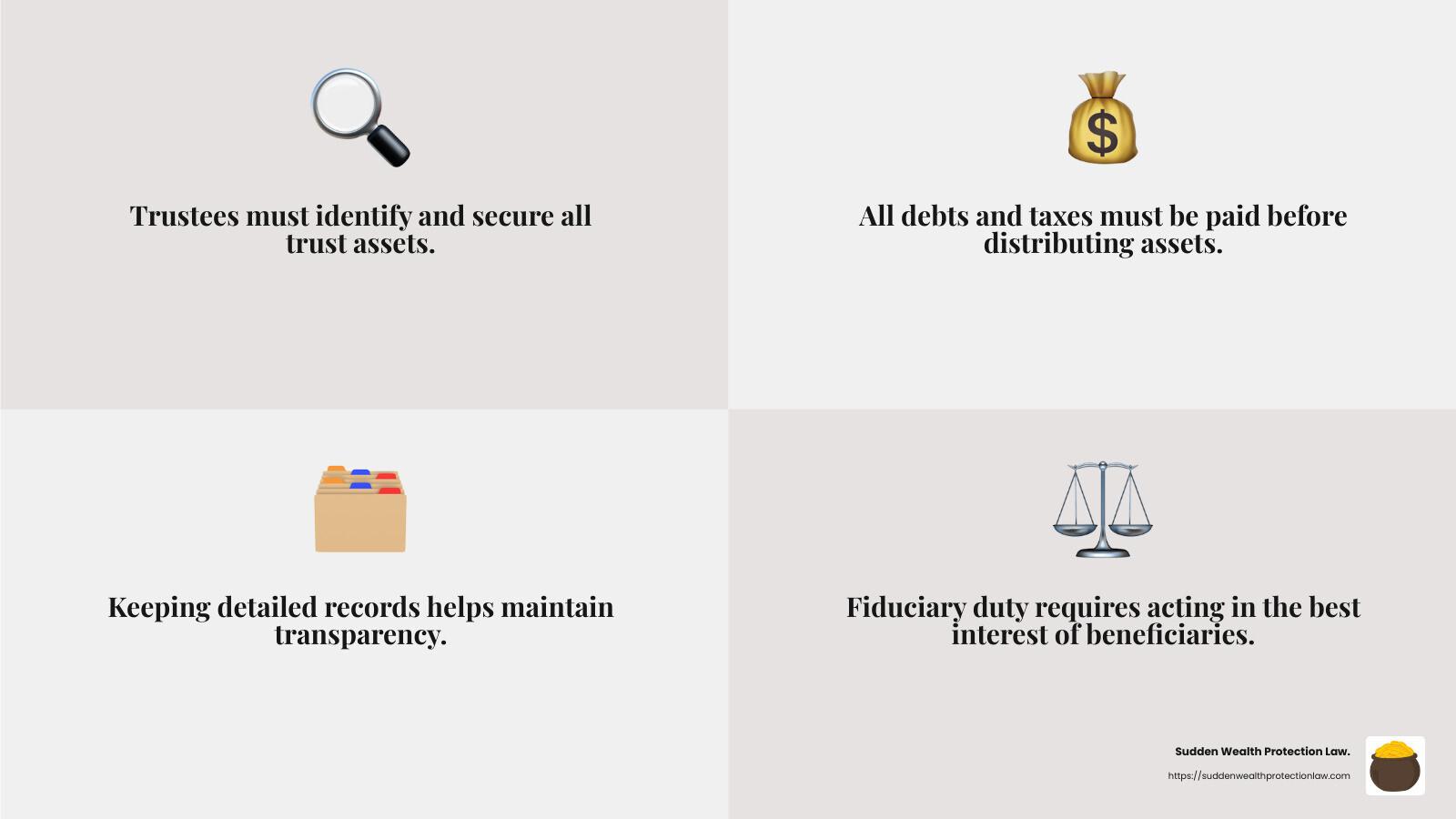
- Locate and Secure Assets: Identify all the assets in the trust, from bank accounts to property. Keep them safe and in good condition.
- Pay Debts and Taxes: Before any assets can be distributed, all outstanding debts and taxes must be settled. This ensures the beneficiaries receive their inheritance without any legal hiccups.
- Follow Trust Instructions: Distribute the assets according to the trust’s terms. This might mean giving a house to one person and stocks to another, exactly as the trust specifies.
Asset Management
Managing assets isn’t just about holding onto them. It involves making smart decisions to preserve their value:
- Evaluate and Decide: Sometimes, it’s better to sell certain assets, like a piece of property, rather than keep it. Trustees might need advice from financial experts to make these decisions.
- Keep Records: Maintain detailed records of all transactions. This transparency helps avoid disputes and ensures that everything is above board.
Legal Formalities
Handling an administrative trust isn’t just about managing assets—it’s also about navigating legal requirements:
- File Necessary Documents: This includes tax returns for the trust and any other required paperwork. Missing a step can lead to legal troubles.
- Notify Beneficiaries: Inform all beneficiaries about the trust administration process. This keeps everyone in the loop and reduces the chance of misunderstandings.
- Adhere to Fiduciary Duty: The trustee must act in the best interest of the beneficiaries, maintaining loyalty and fairness. Failure to do so can result in personal liability or legal action.
The role of a trustee is vital for ensuring the smooth operation of an administrative trust after death. It’s about balancing responsibilities, managing assets wisely, and following legal protocols. Up next, we’ll explore the key steps involved in trust administration.
Administrative Trust After Death
When someone passes away, their assets don’t just automatically go to the beneficiaries. Instead, they often go into a temporary holding known as an administrative trust. This is a crucial step in the process of estate settlement.
Temporary Holding
Think of an administrative trust as a waiting room for the deceased’s assets. It’s a temporary setup that helps manage the transition of assets from the deceased to the beneficiaries. During this period, the trustee gathers all the assets, ensuring they are secure and accounted for.
Asset Distribution
Once the assets are safely held, the next step is asset distribution. But before beneficiaries can receive their inheritance, the trustee must first settle all debts and taxes. This ensures that no financial obligations are passed on to the beneficiaries.
- Pay Off Debts: The trustee must identify and pay any outstanding debts the deceased may have had.
- Settle Taxes: All taxes related to the estate must be calculated and paid. This includes any estate taxes that might be due.
Only after these obligations are met can the assets be distributed to the beneficiaries according to the terms of the trust.
Estate Settlement
The final part of this process is the estate settlement. This is where the administrative trust is dissolved, and the assets are handed over to the beneficiaries. The trustee plays a critical role here, ensuring that the distribution aligns with the deceased’s wishes as outlined in the trust.
- Distribute Assets: The trustee must follow the trust’s instructions to the letter, whether that means giving a specific item to a particular person or dividing the assets equally among several beneficiaries.
- Close the Trust: Once all assets are distributed, and obligations are met, the administrative trust is closed.
An administrative trust after death ensures that the transition of assets is handled smoothly and legally. It provides a structured approach to managing and distributing the deceased’s assets, respecting their final wishes while protecting the interests of all parties involved.
Next, let’s dive into the key steps in trust administration to understand how trustees effectively manage this process.
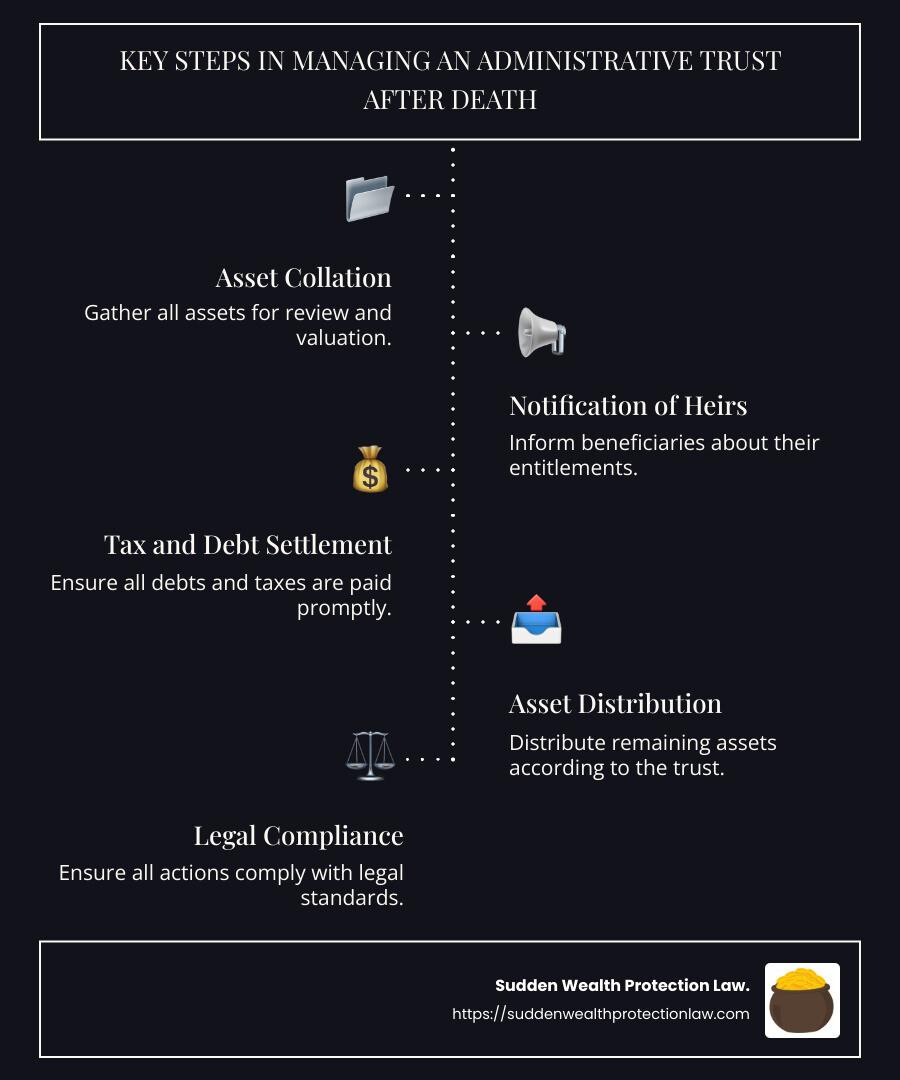
Key Steps in Trust Administration
When it comes to managing a trust, especially after someone has passed away, there are a few important steps that trustees need to follow. These steps ensure that everything is handled properly and that the beneficiaries receive what they are entitled to.
Asset Collection
The first step is asset collection. This means gathering all the assets that are part of the trust. These could include bank accounts, real estate, investments, and personal belongings. It’s like putting together a puzzle where each piece represents an asset that needs to be accounted for.
- Create an Inventory: The trustee should list all assets, noting their value at the time of the grantor’s death.
- Secure the Assets: Make sure everything is safe and protected during the administration process.
Debts and Taxes
Before any assets can be given to beneficiaries, the trustee must handle all debts and taxes. This is a crucial step because it ensures that the estate’s financial obligations are settled.
- Pay Debts: Any outstanding debts of the deceased must be paid off. This could include credit card bills, loans, or medical expenses.
- Settle Taxes: All necessary taxes, including estate taxes, need to be calculated and paid. This step helps avoid future legal issues for the beneficiaries.
Beneficiary Distribution
Once debts and taxes are taken care of, it’s time for beneficiary distribution. This is when the trustee distributes the remaining assets to the beneficiaries according to the trust’s instructions.
- Follow the Trust’s Terms: The trustee must adhere strictly to the trust document’s terms. This might mean giving specific items to certain people or dividing assets among a group.
- Communicate Clearly: It’s important for the trustee to communicate with beneficiaries, explaining how and when they will receive their inheritance.
By following these key steps, trustees can ensure that the trust administration process is smooth and efficient. This not only honors the wishes of the deceased but also protects the interests of the beneficiaries.
Next, we’ll explore the types of trusts and their administration to understand the different ways trusts can be managed.
Types of Trusts and Their Administration
When it comes to estate planning, understanding the different types of trusts is crucial. Each type serves a unique purpose and comes with its own set of rules for administration.
Revocable Trusts
Revocable Trusts, often called “living trusts,” are like a flexible box. You can add or remove items (assets) and change the instructions on the box whenever you want, as long as you’re alive. This flexibility makes them popular for estate planning because you can adjust them as life changes.
- Control and Flexibility: The grantor maintains control over the assets and can modify the trust terms.
- Avoids Probate: Upon death, assets in a revocable trust bypass the probate process, ensuring a quicker and more private distribution to beneficiaries.
However, because the grantor retains control, the assets in a revocable trust are still part of their taxable estate and offer no protection from creditors.
Irrevocable Trusts
Irrevocable Trusts are the opposite of revocable trusts. Once you place assets inside, you can’t easily take them out or change the terms. It’s like a locked safe, providing robust protection.
- Asset Protection: Assets are shielded from creditors and lawsuits since they are no longer part of the grantor’s estate.
- Tax Benefits: These trusts can offer significant estate tax savings, as assets are removed from the taxable estate.
While irrevocable trusts provide strong protection, they lack flexibility. Any changes require legal procedures and, often, the consent of beneficiaries.
Testamentary Trusts
Testamentary Trusts are a bit different as they are created through a will and only come into effect after the grantor’s death. Think of them as instructions left behind for how to manage and distribute assets.
- Probate Required: Unlike revocable and irrevocable trusts, testamentary trusts must go through probate, which can be time-consuming and public.
- Structured Distribution: They are ideal for setting conditions on how and when beneficiaries receive their inheritance, like setting up funds for education or supporting a cause.
Testamentary trusts offer a way to ensure that assets are distributed according to specific wishes, but the probate process can delay the distribution.
Understanding these different types of trusts helps in making informed decisions about estate planning. Each type has its own benefits and limitations, and choosing the right one depends on individual goals and circumstances.
Next, we’ll dive into some frequently asked questions about administrative trusts to clarify common concerns and misconceptions.
Frequently Asked Questions about Administrative Trusts
What Happens if No Executor Is Named?
When someone passes away without naming an executor, or if there’s no will, the court steps in to fill this crucial role. The court appoints an administrator to handle the estate, similar to an executor’s duties. Typically, the court looks for the closest family member willing to take on the responsibility. If no family member is available or suitable, a third party, like a professional lawyer, might be appointed.
Family Member Administrator: Often, a spouse, adult child, or another relative becomes the administrator. This can provide a sense of familiarity and trust for the beneficiaries.
Third-Party Management: In complex situations or when no family member is available, the court might appoint a professional to manage the estate, ensuring impartial and competent handling of the deceased’s affairs.
How Does an Administrative Trust Operate After Death?
An administrative trust serves as a temporary holding place for the deceased’s assets during the estate settlement process. This arrangement ensures that assets are managed and distributed correctly.
Asset Distribution: The trustee or administrator gathers the deceased’s assets, pays off any debts and taxes, and then distributes the remaining assets to the beneficiaries. This is done according to the will or, if there’s no will, according to state law.
Temporary Legal Arrangement: The administrative trust is not permanent. It exists only for the duration of the estate administration process. Once all assets are distributed and estate matters are settled, the trust is dissolved.
What is Trust Litigation?
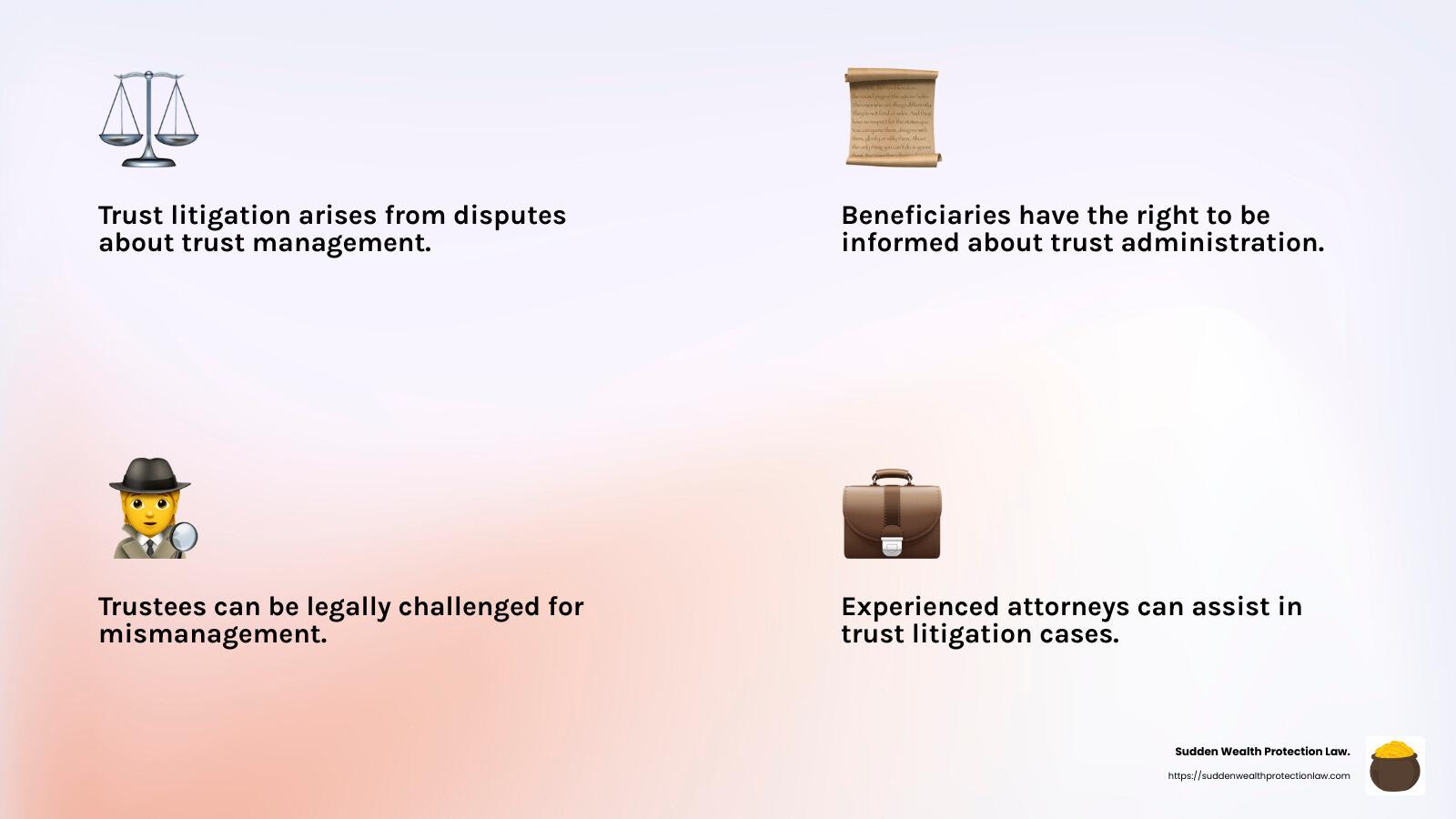
Trust litigation arises when there are disputes about the management of a trust. It’s crucial to understand the rights and responsibilities involved to avoid legal battles.
Beneficiary Rights: Beneficiaries have the right to be informed about the trust and its administration. They can challenge decisions if they believe the trustee is not acting in their best interest.
Trustee Mismanagement: If beneficiaries feel that the trustee is mishandling the trust’s assets, they can take legal action. This can occur due to mismanagement, failing to adhere to the trust’s terms, or acting in self-interest rather than for the beneficiaries’ benefit.
In such cases, beneficiaries can file a lawsuit against the trustee to resolve disputes. This process can be complex and often requires the assistance of an experienced trust litigation attorney. Understanding these aspects helps both trustees and beneficiaries steer the legal landscape effectively.
Next, we’ll explore the key steps involved in trust administration to provide a clear roadmap for managing an estate after death.
Conclusion
Navigating the complexities of trust administration can be daunting. At Sudden Wealth Protection Law, we understand the unique challenges that come with managing an estate after a loved one’s passing. Our firm is dedicated to providing personalized legal solutions custom to the specific needs of each family. With our expert guidance, we aim to make the process as smooth and stress-free as possible.
Why Choose Sudden Wealth Protection Law?
Our founding attorney, Paul Deloughery, brings years of experience and a compassionate approach to estate planning. We focus on protecting family assets and ensuring that the wishes of the deceased are honored while minimizing potential conflicts among heirs. Our unique asset protection strategy, including the Asset Vault Trust, offers maximum flexibility and security for your assets.
Personalized Legal Solutions
Every family is different, and so are their estate planning needs. We offer customized legal strategies to address each client’s concerns, whether it’s managing a complex estate or resolving disputes. Our goal is to empower families to make informed decisions and to feel confident about the future.
Expert Guidance
Trust administration involves many legal formalities and responsibilities. Our team is here to guide you through each step, from asset collection to beneficiary distribution. We provide clear, straightforward advice to help you fulfill your duties as a trustee with confidence.
For those facing disputes or needing assistance with trust litigation, our experienced attorneys are ready to advocate for your rights and help you achieve a favorable outcome.
If you’re looking for compassionate, expert guidance in trust administration, contact us today. Let us help you protect your family’s wealth and honor your loved one’s legacy.
This article is general information, not legal advice for your situation. Reading it does not create an attorney-client relationship.