

Arizona inheritance tax waiver form is essential for those navigating the complex world of estate planning in the Grand Canyon State. While Arizona doesn’t impose an estate or inheritance tax, the form is still necessary to handle probate efficiently when transferring assets. Here’s a quick rundown:
- Efficient Asset Transfer: The form helps in timely transferring assets as per Arizona inheritance laws.
- Legal Compliance: Ensures compliance with state laws, especially when dealing with out-of-state properties.
- Peace of Mind: Provides reassurance that assets are distributed according to the deceased’s wishes without any hitches.
I’m Paul E. Deloughery, founder of Sudden Wealth Protection Law. With over 25 years in estate planning, I’ve helped many Arizonans steer through the intricacies of arizona inheritance tax waiver form to ensure their families’ security and adherence to legal requirements.
Arizona inheritance tax waiver form word list:
– arizona estate tax
– does arizona have an inheritance tax
–how much can you inherit without paying taxes in arizona
Understanding Arizona Inheritance Tax
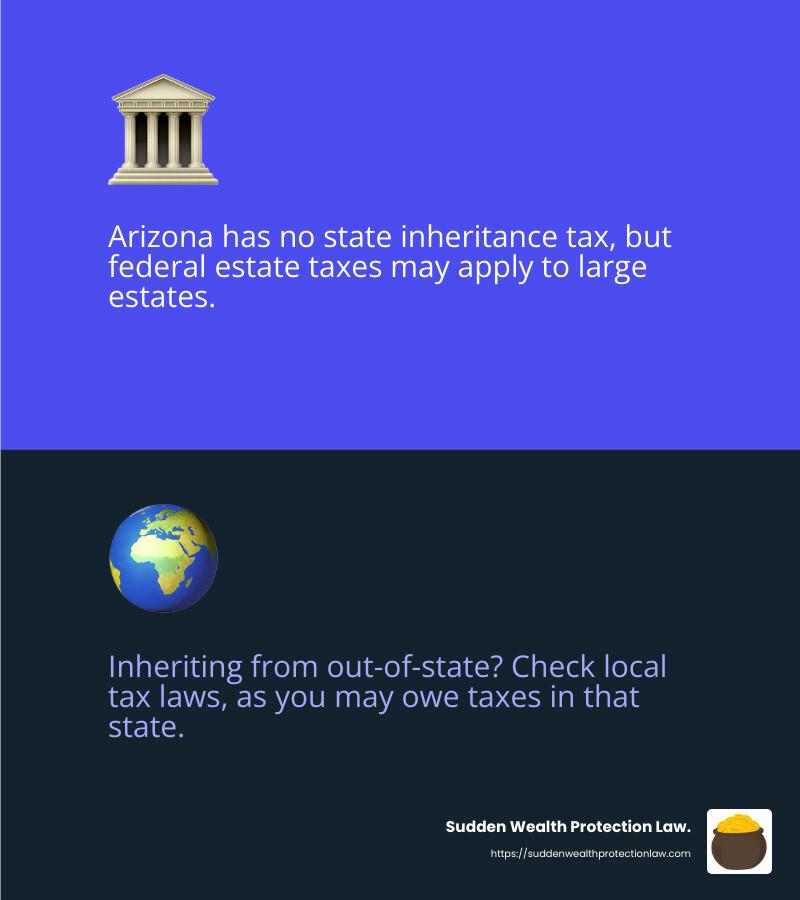
In Arizona, there is no state inheritance tax. This means that when someone inherits assets from a deceased person, they do not owe any state-level inheritance tax. However, it’s important to note that while Arizona doesn’t impose this tax, other taxes might still apply.
Estate Taxes
Though Arizona doesn’t have a state estate tax, federal estate taxes may still affect estates depending on their value. The federal estate tax applies to the transfer of property after a person’s death. The tax rate can vary, typically ranging from 18% to 40%.
For example, if a person in Arizona passes away with a large estate, the estate might be subject to federal taxes. It’s crucial to check whether the estate exceeds the federal exemption limit, which changes yearly.
Out-of-State Inheritance
If you inherit property or assets from someone who lived in a state that does impose inheritance taxes, you may still be liable for taxes in that state. Each state has its own rules regarding inheritance tax, so it’s wise to consult with a professional if you inherit from out-of-state.
For instance, if you inherit a property in a state with an inheritance tax, you might need to pay taxes based on that state’s laws, even if you live in Arizona.
Arizona residents should also be aware of community property laws, which can affect inheritance. In Arizona, spouses automatically share half of the assets acquired during the marriage. This could impact the division of assets in an estate.
Navigating these laws can be complex, but understanding the basics of Arizona’s tax landscape can help ensure a smooth transfer of assets.
Arizona Inheritance Tax Waiver Form
When dealing with estate matters in Arizona, it’s important to know about the Arizona inheritance tax waiver form. While Arizona doesn’t have a state inheritance tax, certain formalities still need to be completed to ensure compliance with state regulations.
How to Obtain the Waiver
To obtain a tax waiver, you must interact with the Arizona Department of Revenue. This involves securing a Certificate of Taxes. This certificate confirms that all necessary taxes have been settled for the estate, which is crucial for the proper transfer of assets.
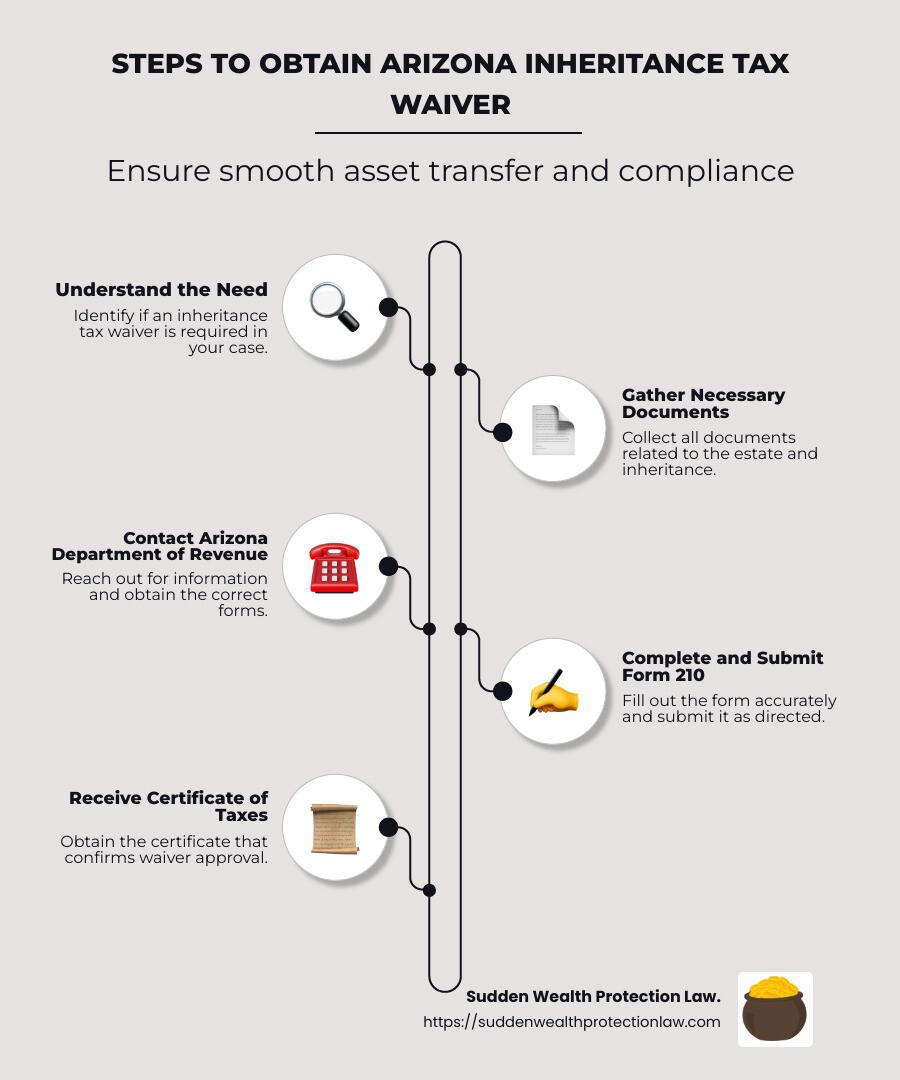
Here’s a step-by-step guide to obtaining the waiver:
- Gather Necessary Documents:
- A court letter titled NOTICE OF INFORMAL APPOINTMENT OF PERSONAL REPRESENTATIVE for the deceased.
- A completed and signed Arizona Form 210, which is the Notice of Assumption of Duties in a Fiduciary Capacity.
- The final Arizona Form 141AZ, which is the Arizona Fiduciary Income Tax Return.
- Check Tax Returns:
- Ensure that all tax returns are up-to-date. If there are missing returns for the past four years, a notarized affidavit explaining the absence is required.
- Mail the Documents:
- Send all documents to the Arizona Department of Revenue at their specified address.
Completing these steps will help you acquire the necessary waiver for the estate.
When is the Waiver Required?
A waiver is required in specific situations where the estate or trust meets certain income thresholds. Here’s when you need it:
- The estate’s Arizona taxable income for the tax year is $1,000 or more.
- The trust’s Arizona taxable income for the tax year is $100 or more.
- The estate or trust’s gross income for the tax year is $5,000 or more, regardless of the amount of taxable income.
In these cases, obtaining a waiver ensures that the estate can be settled without any outstanding tax liabilities.
Understanding when and how to obtain the Arizona inheritance tax waiver form can save time and avoid potential legal complications during estate settlement.
Filing Requirements and Procedures
Navigating the filing requirements for estate matters in Arizona can be complex. To ensure a smooth process, it’s crucial to understand the necessary forms and procedures, as well as common pitfalls to avoid.
Common Mistakes to Avoid
1. Incorrect Filing of Forms:
When dealing with estate taxes, three forms are particularly important:
- Form 140NR: This is for nonresidents who need to report income from Arizona sources. Ensure that all income is accurately reported to avoid discrepancies.
- Form 140V: This form is used for making voluntary contributions with your tax return. Double-check that the amounts match your intentions to prevent any errors.
- Form 141AZ: This is the Arizona Fiduciary Income Tax Return. It’s critical for estates and trusts to submit this form correctly, as it reflects the financial activities of the estate or trust.
2. Neglecting Penalty Abatement Requests:
If you encounter penalties, you might be eligible for penalty abatement. Use Form 290 to request an abatement for non-audit penalties. This can alleviate unnecessary financial burdens if filed correctly.
3. Failing to E-file and E-pay:
Arizona encourages electronic filing and payment for its efficiency and accuracy. Errors often occur when taxpayers don’t comply with e-file and e-pay requirements. Make sure to:
- E-file: Submit your forms electronically to reduce processing time and minimize errors.
- E-pay: Use electronic payment methods to ensure timely and verified payments, avoiding penalties for late or missed payments.
By understanding these forms and avoiding common mistakes, you can ensure compliance and a smoother process in managing estate taxes in Arizona.
Frequently Asked Questions about Arizona Inheritance Tax Waiver
Does Arizona require an inheritance tax waiver?
In Arizona, there is no state inheritance tax, which means beneficiaries generally do not need to worry about an inheritance tax waiver for state purposes. However, if the estate involves out-of-state assets or beneficiaries, there may be other tax considerations that need attention. Always check with a professional advisor to ensure compliance with any applicable tax laws.
Do beneficiaries have to pay taxes on inheritance in Arizona?
Beneficiaries in Arizona typically do not pay state taxes on their inheritance due to the absence of a state inheritance tax. However, federal taxes might apply, especially if the estate is large enough to be subject to federal estate taxes. Additionally, if the inheritance generates income, such as dividends or interest, the beneficiary may need to report this income on their personal tax return.
What is Arizona Form 140NR?
Form 140NRis specifically for nonresidents who have income from Arizona sources. This form is crucial for individuals who do not reside in Arizona but earn income from the state, such as rental income or business profits. Filing this form ensures that nonresidents comply with Arizona’s income tax regulations and report their Arizona-sourced income accurately.
By understanding these key aspects of Arizona’s inheritance tax landscape, beneficiaries and estate planners can steer the process with greater ease and confidence.
Conclusion
Navigating the complexities of estate planning and probate litigation can be daunting. At Sudden Wealth Protection Law, we specialize in providing clear, compassionate guidance to help you protect your family’s assets. Our expertise in Arizona estate planning ensures that you are well-prepared to handle any challenges related to inheritance, taxes, and asset protection.
Our team, led by attorney Paul Deloughery, is dedicated to empowering families and business owners. We offer personalized legal solutions, including our unique Asset Vault Trust, to safeguard your wealth and ensure it is passed down responsibly to future generations.
Whether it’s crafting a comprehensive estate plan or resolving probate disputes, we are committed to delivering peace of mind and favorable outcomes. Our strategic approach combines maximum flexibility with robust asset protection, custom to meet the unique needs of each client.
For more information on how we can assist with your estate planning needs, visit our Estate Planning Service Page. Let us help you secure your family’s future with confidence.
This article is general information, not legal advice for your situation. Reading it does not create an attorney-client relationship.