
Arizona property tax exemptions offer residents a range of tax relief options specifically designed to ease the financial burden on certain groups. If you’re wondering about what options are available and who qualifies, here’s a quick overview:
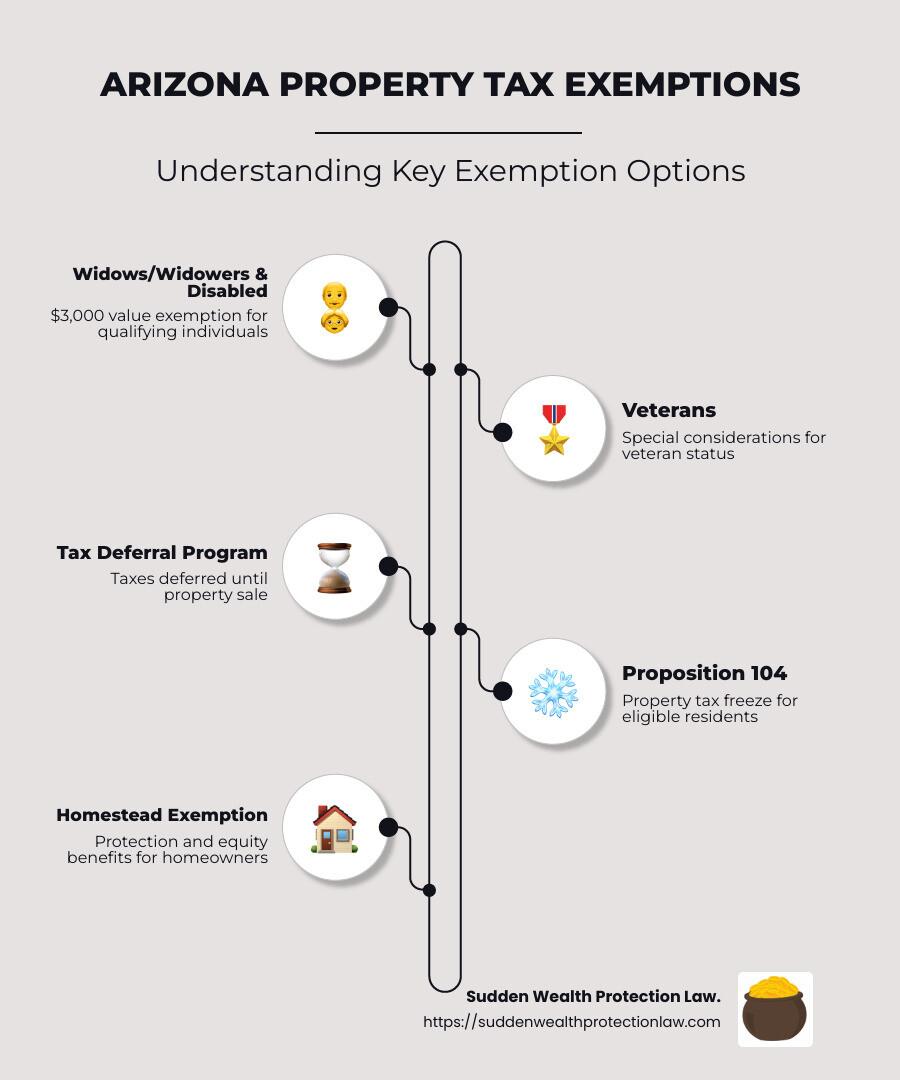
- Widows, widowers, and disabled persons may qualify for an exemption of up to $3,000 off the assessed property value.
- Tax Deferral Program: Under this, property taxes don’t have to be paid until the property is sold or becomes income-producing.
- Proposition 104: Provides a property tax freeze for qualifying individuals.
- Eligibility typically revolves around factors such as age, disability status, or veteran status.
These exemptions and deferrals can significantly lower your property tax liability if you meet the eligibility criteria. It’s crucial to understand what you qualify for so you can make the most of Arizona property tax exemptions.
I’m Paul E. Deloughery, founder and managing attorney of Sudden Wealth Protection Law, and with over 25 years of experience, I’ve helped many Arizonans steer the maze of property tax laws. My focus is to simplify the complex world of Arizona property tax exemptions and provide guidance custom to your needs.
Arizona property tax exemptions basics:
– arizona bankruptcy homestead exemption
–bankruptcy homestead equity exemption arizona
Types of Property Tax Exemptions in Arizona
Arizona offers several property tax exemptions to help residents reduce their property tax burden. These exemptions are particularly beneficial for specific groups like widows, widowers, disabled individuals, veterans, and those eligible for a homestead exemption. Here’s how each type of exemption works:
Widows/Widowers Exemption
Widows and widowers in Arizona can benefit from a property tax exemption. To qualify, you must be a legal resident and provide a copy of your spouse’s death certificate when applying for the first time. This exemption can reduce the assessed value of your property by up to $4,476, offering significant tax relief to those who have lost a spouse.
Disabled Individuals
Arizona provides exemptions for individuals who are totally and permanently disabled. To qualify, applicants must be certified as disabled by a licensed physician. A Certificate of Disability (Form 82514B) is required, which can be obtained from the Assessor’s office. This exemption also offers a $4,476 reduction in the assessed property value, helping ease the financial strain for disabled residents.
Veterans Exemption
Veterans with a service or non-service connected disability can also avail themselves of property tax exemptions. The exemption amount is up to $4,476 but is adjusted based on the veteran’s disability rating from the Veterans Administration. For example, if a veteran has a 50% disability rating, the exemption is halved. This custom approach ensures that veterans receive tax relief proportional to their service-related disabilities.
Homestead Exemption
The homestead exemption is designed to protect a portion of the home’s value from property taxes, creditors, and circumstances like bankruptcy. In Arizona, this exemption can be a crucial financial shield, particularly for older adults, disabled individuals, and veterans. It allows homeowners to reduce the taxable value of their primary residence, potentially lowering their overall property tax bill.
These Arizona property tax exemptions are designed to provide relief to those who need it most. Whether you’re a widow, widower, disabled individual, veteran, or homeowner, understanding these exemptions can help you save significantly on your property taxes. For personalized advice, consider reaching out to experts who can guide you through the application process and ensure you take full advantage of these benefits.
Eligibility Criteria for Arizona Property Tax Exemptions
Understanding the eligibility criteria for Arizona property tax exemptions is crucial for those seeking to reduce their tax burden. Here’s a simple breakdown of what you need to qualify:
Age Requirements
Some property tax exemptions in Arizona are specifically designed for older adults. For instance, the Senior Value Protection Program, also known as the “Senior Freeze,” allows eligible seniors to freeze the taxable value of their property. To qualify, you generally need to be at least 65 years old and meet other specific criteria related to residency and income. This program is a great way for seniors to manage their property taxes without worrying about increasing property values.
Income Limitations
Income plays a significant role in determining eligibility for various exemptions. For example, to qualify for the personal exemption for widows, widowers, or disabled individuals, your total household income must not exceed certain limits. If you have no children under 18 living with you, your income should be below $34,901. If you do have children under 18 or a disabled child living with you, the limit increases to $41,870. These limitations ensure that the exemptions benefit those who need them most.
Residency Requirements
Residency is another key factor in qualifying for property tax exemptions in Arizona. You must be a legal resident of the state to apply for these exemptions. Additionally, the property in question must be your primary residence. This means you need to live in the home for a significant portion of the year. Evidence like an Arizona driver’s license or utility bills can help prove your residency status.
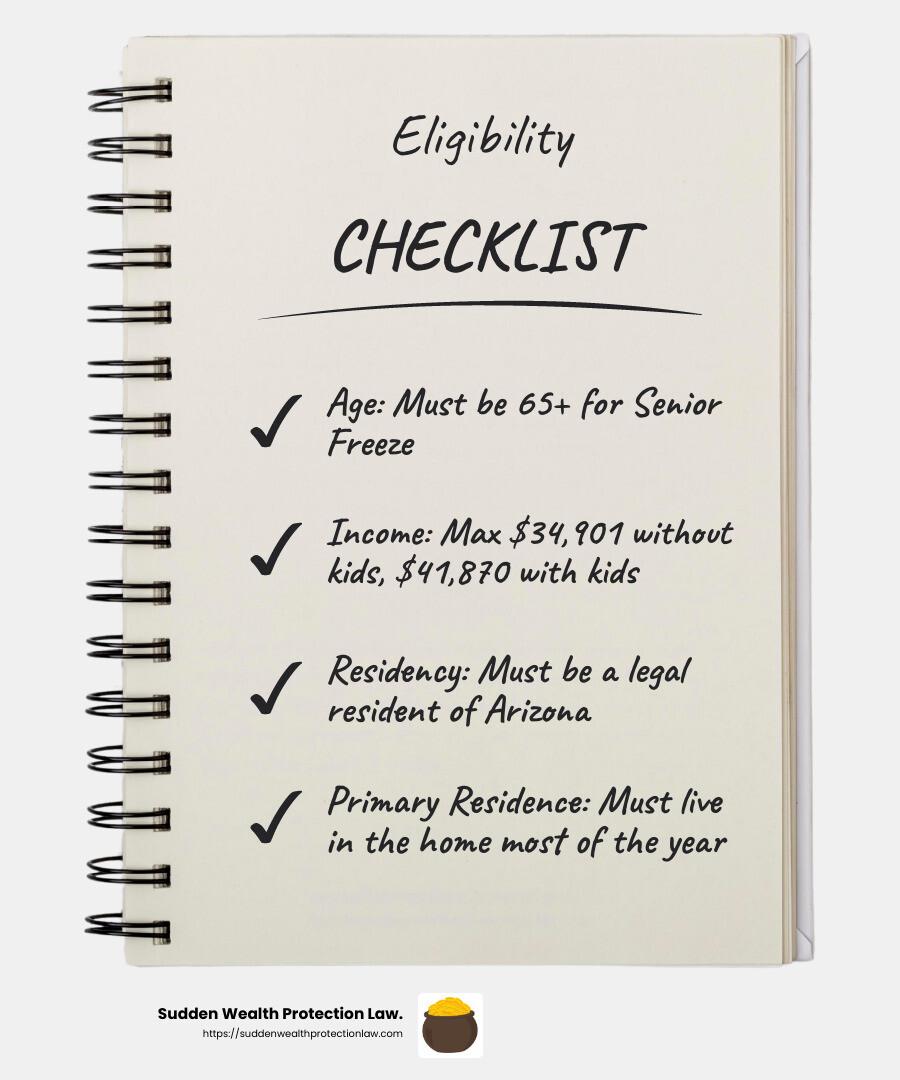
These eligibility criteria are designed to ensure that Arizona property tax exemptions are accessible to those who genuinely need financial relief. If you meet the age, income, and residency requirements, you could significantly reduce your property tax burden. For more detailed guidance, consider consulting with professionals who can help steer the application process.
How to Apply for Property Tax Exemptions
Applying for Arizona property tax exemptions can seem complex, but breaking it down step-by-step makes it more manageable. Here’s what you need to know:
Application Process
First-time applicants for property tax exemptions, such as disabled veterans, must apply in person at the County Assessor’s Office. After the first application, renewals can often be done by mail, but this requires notarization. If you can’t make it in person, contact the office to make alternative arrangements.
For organizational exemptions, such as those for churches or veterans’ organizations, a representative must file in person with all necessary documents between January 1st and March 1st.
Required Documentation
When applying, you’ll need to gather several important documents. These typically include:
- Copy of VA Disability Letter (for veterans)
- Arizona State Income Tax Return
- Prior year’s tax bill or valuation card for all properties in Arizona
- License plate numbers for all vehicles
- Arizona Driver’s License or AZ ID
For organizations, additional documents like the “Articles of Incorporation” and the “IRS Statement of exemption” are required.
Filing Deadlines
Timing is crucial. For personal exemptions, the application period is from the first Monday in January to the last day of February. Missing this window means waiting another year to apply. For organizational exemptions, the deadline extends slightly to March 1st, but it’s still important to plan ahead to ensure all paperwork is filed on time.
By following these steps and preparing the necessary documents, you can successfully steer the application process for Arizona property tax exemptions. If you’re unsure about any part of the process, consulting with a legal professional can be beneficial. They can offer guidance custom to your specific situation and help ensure all requirements are met.
Arizona Property Tax Valuation Freeze
The Arizona Property Tax Valuation Freeze is a valuable tool for certain residents looking to manage their property taxes. Let’s break down what this means and how it works.
Proposition 104
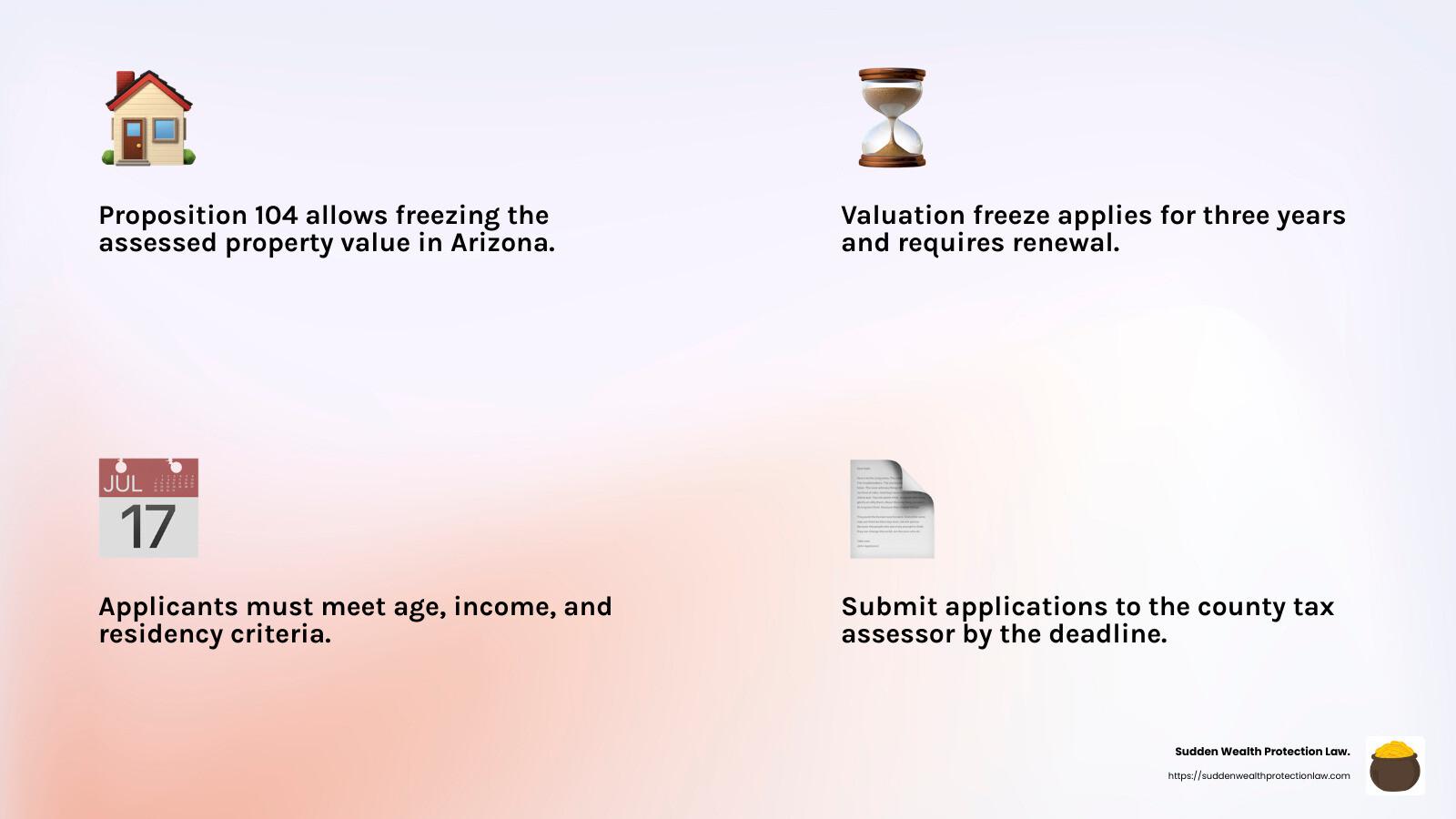
Proposition 104, passed in 2000, allows eligible homeowners to “freeze” the assessed value of their property, which can help manage and potentially reduce their property tax bills over time. This doesn’t freeze the taxes themselves, but rather the taxable value of the property, which can be advantageous as property values increase.
Tax Deferral Program
In addition to the valuation freeze, Arizona offers a tax deferral program. This program is designed to assist those who qualify by deferring the payment of property taxes until the property is sold, the owner passes away, or the property becomes income-producing. This can be particularly beneficial for individuals on fixed incomes or those experiencing financial difficulties.
How the Valuation Freeze Works
For qualified individuals, once the application is approved, the property valuation freeze applies for the year of application and extends for two additional years. At the end of the third year, a renewal application is required to continue the freeze.
To qualify, applicants need to meet specific criteria related to age, income, and residency. The application process involves submitting a timely application to the county tax assessor’s office, and applicants are notified of their qualification status by December 1.
Understanding these options can be a game-changer for those eligible. By utilizing the valuation freeze and tax deferral programs, you can better manage your property tax obligations in Arizona.
Frequently Asked Questions about Arizona Property Tax Exemptions
What age do you stop paying property taxes in Arizona?
While Arizona doesn’t completely eliminate property taxes based on age, there are programs that can help reduce or manage them. One such program is the Senior Valuation Protection Program, often referred to as the “Senior Freeze.” This program is available to homeowners aged 65 and older, allowing them to freeze the assessed value of their primary residence. This can help stabilize property taxes even if property values rise. To qualify, residents must meet specific income and residency requirements.
Does Arizona have any property tax exemptions?
Yes, Arizona offers several property tax exemptions to help reduce the financial burden for certain individuals. Here are some key exemptions:
- Widows/Widowers: Arizona allows a property tax exemption for widows and widowers who meet specific income and property value criteria. This helps reduce the assessed value of their property, lowering the overall tax bill.
- Disabled Individuals: Arizona residents who are totally and permanently disabled can qualify for a property tax exemption. A licensed physician must certify the disability, and applicants need to meet income and property value limitations.
- Veterans: Disabled veterans, whether their disability is service-connected or not, can benefit from a property tax exemption. The exemption amount is adjusted based on the percentage of the veteran’s disability as determined by the Veterans Administration (VA).
What property is exempt in Arizona?
Arizona offers exemptions for certain types of property, helping residents protect their assets:
- Homestead Exemption: This exemption provides equity protection by safeguarding a portion of a homeowner’s equity in their primary residence from creditors. While it doesn’t directly reduce property taxes, it offers financial security for homeowners.
- Equity Protection: Under Arizona law, homeowners can protect a certain amount of equity in their homes from creditors. This is particularly important for those facing financial challenges, as it ensures that a portion of their home value remains secure.
These exemptions and protections are crucial for Arizona residents looking to manage their property tax obligations and safeguard their assets. Understanding and leveraging these options can significantly impact financial well-being.
Conclusion
Navigating the landscape of Arizona property tax exemptions can be complex, but understanding these opportunities can lead to significant savings and financial security for eligible residents. At Sudden Wealth Protection Law, we specialize in providing personalized legal solutions to help you make the most of these exemptions while protecting your family’s assets.
Our team, led by founding attorney Paul Deloughery, is dedicated to teaching families and business owners how to safeguard their wealth. We offer custom estate planning services that include unique asset protection strategies, such as the Asset Vault Trust. This irrevocable trust provides maximum flexibility and asset protection, ensuring peace of mind for you and your loved ones.
If you’re interested in learning more about how to protect your assets and benefit from Arizona’s property tax exemptions, contact us today to explore your options. Our compassionate, expert guidance is designed to meet your unique needs and ensure favorable outcomes. Let us help you secure your financial future with confidence.
This article is general information, not legal advice for your situation. Reading it does not create an attorney-client relationship.