

How to protect your assets is a crucial question for anyone looking to safeguard their financial future. With the right strategies, you can shield your wealth from unforeseen circumstances, like lawsuits, creditors, or even divorce. Quick tips include:
- Diversify Your Asset Holdings
- Establish Trusts for Long-term Protection
- Get Adequate Insurance Coverage
- Consider Asset Protection Trusts
- Use Retirement Accounts Wisely
In today’s unpredictable world, understanding and implementing effective asset protection strategies is a vital part of financial planning. It’s about more than just safeguarding your wealth—it’s about ensuring peace of mind and a secure future for your family. In the pages that follow, you’ll find simple, actionable steps to help you achieve these goals.
I’m Paul E. Deloughery. With over 25 years of legal experience and a personal journey navigating the challenges of wealth protection, I understand the intricacies of how to protect your assets. My aim is to offer you informed and straightforward guidance, grounded in both professional expertise and personal insight.

How to protect your assets terms to learn:
– asset protection and estate planning strategy
– asset protection definition
Understanding Asset Protection
Asset protection is all about keeping your hard-earned money and property safe from creditors and lawsuits. Think of it as a financial shield that helps you sleep better at night, knowing your assets are secure.
Laws and Creditor Actions
The first step in understanding asset protection is knowing the laws that can help you. Different states offer various levels of protection for your assets, like homesteads, retirement accounts, and life insurance policies. Federal laws also play a role, especially when it comes to retirement plans.
For instance, did you know that certain retirement accounts are protected from creditors under federal law? This means that even if you face bankruptcy, your 401(k) might still be safe. However, state laws can vary, so know what protections are available where you live.
Financial Security
Financial securityis the ultimate goal of asset protection. By planning ahead, you can ensure that your wealth is preserved for you and your family, no matter what legal challenges come your way. This involves creating legal barriers, like trusts and insurance, to keep your assets out of reach from creditors.
Imagine being wrongly accused in a lawsuit. Without proper asset protection, you could lose everything. But with the right strategies, your assets remain untouchable, providing you peace of mind.
Proactive Steps
To start protecting your assets, consider these proactive steps:
- Establish Trusts: Trusts can be powerful tools to keep your assets safe. By transferring ownership of your assets to a trust, you create a layer of protection against creditors.
- Use Insurance Wisely: Insurance is your first line of defense. It can cover many liabilities, but remember, it has its limits. Always check what your policy covers.
- Retirement Accounts: Make the most of retirement accounts. They often come with built-in protections against creditors, especially in bankruptcy situations.
- Understand State Laws: Each state has different asset protection laws. Knowing these can help you make informed decisions about where to keep your assets.
Asset protection isn’t just for the wealthy. It’s a smart move for anyone who wants to secure their financial future. By understanding the laws and taking proactive steps, you can protect your assets from unexpected creditor actions and ensure financial security for yourself and your family.
How to Protect Your Assets
Protecting your assets is not just a task for the wealthy; it’s a smart move for anyone looking to secure their financial future. Let’s explore some effective strategies, starting with asset protection trusts and irrevocable trusts.
Asset Protection Trusts
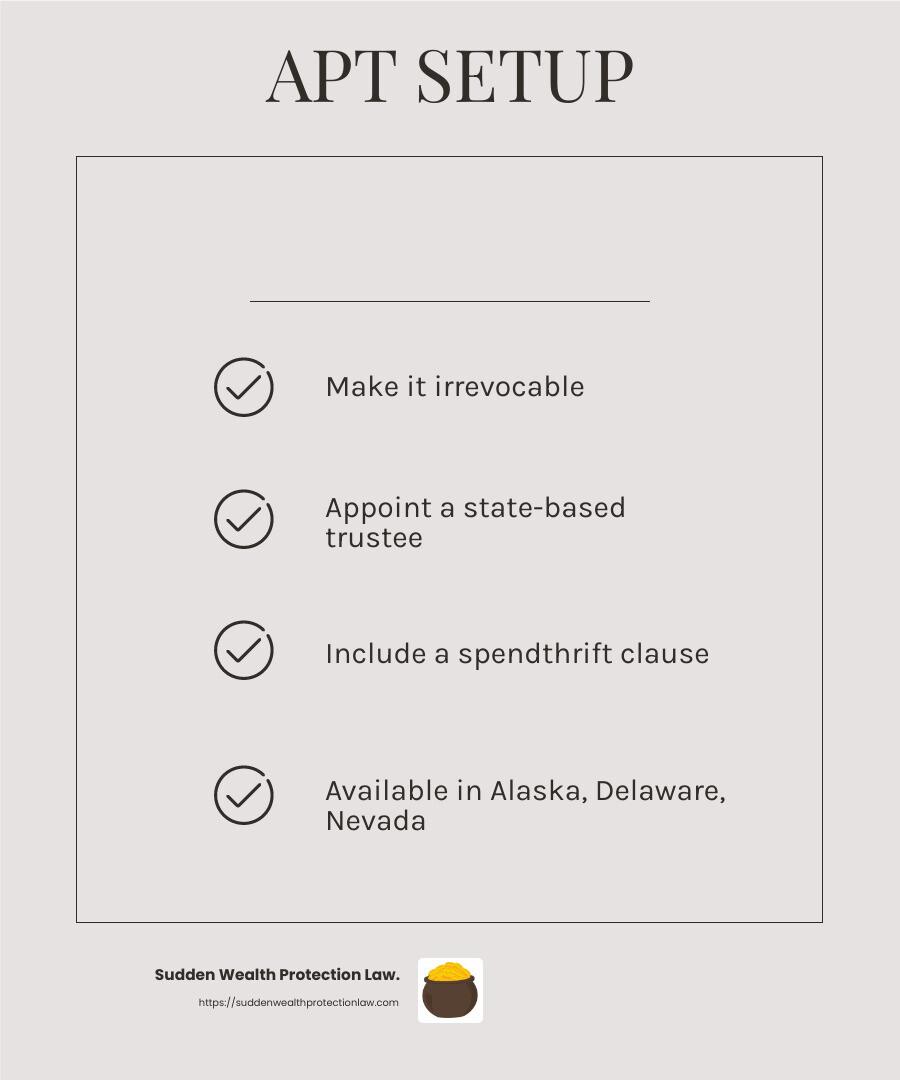
An asset protection trust (APT) is a powerful tool to shield your wealth from creditors. These trusts are available in several states, including Alaska, Delaware, and Nevada. They are types of irrevocable trusts, meaning once you place assets in them, you cannot easily take them back. This permanence is what makes them effective against creditor claims.
To set up an APT, you must:
- Make it irrevocable.
- Appoint a trustee located in the state where the trust is established.
- Ensure that the trust has a spendthrift clause, which prevents beneficiaries from accessing the trust’s principal at will.
Irrevocable Trusts
An irrevocable trust is a trust you cannot change once it’s set up. This might sound restrictive, but it’s a key feature for asset protection. By placing your assets in such a trust, you effectively remove them from your ownership, making them less accessible to creditors.
- Pros: Offers strong protection against lawsuits and creditors.
- Cons: You lose control over the assets, and it can be costly to set up.
Proactive Steps
Taking proactive steps is crucial to how to protect your assets. Here are some actions you can implement:
- Establish Trusts: As mentioned, trusts can be a robust way to protect your assets. They act as a barrier between your wealth and potential legal threats.
- Use Insurance Wisely: Insurance is your first line of defense. Consider umbrella policies that extend your liability coverage beyond standard limits.
- Retirement Accounts: Maximize contributions to retirement accounts like IRAs and 401(k)s, which often have strong protections against creditors.
- Understand State Laws: Each state offers different levels of protection for assets like homesteads and life insurance. Knowing these can guide where you place your assets.
- Separate Business from Personal Assets: Keep your business and personal finances distinct to protect personal assets from business liabilities.
By taking these steps, you can create a solid asset protection plan. This proactive approach ensures that your assets are not only shielded from unexpected legal challenges but are also preserved for your future needs and those of your family.
Asset Protection Strategies
When it comes to how to protect your assets, having a solid strategy is key. Let’s explore several effective strategies that can help safeguard your wealth.
Business Entities
Creating a business entity such as an LLC or a corporation can be a smart move. These entities help separate your personal assets from business liabilities. This means if your business faces legal trouble, your personal wealth remains protected. For instance, if you own a rental property, forming an LLC can protect your home and savings from potential lawsuits related to the property.
Personal Insurance
Insurance acts as a safety net for your assets. Personal insurance policies like umbrella insurance offer additional liability coverage that can protect you from large claims or lawsuits. This coverage kicks in when the limits of your other insurance policies are exhausted, giving you extra peace of mind.
Retirement Accounts
Retirement accounts such as 401(k)s and IRAs are not just for saving for the future; they also offer protection from creditors. By contributing the maximum allowed, you can shield your money from most claims. It’s worth noting that while 401(k)s have robust protection, IRAs offer limited protection, so it’s wise to understand the specifics of your retirement accounts.
Homestead Exemptions
In many states, homestead exemptions protect a portion of your home equity from creditors. This means that in the event of bankruptcy or a lawsuit, a certain amount of your home’s value is off-limits to creditors. The level of protection varies by state, so it’s important to know your local laws.
Titling
Properly titling your assets can also provide protection. For married couples, holding property as “tenants by entirety” can shield your home from creditors of one spouse. This form of ownership means creditors cannot claim the property unless they have claims against both spouses.
Annuities and Life Insurance
Certain annuities and life insurance policies offer creditor protection. These financial products can be structured to provide a safe haven for your wealth. For example, life insurance policies often have a cash value component that is protected from creditors, depending on state laws.
Asset Transfer
Transferring assets to family members or trusts can be another effective strategy. However, it’s crucial to do this wisely. Transferring assets to a spouse, children, or a trust can protect them from creditors, but it’s important to ensure these transfers comply with legal requirements to avoid accusations of fraudulent conveyance.
Incorporating these strategies can create a robust plan for asset protection. By using a combination of business entities, insurance, retirement accounts, and other tools, you can effectively shield your wealth from unforeseen legal challenges. This approach not only safeguards your current assets but also ensures a secure financial future for you and your loved ones.
Legal Tools for Asset Protection
When it comes to protecting your assets, legal tools can be incredibly effective. Let’s explore some of these options, including domestic asset protection trusts, offshore trusts, family limited partnerships, and accounts-receivable financing.
Domestic Asset Protection Trusts (DAPTs)
A Domestic Asset Protection Trust, or DAPT, is a specialized trust that shields your assets from creditors while allowing you to remain a beneficiary. These trusts are legal in about one-third of U.S. states, offering varying levels of protection. For example, Nevada is known for having strong asset protection laws, making it a popular choice for setting up a DAPT. However, setting up a DAPT requires careful planning and legal expertise to ensure it complies with state laws and offers the intended protection.
Offshore Trusts
Offshore trusts provide another layer of asset protection by placing your assets under the jurisdiction of foreign laws, which can be more favorable than U.S. laws in terms of shielding assets from creditors. Countries like the Cook Islands and Nevis are known for their robust asset protection legislation. However, setting up an offshore trust is complex and must be done correctly to avoid legal issues, such as being held in contempt of court or facing tax complications. It’s crucial to understand both the foreign and domestic legal requirements before proceeding with this option.
Family Limited Partnerships (FLPs)
Family Limited Partnerships are a strategic way to manage and protect family assets. By transferring assets into an FLP, you can retain control while limiting personal liability. This structure allows you to distribute ownership among family members, reducing the risk of losing assets to creditors. An FLP can also offer tax benefits, as it allows for the strategic transfer of wealth to younger generations, potentially reducing estate and gift taxes.
Accounts-Receivable Financing
For business owners, accounts-receivable financing can be a valuable tool for asset protection. This involves selling your outstanding invoices to a financing company in exchange for immediate cash. By doing this, you convert a potentially vulnerable asset (your receivables) into cash, which can be used to pay down debts or reinvest in your business. This strategy not only improves cash flow but also reduces the risk of losing assets to creditors, as the financing company takes on the responsibility of collecting the receivables.
Each of these legal tools offers unique benefits and requires careful consideration to ensure they fit your overall asset protection strategy. By leveraging these options, you can create a more secure financial future and protect your wealth from unforeseen legal challenges.
Frequently Asked Questions about Asset Protection
What is the strongest asset protection?
When it comes to the strongest form of asset protection, irrevocable trusts and asset protection trusts are at the top. These trusts are designed to keep your assets safe from creditors by legally transferring ownership to the trust itself. Once assets are in an irrevocable trust, they are generally beyond the reach of creditors, which makes them a powerful tool for asset protection.

How do you make assets untouchable?
To make assets untouchable, consider using a combination of business entities, insurance, and retirement accounts. Here’s how each helps:
- Business Entities: Forming a Limited Liability Company (LLC) or corporation can separate personal and business liabilities, protecting personal assets from business-related claims.
- Insurance: Personal liability insurance, like an umbrella policy, can cover claims that exceed standard policy limits, providing an extra layer of protection.
- Retirement Accounts: Many retirement accounts, such as 401(k)s and IRAs, offer protection from creditors under federal and state laws.
How will you protect your assets?
There are several proactive steps you can take to protect your assets effectively:
- Set Up Non-Business Accounts: Keep personal and business finances separate. This separation ensures that personal assets are not at risk if your business faces legal challenges.
- Use Debt-Encumbered Assets: Consider strategies like borrowing against an asset’s equity. For instance, if you own a property, taking out a loan against its equity and placing the funds in a protected asset can make the original asset less attractive to creditors.
- Create an Asset Protection Trust: As discussed, these trusts are a strong method of making assets untouchable. They require careful planning and legal guidance to ensure compliance with relevant laws.
By leveraging these strategies, you can build a robust defense against potential financial threats and safeguard your wealth effectively.
Conclusion
At Sudden Wealth Protection Law, we understand the importance of safeguarding your hard-earned assets. Our personalized legal solutions are crafted with your unique needs in mind, ensuring you have the best strategies in place to protect your wealth.
Our team, led by founding attorney Paul Deloughery, is dedicated to providing compassionate, expert guidance. We specialize in empowering families and business owners to not only protect their assets but also to equip the next generation with the tools and knowledge they need to manage and grow their inherited wealth responsibly.
When you choose us, you’re choosing peace of mind. Our unique asset protection strategy, which includes the innovative Asset Vault Trust, offers maximum flexibility and protection. We take pride in our ability to tailor solutions that ensure favorable outcomes and long-term security for you and your family.
For those seeking to understand how to protect your assets, we invite you to explore our comprehensive services. Let us be your trusted partner in building a secure financial future.
Learn more about our asset protection services.
This article is general information, not legal advice for your situation. Reading it does not create an attorney-client relationship.