
What Are Creditor Claims in Probate? In simple terms, they represent the debts and liabilities that a deceased individual leaves behind. During the probate process, creditors get the opportunity to file these claims against the deceased’s estate to recoup what they’re owed.
- Probate Process: The legal procedure to settle a deceased person’s estate.
- Creditor Claims: Debts that creditors submit for payment from the estate.
- Estate Debts: Obligations the deceased accrued during their lifetime that must be resolved during probate.
The probate process can sometimes feel daunting and complex. It’s the legal mechanism used to settle a deceased person’s estate—essentially, it sorts out all financial matters, such as identifying assets, paying off debts, and distributing what’s left to the rightful beneficiaries. Within this process, creditor claims play a significant role. Creditor claims identify and address all outstanding debts before distributing assets to beneficiaries. This step is crucial, as unsettled debts can impact what heirs finally receive.
I’m Paul E. Deloughery, founder of Sudden Wealth Protection Law, with over 25 years of legal experience. My journey and personal experiences with estate planning have fueled my dedication to make complex topics like What Are Creditor Claims in Probate? accessible and understandable for everyone. Transitioning into the finer details, let’s explore how estate debts are managed in this pivotal process.

What Are Creditor Claims in Probate?
Definition of Creditor Claims
When someone passes away, they often leave behind debts. These debts are known as creditor claims in probate. Simply put, a creditor claim is a request by a creditor to have their debt paid from the deceased person’s estate. This could include credit card bills, medical expenses, or other outstanding liabilities the decedent accrued during their lifetime.
In the probate court, these claims are reviewed and either approved or denied. If approved, they are paid from the estate assets before any distribution to beneficiaries. This process ensures that the deceased person’s financial obligations are settled properly.
Importance of Filing Claims
Filing a creditor claim is essential for creditors to assert their legal rights. It allows them to receive payment from the estate assets. However, timing is crucial. Creditors must file their claims within a specific period, known as the claim period, which varies by state. Missing this deadline can result in the claim being barred, meaning the creditor loses their chance to collect the debt from the estate.
Timely filing is not just important for creditors, but also for the estate’s smooth administration. It helps the personal representative (executor) manage the estate efficiently, ensuring all debts are paid before distributing the remaining assets to beneficiaries. This process avoids legal disputes and protects the estate from future claims.
- Outstanding Debts: Must be identified and settled during probate.
- Liabilities: Include any financial obligations the deceased had.
- Estate Assets: Used to pay off approved creditor claims before distribution to heirs.
Filing creditor claims punctually and accurately is a critical step in maintaining the integrity of the probate process. It ensures that all parties, including creditors and beneficiaries, have their rights protected and that the decedent’s financial matters are concluded fairly.
The Probate Process and Creditor Claims
Role of the Personal Representative
The personal representative, often called the executor, plays a crucial role in the probate process. This person is appointed by the probate court to manage the deceased’s estate. One of their primary duties is to handle creditor claims, ensuring that all debts and liabilities are settled appropriately.
- Executor Duties: The executor must identify all creditors and notify them about the probate process. This involves gathering information about the deceased’s debts, such as credit card balances, mortgages, and medical bills.
- Notifying Creditors: The personal representative must inform creditors that the estate is in probate. This is a vital step because it gives creditors the opportunity to file their claims against the estate.
Managing claims effectively helps prevent delays in the probate process. By settling debts early, the personal representative can distribute the remaining assets to the beneficiaries more smoothly.
Notice to Creditors
The notice to creditors is a formal announcement that the estate is in probate and that creditors should submit their claims. This step is essential because it creates a public record and ensures that creditors are aware of the probate proceedings.
- Public Statement: The notice is typically published in a local newspaper, which serves as a public statement to reach unknown creditors. This is crucial because it ensures that all potential claims are addressed.
- Notification Process: The process of notifying creditors can vary by state. Some states require the notice to be published multiple times, while others may have different requirements for how and where the notice is published.
- State Variations: Each state has its own rules regarding the time frame for creditors to submit their claims. It’s important for the personal representative to understand these variations to comply with state laws and avoid legal complications.
By following these procedures, the personal representative ensures that all creditor claims are managed appropriately, safeguarding the estate from future disputes. Proper notification and management of claims protect both the estate and its beneficiaries, ensuring a fair distribution of assets.
Filing and Managing Creditor Claims
In probate, managing creditor claims is a key step. Whether you’re a creditor seeking payment or a personal representative handling an estate, understanding how to file and respond to claims is crucial.
How to File a Creditor Claim
Filing a creditor claim involves clear steps. Creditors must submit their claims within a specific period, often called the claim period. This timeframe varies by state, so it’s important to check local laws.
- Formal Claims: These are official claims submitted using the required forms. In some states, like California, creditors might use a Judicial Council form to file their claim. This form provides details about the debt and any supporting documents.
- Informal Claims: Sometimes, creditors might informally notify the personal representative of their claim. However, to ensure legal recognition, formal claims are recommended.
- Serving the Claim: Once the claim is prepared, it must be served to the personal representative. This means delivering the claim in a manner that is recognized by the court, such as certified mail.
- Court Procedures: After serving the claim, the court may require additional steps, like setting a hearing date or providing further documentation. Understanding these procedures helps ensure the claim is processed smoothly.
Responding to Creditor Claims
Once a claim is filed, the personal representative must review it. This involves assessing the validity of the claim and deciding whether to accept or reject it.
- Reviewing Claims: The personal representative examines the claim and any supporting documents. They check the debt’s legitimacy and whether it aligns with the estate’s records.
- Accepting or Rejecting: If the claim is valid, the representative may accept it and arrange for payment from the estate’s assets. If it’s questionable, they might reject it, but must provide a reason.
- Legal Disputes: Sometimes, disputes arise if a claim is rejected. In such cases, the creditor may pursue legal action to contest the decision. This can lead to court hearings where both parties present their arguments.
Handling creditor claims efficiently is vital for a smooth probate process. By understanding how to file and respond to claims, both creditors and personal representatives can help ensure fair and timely resolutions.
Timeframes and Deadlines for Creditor Claims
Understanding timeframes and deadlines in probate is crucial. Missing these deadlines can have serious consequences, affecting both creditors and the estate’s distribution.
Consequences of Missing Deadlines
Statute of Limitations: This is the time limit for creditors to file claims against the estate. Each state has its own rules, so it’s important to know the local state-specific deadlines. For example, in Arizona, creditors typically have four months to file a claim after notice is given.
Claim Period: This refers to the specific window during which creditors must submit their claims. If a creditor misses this period, their claim might become a barred claim, meaning they lose the right to collect the debt from the estate.
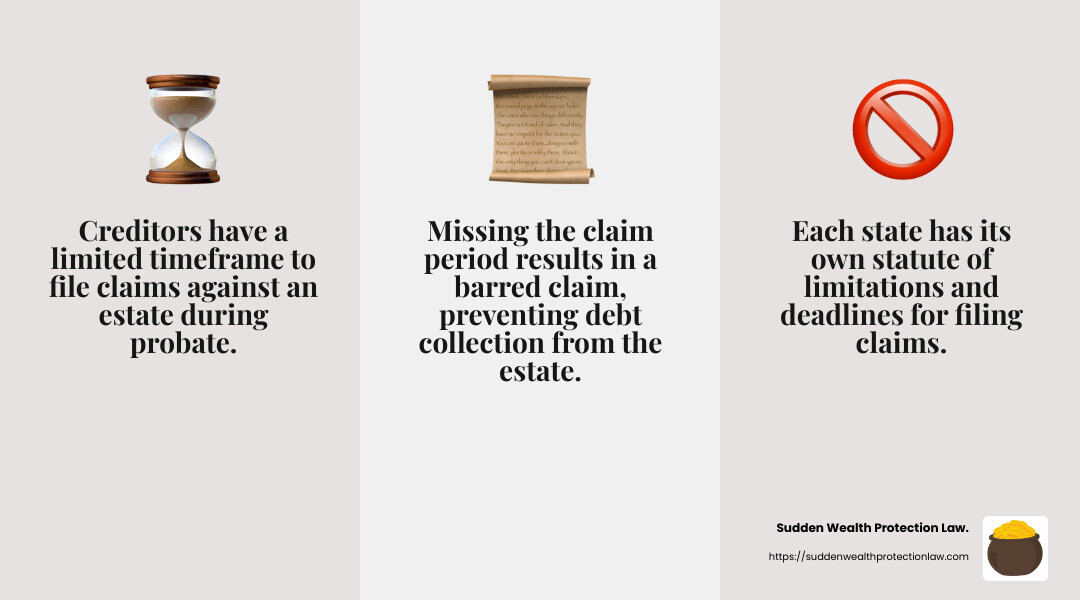
Legal Implications: When a claim is barred, the creditor can’t pursue the debt through the probate process. This can lead to legal disputes if the creditor believes their claim was wrongly barred. It’s crucial for creditors to act promptly to avoid such scenarios.
Estate Distribution: Once the claim period ends, the personal representative can distribute the estate’s assets. If a creditor misses the deadline, they might not receive any payment, and the estate’s assets will be allocated to other beneficiaries or obligations.
Understanding these deadlines helps ensure that creditor claims are handled properly, avoiding unnecessary legal complications and ensuring a fair distribution of the estate. This leads us to the next section, where we’ll tackle frequently asked questions about creditor claims in probate.
Frequently Asked Questions about Creditor Claims in Probate
Understanding creditor claims in probate can be complex. Here are some common questions people have about this process.
What Happens if a Creditor Misses the Deadline?
When a creditor misses the deadline to file a claim, their claim is often considered barred. This means they lose the legal right to collect the debt from the estate. It’s crucial for creditors to act within the set statute of limitations and claim period. In Arizona, for instance, creditors generally have four months from the date of notice to file their claims. Once the deadline passes, the personal representative can proceed with distributing the estate’s assets, leaving the creditor without recourse through probate.
Can Creditors Claim Retirement Accounts?
Retirement accounts, such as 401(k)s and IRAs, usually have designated beneficiaries. This means they often bypass the probate process and go directly to the named beneficiaries. Creditors typically cannot claim these accounts unless the estate is named as the beneficiary. However, laws can vary by state, so it’s a good idea to consult with a probate attorney to understand specific protections in your area.
Do Heirs Inherit the Debts of a Decedent?
Generally, heirs do not inherit the debts of the deceased. Debts are paid from the estate’s assets during probate. If the estate lacks sufficient assets to cover all debts, the remaining debts typically go unpaid. However, a surviving spouse might be responsible for some debts, especially if they co-signed or are otherwise legally obligated. Debt collectors might still contact heirs, but heirs are not legally required to pay these debts unless they have a legal obligation.
Understanding these aspects of creditor claims in probate can alleviate concerns and clarify the responsibilities of creditors and heirs. This knowledge helps ensure a smoother probate process and protects the rights of all parties involved.
Conclusion
At Sudden Wealth Protection Law, we understand the complexities involved in managing creditor claims during probate. Our team is dedicated to providing personalized legal solutions that cater to the unique needs of each client. We believe in empowering families to protect their assets while ensuring peace of mind through the probate process.
Our approach to asset protection is holistic. We don’t just focus on shielding assets from creditors during your lifetime; we also plan for what happens after you’re gone. Our proprietary Asset Vault Trust offers a flexible and robust strategy for safeguarding your wealth, incorporating a special power of appointment for maximum protection.
We know that dealing with probate can be overwhelming, especially when creditor claims are involved. That’s why we offer expert guidance every step of the way. Our compassionate and knowledgeable attorneys work closely with you to steer the legal landscape, ensuring all claims are managed effectively and your family’s interests are protected.
If you’re looking for assistance with probate and trust administration in Phoenix, AZ, we’re here to help. Our dedicated team at Sudden Wealth Protection Law is ready to provide the support you need.
Learn more about our probate and trust administration services and how we can assist you in achieving a favorable outcome.

