

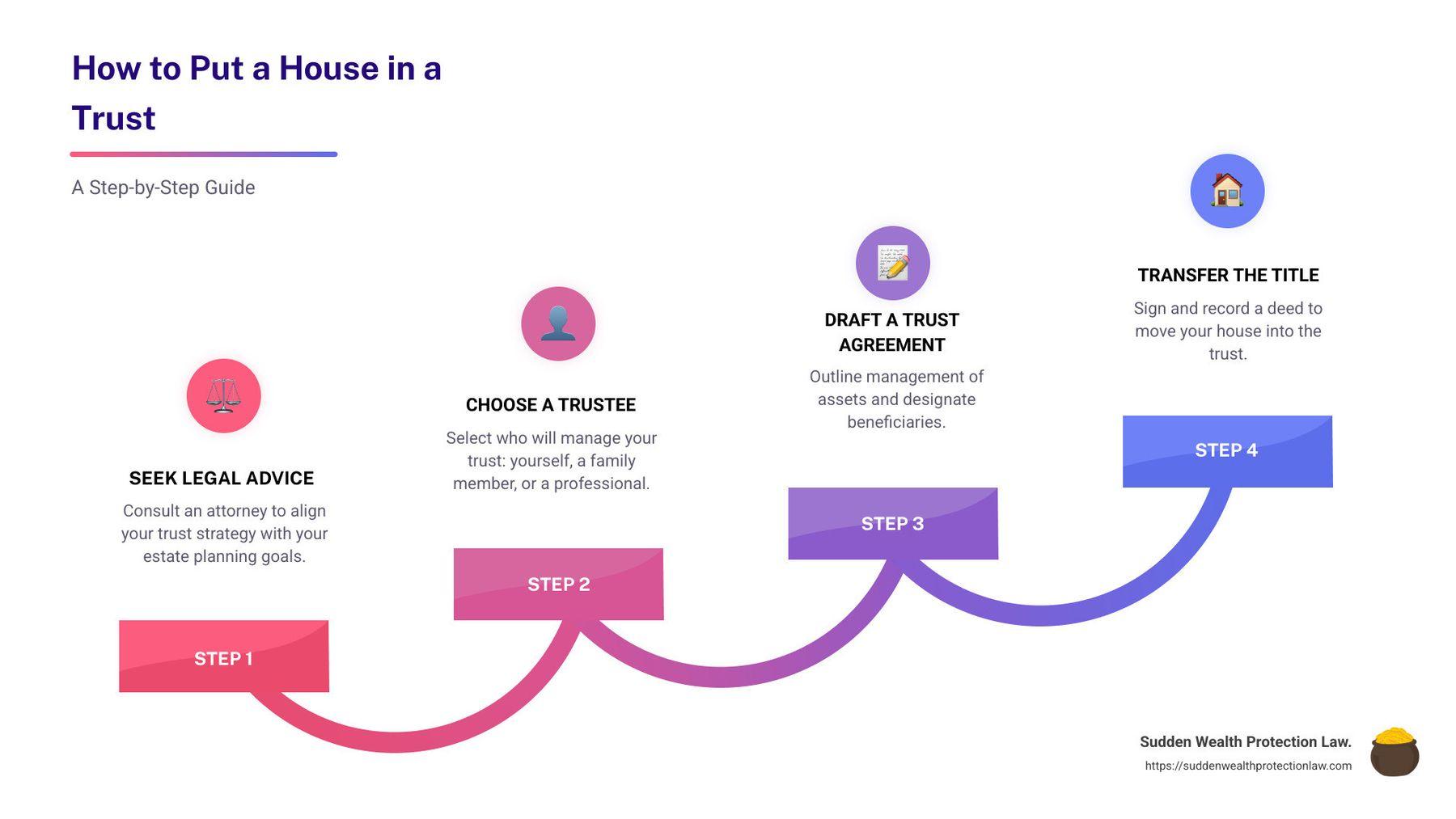
How to put a house in a trust is a key question for anyone interested in estate planning. Here’s how you can get started:
- Seek Legal Advice: Consult a knowledgeable attorney to ensure this strategy aligns with your estate planning goals.
- Choose a Trustee: Decide who will manage the trust—yourself, a family member, or a professional.
- Draft a Trust Agreement: Clearly outline how your assets will be managed and who the beneficiaries will be.
- Transfer the Title: Sign and record a deed transferring your property into the trust.
Estate planning can be tricky, especially when it comes to safeguarding your home. Placing your house in a trust provides peace of mind, ensuring your estate transitions smoothly while avoiding probate. Trusts offer increased privacy and protect assets from creditors, making them a wise choice for effective estate management.
I’m Paul E. Deloughery. With over 25 years of legal experience, I’ve helped countless families understand how to put a house in a trust to achieve their estate planning goals. Join me as we explore how this strategy can protect your home and secure your family’s future.
Glossary for how to put a house in a trust:
– living trusts
– estate planning
–estate and trust administration
Understanding Trusts
Trusts are powerful tools in estate planning, allowing individuals to manage and protect their assets effectively. But what exactly is a trust, and how can it benefit you?
What is a Trust?
A trust is a legal arrangement where one party, known as the grantor, transfers assets to another party, called the trustee, to hold and manage for the benefit of a third party, the beneficiary. This setup ensures that the assets are managed according to the grantor’s wishes, both during their lifetime and after their death.
Types of Trusts
There are several types of trusts, but the two most common in estate planning are revocable and irrevocable trusts.
- Revocable Trusts: Also known as living trusts, these can be altered or canceled by the grantor at any time. They allow the grantor to retain control over the assets during their lifetime. However, they do not offer protection from creditors and are subject to estate taxes after the grantor’s death.
- Irrevocable Trusts: Once established, these cannot be changed without the beneficiary’s consent. They provide asset protection from creditors and can help minimize estate taxes since the assets are no longer considered part of the grantor’s estate.
Estate Management
Trusts are integral to effective estate management. They provide a structured way to manage assets, ensuring they are distributed according to the grantor’s wishes. This can prevent disputes among heirs and streamline the transfer of assets.
For instance, real estate mogul Donald Bren used a trust to manage his vast property holdings, ensuring a seamless transition and continued operation of his real estate empire after his passing. Similarly, Oprah Winfrey uses trusts to maintain privacy and control over her extensive property portfolio.
Trusts also offer the advantage of avoiding probate, a public and often lengthy legal process that validates a will. By placing assets in a trust, you can ensure a quicker and more private transfer of your estate to your beneficiaries.
In summary, understanding the basics of trusts and their types is crucial for anyone interested in estate planning. Trusts offer flexibility, control, and peace of mind, making them a valuable component of any estate management strategy.
How to Put a House in a Trust
Placing your home in a trust involves a few key steps. This process ensures that your property is managed according to your wishes and can provide benefits like avoiding probate and protecting assets from creditors. Let’s break down the essentials of how to put a house in a trust.
Creating a Trust Agreement
The first step is to create a trust agreement. This is a legal document that outlines the terms of the trust, including:
- Trustee Responsibilities: The trustee is the person or entity responsible for managing the trust. They must act in the best interest of the beneficiaries and follow the terms set out in the trust agreement. You can choose yourself, a trusted family member, or a professional like an attorney to be the trustee.
- Beneficiary Designation: Beneficiaries are the individuals or entities that will benefit from the trust. You can name anyone you wish as a beneficiary, including family members, friends, or charities. Clearly defining beneficiaries helps avoid disputes later on.
Once the trust agreement is drafted, it must be signed and notarized to become legally binding. This ensures all parties are aware of their roles and responsibilities.
Transferring the Deed
After establishing the trust, the next step is transferring the property deed into the trust. Here’s how it works:
- Property Title: To transfer the title, you’ll need to prepare a new deed. This deed will transfer ownership from your name to the trustee’s name as the trustee of the trust. This step is crucial because it legally places the property into the trust.
- Legal Documentation: The new deed must be correctly executed and recorded with the county recorder’s office where the property is located. This updates public records to reflect the change in ownership. There might be a recording fee involved, so be prepared for this expense.
- Homeowner’s Insurance: Don’t forget to update your homeowner’s insurance to reflect the trust as the new property owner. This ensures the property remains insured under the new ownership structure.
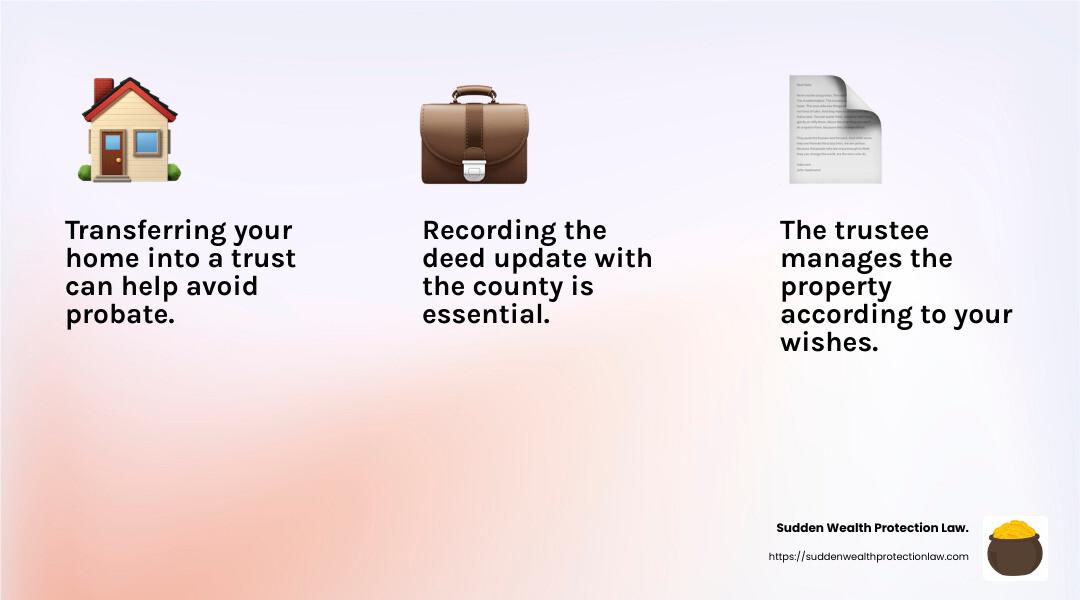
By following these steps, you can smoothly place your home in a trust, ensuring it is managed and protected according to your wishes. Trusts offer a powerful way to manage your estate, providing peace of mind and security for you and your beneficiaries.
Benefits and Disadvantages of House Trusts
Placing your home in a trust can be a strategic move with both benefits and drawbacks. Let’s explore these aspects to help you understand what to expect.
Advantages
Probate Avoidance
One of the most significant benefits of putting your home in a trust is avoiding probate. Probate can be a lengthy and costly process. By placing your home in a trust, you can ensure that it is transferred directly to your beneficiaries without the delays and expenses associated with probate court. Real estate mogul Donald Bren used a trust to avoid probate, ensuring a smooth transition of his property holdings.
Asset Protection
Trusts, particularly irrevocable ones, offer asset protection. This means your home is safeguarded from creditors and lawsuits. Once in a trust, the property is no longer considered your personal asset, providing a layer of security for your estate.
Privacy
Trusts can provide a high level of privacy. Unlike probate, which is a public process, the details of a trust are not public record. This was a strategy used by Oprah Winfrey to keep her property dealings private.
Tax Benefits
Certain trusts can offer tax advantages. For example, an irrevocable trust might qualify for a stepped-up tax basis, potentially reducing estate taxes and capital gains taxes for your beneficiaries. However, revocable trusts do not provide these tax benefits since they are not separate tax entities.
Creditor Protection
Irrevocable trusts can shield your home from creditors. This protection ensures that your property is preserved for your beneficiaries, even if you face financial challenges.
Disadvantages
Complexity
Setting up a trust can be complex. It involves understanding legal terms and processes, which might require professional help. Johan Andresen, a Norwegian entrepreneur, steerd these complexities with the aid of trust lawyers to simplify the management of his trust.
Costs
Creating and maintaining a trust can be costly. Legal fees for drafting the trust agreement and ongoing administration costs can add up. Upfront costs might range from a few hundred to several thousand dollars, depending on the complexity of the trust.
Refinancing Issues
If you plan to refinance your home, having it in a trust can complicate matters. Lenders might require you to transfer the property out of the trust to complete the refinancing process, adding an extra step to your financial planning.
Legal Challenges
Trusts can sometimes face legal challenges, particularly if the terms are unclear or disputed. Clear operational guidelines and a well-drafted trust document, as seen in Gina Rinehart’s case, can help mitigate these issues.
By weighing these advantages and disadvantages, you can make an informed decision about whether placing your home in a trust aligns with your estate planning goals.
Frequently Asked Questions about House Trusts
What are the financial and legal benefits of placing a house in a trust?
Placing a house in a trust offers several financial and legal benefits. One of the biggest advantages is avoiding the probate process. Probate can be both time-consuming and costly, often involving court procedures and public records. When your house is in a trust, it transfers directly to your beneficiaries, skipping this cumbersome step. This not only saves time and money but also keeps your affairs private.
Another benefit is privacy. Unlike wills, which become public records, trusts keep your property dealings confidential. This can be particularly appealing for those who wish to maintain discretion over their estate plans.
Trusts also have tax implications. While revocable trusts do not offer tax benefits since they are not separate tax entities, irrevocable trusts can provide tax advantages. For instance, they may help reduce estate taxes by excluding the property from the taxable estate, as seen in the case of the Walton family, owners of Walmart.
How does a revocable trust differ from an irrevocable trust?
The main difference between a revocable trust and an irrevocable trust is flexibility. A revocable trust allows you to change or cancel the trust at any time. This flexibility means you can adjust your estate plan as your circumstances change, such as during a marriage or divorce. However, because you retain control over the assets, they are still part of your estate and subject to creditors and taxes.
In contrast, an irrevocable trust is more rigid. Once set up, you cannot easily alter or dissolve it without the beneficiary’s consent. This structure provides creditor protection and tax advantages, as the assets are no longer considered part of your estate. This can be especially beneficial for shielding your property from creditors and reducing estate taxes.
How much does transferring a property into a trust cost?
Transferring a property into a trust involves several costs. Legal fees for drafting the trust agreement can range from $1,000 to $3,000, depending on the complexity of the estate. Additionally, you’ll encounter filing fees, which vary by jurisdiction but typically range from $10 to $100 per document.
The overall cost also depends on the complexity of the estate. A straightforward estate with a single property will generally cost less to transfer into a trust than a complex estate with multiple properties and assets. It’s wise to consult with an estate planning attorney to get a clearer picture of the costs involved and ensure the process is handled correctly.
Conclusion
Navigating estate planning can be challenging, but with Sudden Wealth Protection Law, you’re never alone. We specialize in personalized legal solutions that cater to your unique needs. Our team is committed to guiding families and business owners through the complexities of how to put a house in a trust, ensuring a smooth and secure transition of your assets.
When you partner with us, you gain the peace of mind that comes from knowing your estate is in expert hands. Our compassionate approach and custom strategies, like the Asset Vault Trust, provide maximum asset protection and flexibility. We understand the importance of safeguarding your family’s future and work diligently to protect your legacy.
For those seeking to avoid probate, protect their assets, and ensure a seamless transfer of wealth, placing your house in a trust is a wise decision. With our guidance, you can confidently steer the legal process, knowing that your wishes will be honored and your family’s future secured.
For more information on how we can assist you with trust and estate administration, visit our Probate and Trust Administration page. Let us help you achieve peace of mind and secure your family’s legacy today.
This article is general information, not legal advice for your situation. Reading it does not create an attorney-client relationship.