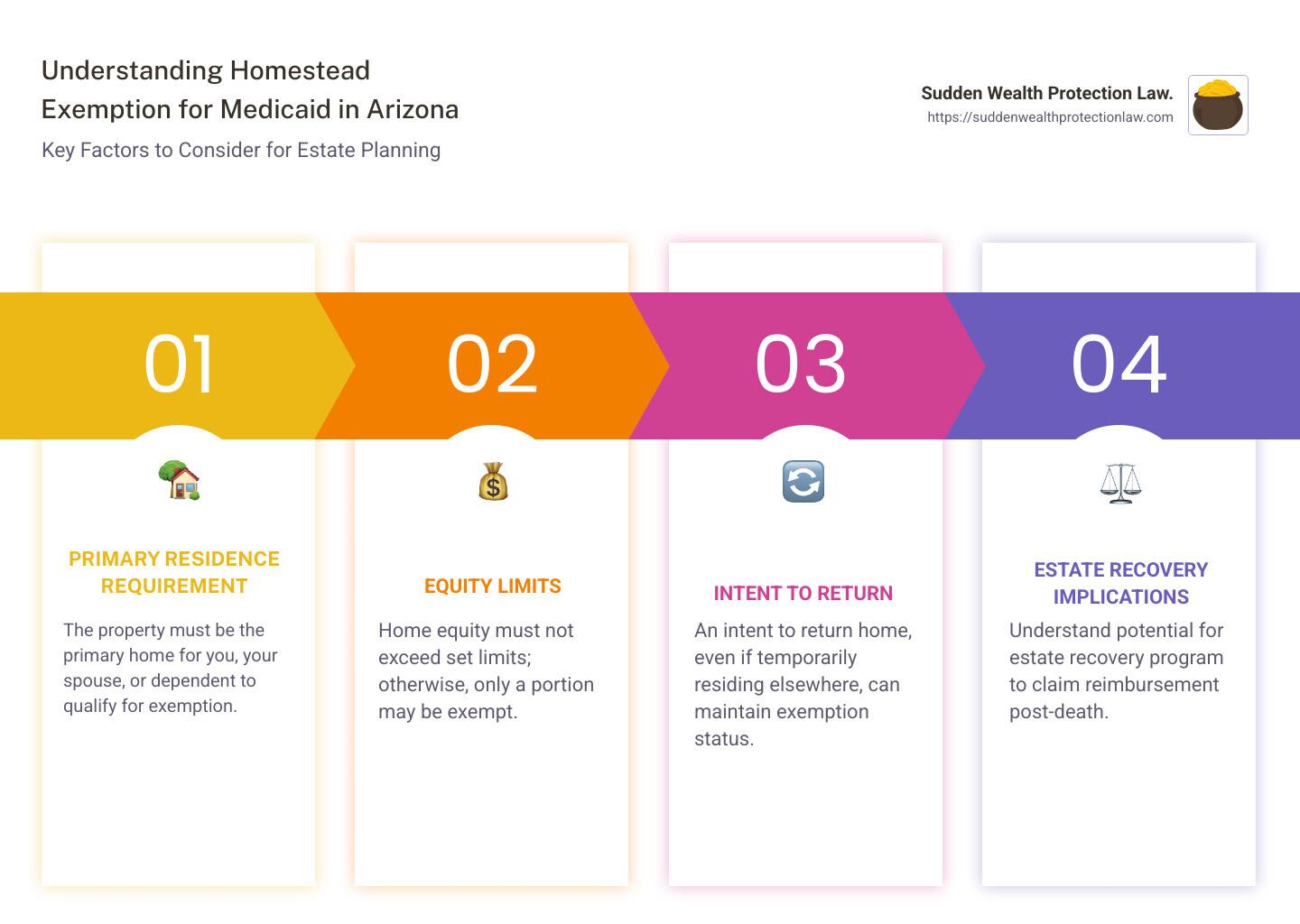
Is homestead property exempt for medicaid purposes in Arizona? Yes, with conditions. The homestead property is generally exempt when determining Medicaid eligibility in Arizona, but only if specific conditions are met.
For instance, the property must serve as the primary residence of the Medicaid applicant, a spouse, or a dependent. Additionally, certain equity limits apply, and there might be implications when the estate recovery program seeks reimbursement after the individual’s death.
Navigating Medicaid rules can be daunting, especially when trying to protect your Arizona home. Understanding how Medicaid eligibility intertwines with the homestead exemption is crucial for effective estate planning. By doing so, Arizona residents can ensure their homes remain safe, while also complying with Medicaid’s stringent financial requirements.
My name is Paul E. Deloughery, the founder and managing attorney of Sudden Wealth Protection Law, with over 25 years of experience. Having steered complex issues, including whether is homestead property exempt for medicaid purposes in Arizona, I aim to simplify your estate planning journey.
Key terms related to this topic are:
– arizona bankruptcy homestead exemption
– arizona property tax exemptions
–bankruptcy homestead equity exemption arizona
Understanding Arizona’s Homestead Exemption
In Arizona, homestead exemption is a legal provision that helps protect a portion of your home’s equity from creditors. This exemption is particularly important for individuals facing financial difficulties or unexpected debts.
What is a Homestead?
A homestead is your primary residence. It’s the place where you live most of the time. In Arizona, the homestead exemption applies to this primary residence, safeguarding it against certain types of creditors.
Exemption Rules
The Arizona homestead exemption protects up to $,000 of equity in your primary residence. This means if the equity in your home is $400,000 or less, creditors cannot force you to sell it to satisfy debts. However, this protection does not apply to all types of debts. For example, it won’t protect against mortgage foreclosures or property taxes.
Equity Limits
Equity is the difference between your home’s market value and what you owe on it. For example, if your home is worth $300,000 and you owe $50,000 on your mortgage, your equity is $250,000. Under Arizona law, this entire amount is protected by the homestead exemption.
However, if your equity exceeds $400,000, the excess amount is not protected. This means creditors could potentially pursue the amount over the $400,000 limit.
Key Takeaways
- Primary Residence: The exemption applies only to your main home.
- Equity Protection: Up to $400,000 of equity is protected.
- Debt Types: Not all debts are covered by this exemption.
Understanding these rules is crucial, especially when planning for Medicaid eligibility or protecting your assets. Proper estate planning can help ensure your home remains secure while meeting financial and legal requirements.
Is Homestead Property Exempt for Medicaid Purposes in Arizona?
When considering Medicaid eligibility, it’s important to know how your home is treated. In Arizona, your homestead property can be exempt from Medicaid asset calculations, but certain conditions must be met.
Conditions for Exemption
- Primary Residence: For your home to be exempt, it must be your primary residence. This is the place where you live most of the time. If you move into a nursing home, you must express an intent to return to keep this exemption.
- Spouse or Dependent Occupancy: If your spouse or a dependent continues to live in the home, it remains exempt. This is crucial for protecting your family while you receive Medicaid benefits.
- Home Equity Interest: As of recent rules, if your home equity exceeds a certain limit (typically around $688,000, but this can change), it may affect your eligibility. However, most homes fall below this threshold.
Impact of Estate Recovery
While your home might be exempt during your lifetime, estate recovery is a program that allows Medicaid to recoup costs after your death. Arizona can claim against the estate for Medicaid benefits paid, which might include your home.
- Reimbursement: The state seeks reimbursement for Medicaid expenses. This means your heirs might need to sell the home to pay back Medicaid, unless they take steps to protect it.
- Planning Strategies: To safeguard your home, consider strategies like transferring property to a trust or ensuring a spouse or dependent continues to live there. These actions can help prevent estate recovery from affecting your family.
Proper planning is essential. By understanding these conditions and strategies, you can better protect your home and ensure that Medicaid benefits do not jeopardize your family’s future.
Financial Eligibility for Arizona Medicaid
Navigating Medicaid and understanding financial eligibility can be tricky. Knowing the income and asset limits is crucial if you’re considering applying for Medicaid in Arizona. Let’s break it down.
Income and Asset Limits
Medicaid has specific income and asset limits that applicants must meet to qualify for benefits. These limits ensure that benefits go to those who need them most.
- Income Thresholds: Your income must fall below a certain level to be eligible for Medicaid. This amount can vary based on household size and specific programs.
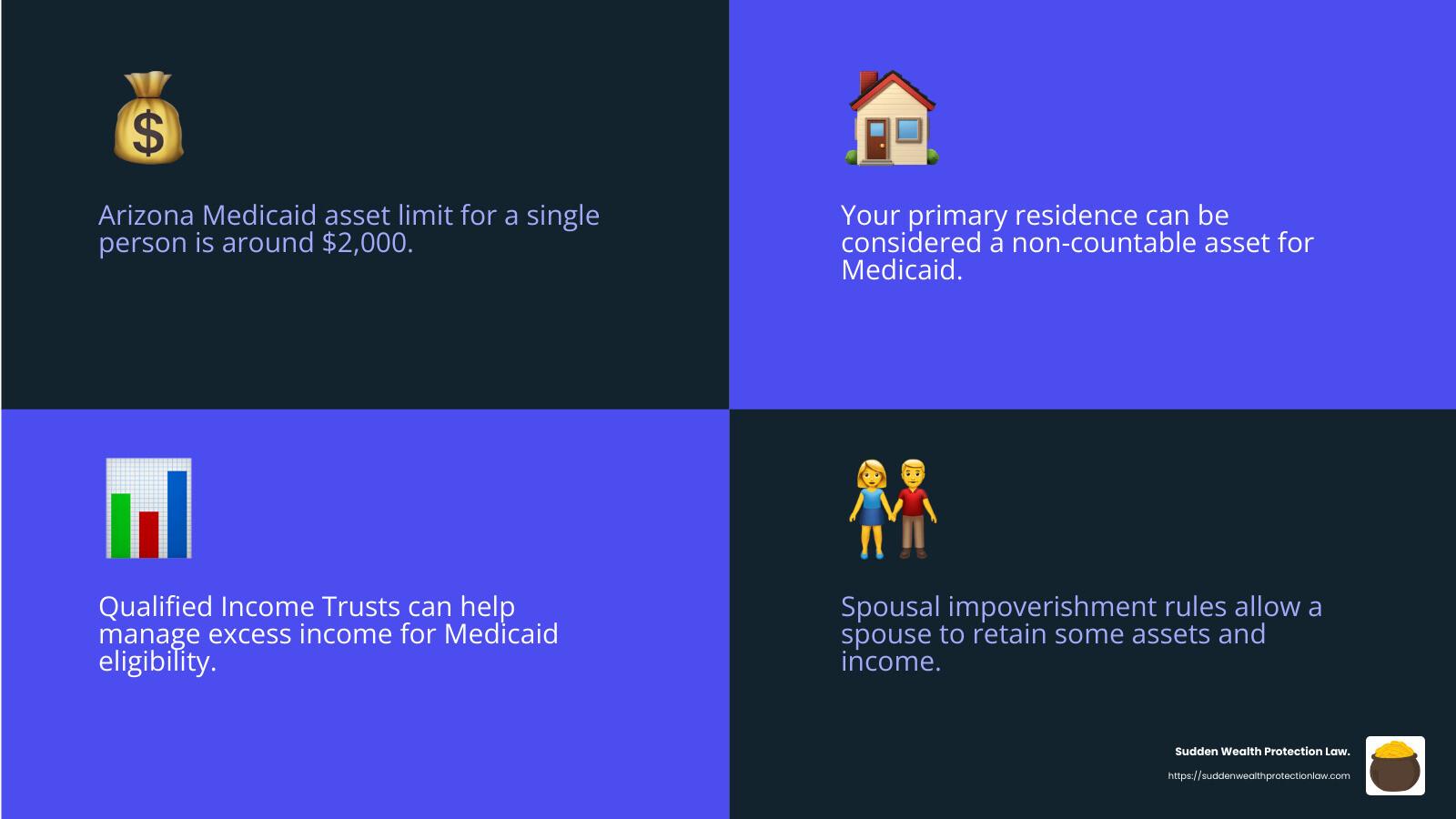
- Asset Limits: Medicaid also considers your assets. Typically, you can only have a limited amount in countable assets. In Arizona, the asset limit for a single person is often around $2,000, but this can vary.
- Countable vs. Non-Countable Assets: Not all assets are counted towards this limit. For example, your primary residence (up to a certain equity value), personal belongings, and one vehicle may be considered non-countable.
- Spousal Impoverishment Rules: These rules protect the spouse of a Medicaid applicant from becoming impoverished. They allow the spouse to keep a portion of the couple’s combined assets and income.
Strategies for Qualifying
If your income or assets exceed the limits, don’t worry. There are strategies to help you qualify for Medicaid.
- Qualified Income Trusts (QITs): These trusts are used to manage excess income. By placing income into a QIT, you can reduce the income counted against Medicaid eligibility.
- Asset Spend Down: This involves spending down assets to meet Medicaid’s asset limit. It’s important to do this wisely, as improper transfers could affect your eligibility.
- Medicaid Planning: Working with a professional can help you steer these strategies effectively. Medicaid planning involves structuring your finances to meet eligibility requirements while protecting your assets.
By understanding these limits and strategies, you can better prepare for Medicaid eligibility in Arizona. Proper planning can ensure you get the care you need without jeopardizing your family’s financial future.
Next, we’ll tackle some frequently asked questions about Arizona Medicaid and Homestead Exemption to clear up any lingering doubts.
Frequently Asked Questions about Arizona Medicaid and Homestead Exemption
Is an inheritance considered income for AHCCCS?
No, an inheritance is generally not considered income for AHCCCS (Arizona Health Care Cost Containment System) purposes. However, it can affect your asset limits. When you receive an inheritance, it may increase your countable assets, which could impact your Medicaid eligibility. It’s crucial to report any changes in your financial situation to AHCCCS and to consider strategies like a Qualified Income Trust or asset spend down to maintain eligibility. Consulting with a professional can help you steer these situations effectively.
What does the homestead exemption not apply to in Arizona?
The homestead exemption in Arizona does not apply to all types of debts. While it provides protection for up to $400,000 of equity in your primary residence, there are exceptions. For instance, the exemption does not protect against:
- Mortgage Foreclosures: If you default on your mortgage, the lender can still foreclose on your home.
- Property Taxes: Unpaid property taxes can lead to a lien on your home.
- Mechanic’s Liens: If a contractor works on your home and you don’t pay, they can place a lien on the property.
Understanding these exceptions is vital to fully protect your home.
Can Medicaid take your house in Arizona?
Medicaid cannot take your house while you’re alive or if your spouse or a dependent relative is living there. However, after your death, Medicaid’s Estate Recovery Program may seek reimbursement for benefits paid on your behalf. This means they might place a claim against your estate, which could include your house, to recover costs.
To avoid this, consider planning strategies like transferring the home to a living trust or exploring other estate planning options. It’s wise to consult with an attorney specializing in Medicaid planning to protect your home and your family’s future.
By addressing these common questions, we hope to clarify concerns about Arizona Medicaid and Homestead Exemption. Understanding these nuances can help you make informed decisions about your estate and healthcare planning.
Conclusion
Navigating Medicaid and understanding the homestead exemption in Arizona can be complex, but you’re not alone. At Sudden Wealth Protection Law, we specialize in crafting personalized estate planning solutions to protect your family’s assets and ensure peace of mind.
Our goal is to help you safeguard what matters most. Whether you’re concerned about Medicaid asset limits or the implications of Arizona’s estate recovery program, our team is here to provide expert guidance custom to your unique needs.
With our asset protection strategies, like the Asset Vault Trust, you can ensure maximum flexibility and protection for your family’s wealth. This trust is an irrevocable tool that incorporates a special power of appointment, offering robust protection while maintaining control over your assets.
Planning for the future is essential, and with our compassionate and knowledgeable approach, we empower families to make informed decisions. Protect your home, secure your legacy, and give your loved ones the peace of mind they deserve.
If you’re ready to take the next step in protecting your family’s future, contact us today. Let’s work together to create a plan that aligns with your goals and provides security for generations to come.
This article is general information, not legal advice for your situation. Reading it does not create an attorney-client relationship.