

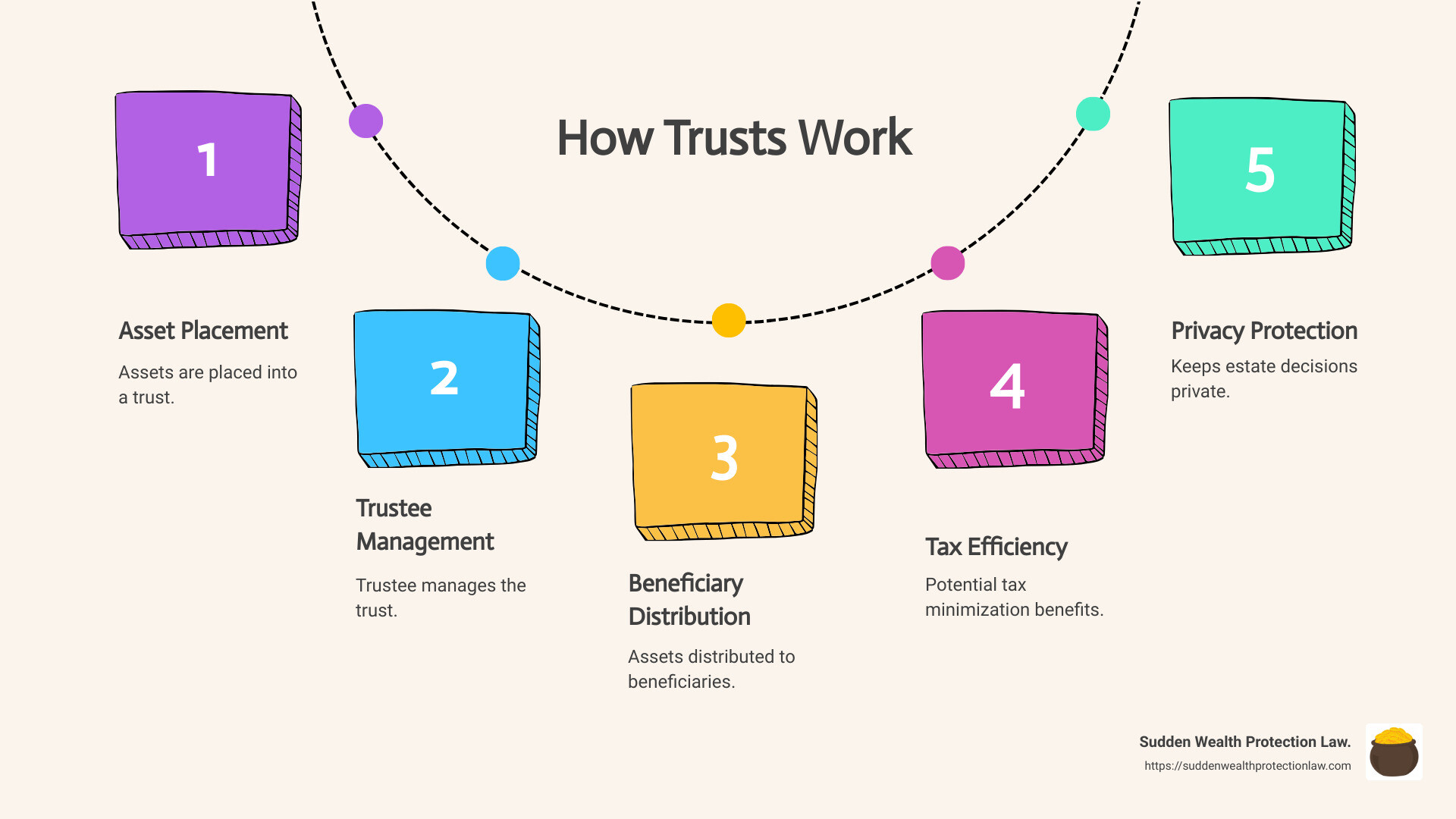
How do trusts work? In a nutshell, trusts are legal tools that help you protect your assets and ensure your financial wishes are carried out. They involve placing assets in the care of a trustee, who manages them for the benefit of the beneficiary. Here’s how trusts work:
- Trusts can minimize taxes and avoid probate, speeding up the distribution of assets.
- They allow you to dictate how and when assets are distributed to beneficiaries.
- Trusts protect assets from creditors and divorce settlements.
- They maintain privacy by keeping your estate decisions out of public records.
- They ensure someone is able to manage your assets in case you become incapacitated.
Trusts play a crucial role in estate planning, providing peace of mind that your assets are secure and your wishes respected. Far from being tools only for the wealthy, trusts are an essential component for many families looking to manage their legacy effectively.
My name is Paul E. Deloughery, founder and managing attorney at Sudden Wealth Protection Law. With over 25 years of legal experience, I’ve dedicated my career to helping families understand how do trusts work so they can safeguard their wealth and ensure a seamless transfer across generations.
Understanding Trusts
A trust is like a box where you can put your assets to keep them safe and organized. It’s a legal arrangement involving three main players: (1) the fiduciary, (2) the trustee, and (3) the beneficiary.
1. Fiduciary Arrangement
In a fiduciary arrangement, a person or organization acts on behalf of another to manage assets. This means they must act in the best interest of the person who benefits from the trust. This is a big responsibility and requires trustworthiness.
2. Trustee
The trustee is the person or entity that holds and manages the assets in the trust. Think of them as the guardian of the box. They make sure everything inside is handled according to the rules set out in the trust document. Trustees can be family members, friends, or even professional organizations. Their duties include managing investments, distributing income, and filing taxes for the trust.
3. Beneficiary
The beneficiary is the person or group of people who benefit from the trust. They are the ones who will receive the assets or income from the trust. For example, if a grandparent sets up a trust for their grandchild, the grandchild is the beneficiary. The trust can specify when and how the beneficiary receives the assets. This could be when they reach a certain age or for specific purposes like education.
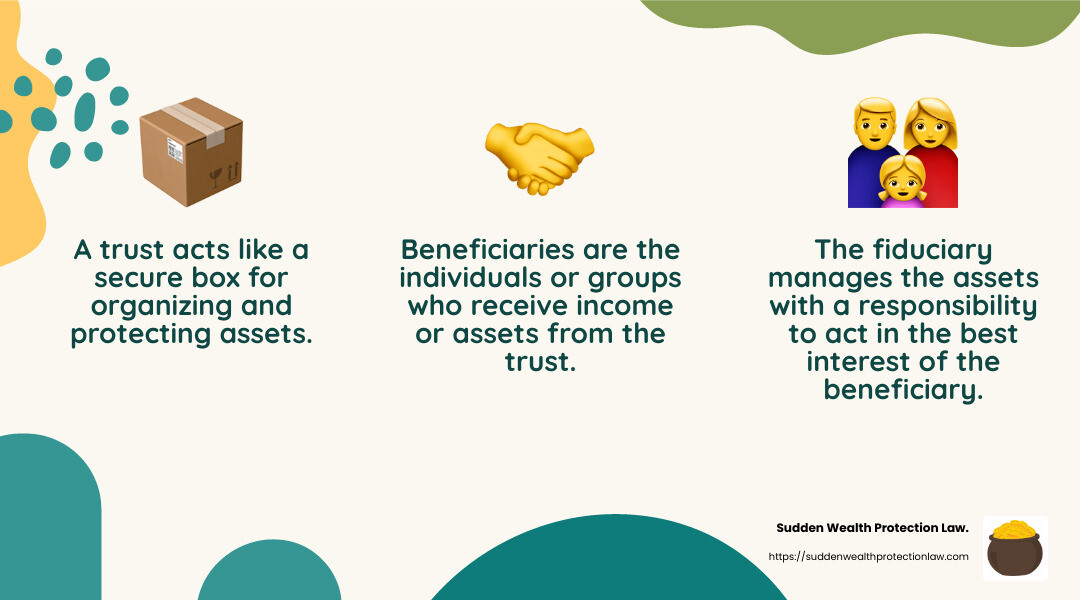
In summary, a trust is a powerful tool for managing and protecting assets. The fiduciary arrangement ensures that the trustee acts in the best interests of the beneficiary, providing a structured way to secure and distribute wealth. Trusts are not just for the wealthy; they are practical solutions for anyone looking to manage their assets wisely.
How Do Trusts Work
Trusts are like a well-organized team working to manage and protect your assets. They function as a legal entity that holds your assets and ensures they are distributed according to your wishes. Let’s explore how this team operates.
Revocable vs. Irrevocable Trusts
When setting up a trust, you can choose between two main types: revocable and irrevocable.
Revocable Trusts are flexible. You can change or cancel them anytime during your lifetime. This means you retain control over the assets. You can add or remove assets, change beneficiaries, or even dissolve the trust if needed. However, because you maintain control, the assets in a revocable trust are not protected from creditors and do not offer tax benefits.
Irrevocable Trusts, on the other hand, are set in stone once created. You give up control of the assets, which means you can’t easily change the terms. But this also means the assets are protected from creditors and can offer significant tax benefits. Once assets are placed in an irrevocable trust, you no longer own them. They may written so they are not part of your estate, which can help reduce estate taxes.
However, there are still ways to amend or dissolve irrevocable trusts. Two ways are to use a Trust Protector. Another is to incorporate a special power of appointment.
Benefits of Trusts
Trusts offer several key benefits that can make them an attractive option for managing your assets:
-
Asset Protection: Trusts can shield your assets from creditors, lawsuits, and even divorce settlements. This is especially true for irrevocable trusts, where you relinquish control over the assets.
-
Tax Efficiency: By removing assets from your taxable estate, trusts can help minimize estate taxes. Irrevocable trusts, in particular, are effective for tax planning as they separate the assets from your personal estate.
-
Privacy: Unlike wills, which go through a public probate process, trusts remain private. This means the details of your assets and their distribution are not made public, providing a level of confidentiality.
-
Efficient Distribution: Trusts allow for a smooth transfer of assets to beneficiaries without the delays of probate. This ensures that your loved ones receive their inheritance quickly and according to your wishes.
Trusts are versatile tools that help you manage your assets with precision and care. Whether you choose a revocable or irrevocable trust, the benefits of asset protection, tax efficiency, and privacy can provide peace of mind and security for you and your beneficiaries.
Types of Trusts
Trusts come in various forms, each designed to serve specific purposes and needs. Let’s explore some of these types of trusts that can be custom to fit different scenarios.
Revocable Trusts
Revocable Trusts are like a safety net you can adjust as needed. You maintain control over the assets and can alter the trust’s terms or even dissolve it during your lifetime. This flexibility makes them a popular choice for those who want to manage their estate while retaining control. However, they don’t provide asset protection from creditors or tax benefits since the assets are still considered part of your estate.
Irrevocable Trusts
Irrevocable Trusts are more rigid but offer significant advantages. Once established, the terms cannot be easily changed, and you relinquish control over the assets. This setup protects the assets from creditors and can offer substantial tax benefits by removing them from your taxable estate. It’s a powerful tool for long-term planning and asset protection.
Special Needs Trusts
A Special Needs Trust is crafted to provide for a loved one with disabilities without affecting their eligibility for government benefits. It ensures they have the financial support they need while preserving their access to essential services. These trusts are crucial for families wanting to secure the future of a special needs individual.
Charitable Trusts
Charitable Trusts allow you to support a cause close to your heart while enjoying tax benefits. There are two main types: a Charitable Remainder Trust, which provides income to the donor or beneficiaries for a period before donating the remainder to charity, and a Charitable Lead Trust, which gives income to a charity for a set time before passing the remaining assets to beneficiaries.
Spendthrift Trusts
A Spendthrift Trust is designed to protect beneficiaries who may not be financially savvy. It limits their access to the trust’s assets, releasing funds incrementally. This setup shields the assets from creditors and ensures the beneficiary’s inheritance isn’t squandered.
Generation-Skipping Trusts
Generation-Skipping Trusts are an effective strategy for transferring wealth across generations while minimizing estate taxes. They allow assets to be passed directly to grandchildren or younger generations, bypassing the grantor’s children, which can provide significant tax savings.
These special purpose trusts offer targeted solutions for various needs, whether protecting assets, supporting loved ones, or contributing to charitable causes. By understanding each type, you can make informed decisions that align with your goals and circumstances.
Frequently Asked Questions about Trusts
What is the point of putting money in a trust?
Putting money in a trust serves several key purposes. Asset protection is a major benefit. Trusts can shield your assets from creditors, lawsuits, and even divorce settlements. This protection is especially strong with irrevocable trusts, where assets are removed from your personal ownership.
Wealth distribution is another reason. Trusts allow you to specify exactly how and when your assets are distributed to beneficiaries. This can be particularly useful if you have young children or beneficiaries who may not yet be financially responsible.
Tax minimization is a third advantage. Trusts can be structured to reduce estate and gift taxes, potentially saving your heirs a significant amount of money. By placing assets in an irrevocable trust, you can remove them from your taxable estate.
How does money come out of a trust?
Money comes out of a trust through a process called distribution. The trustee, who manages the trust, is responsible for carrying out these distributions according to the terms set in the trust document.
Beneficiaries receive distributions as outlined in the trust agreement. These can be regular payments, lump sums, or distributions for specific purposes, like education or healthcare. It’s crucial for beneficiaries to understand the trust’s terms, as they can vary widely.
What are the negatives of a trust?
While trusts offer many benefits, they also come with some downsides. One major drawback is the loss of control. With irrevocable trusts, once assets are placed in the trust, you generally can’t change the terms or access the assets.
Cost is another factor. Setting up a trust can be expensive, requiring legal fees and sometimes ongoing administrative costs. This is particularly true for complex trusts with multiple beneficiaries or special conditions.
Lastly, trusts can introduce complexity into your financial planning. They require careful management and understanding of legal and tax implications. It’s often necessary to work with professionals to ensure the trust operates as intended.
Understanding these pros and cons can help you decide if a trust is the right choice for your financial and estate planning needs.
Conclusion
At Sudden Wealth Protection Law, we understand that navigating trusts can feel overwhelming. Our mission is to provide personalized solutions that make estate planning straightforward and effective.
Trusts are powerful tools that can protect your assets, ensure your wishes are honored, and provide for your loved ones. They can offer peace of mind by allowing you to control how and when your wealth is distributed, while also offering benefits like tax efficiency and privacy.
We know that every family and situation is unique. That’s why we tailor our services to meet your specific needs, whether you’re looking to protect your assets from creditors, minimize taxes, or ensure a smooth transfer of wealth to the next generation.
Peace of mind is one of the greatest gifts you can give your family. By working with us, you can rest assured that your estate planning is in expert hands. Our compassionate and knowledgeable team is here to guide you every step of the way, ensuring that your legacy is preserved and your family’s future is secure.
If you’re ready to explore how trusts can benefit you, or if you have any questions about estate planning, don’t hesitate to reach out. Visit our Probate and Trust Administration page to learn more about how we can help you achieve your estate planning goals.
Let’s work together to protect your wealth and provide peace of mind for you and your family.

