

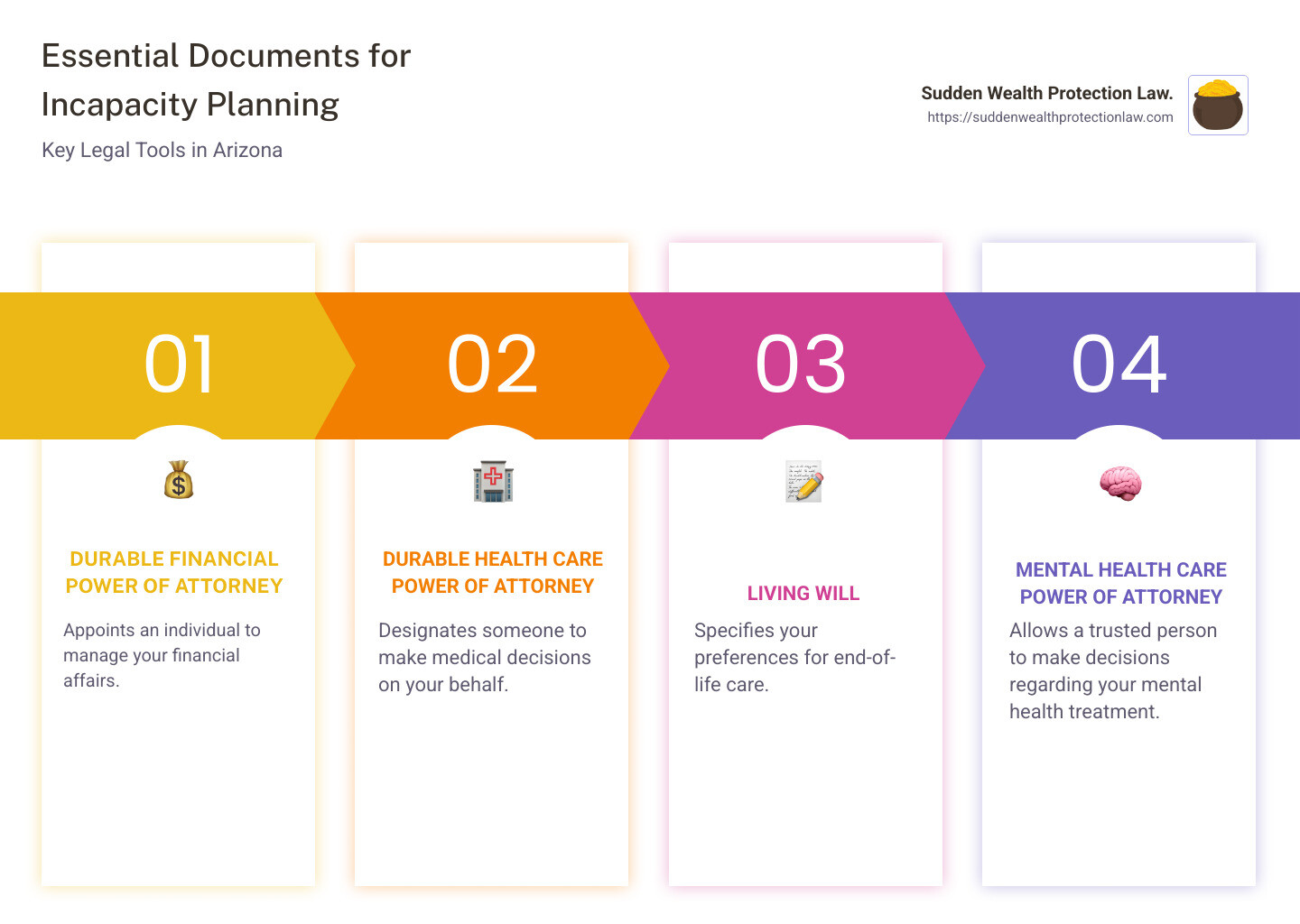
Planning for incapacity in Arizona is a vital part of securing your future and protecting your loved ones. When life takes unexpected turns, having incapacity plans ensures your wishes are followed. Without a plan, the courts could decide who makes financial and medical choices for you—a process that can be lengthy, costly, and stressful. To avoid this, consider creating the following legal documents:
- Durable financial power of attorney: Enables someone to handle your financial matters.
- Durable health care and mental health care power of attorney: Allows a trusted person to make medical decisions.
- Living will: Outlines your preferences for end-of-life care.
I’m Paul E. Deloughery, an expert in Planning for incapacity in Arizona with over 25 years of experience. I’ve dedicated my career to helping Arizona families prepare for the unexpected, ensuring your plans are solid and your wishes honored.
Understanding Incapacity
In the context of Planning for incapacity in Arizona, understanding what incapacity means is crucial. Incapacity isn’t just about aging; it can affect anyone at any time due to various reasons like mental illness or physical disability.
Legal Definition
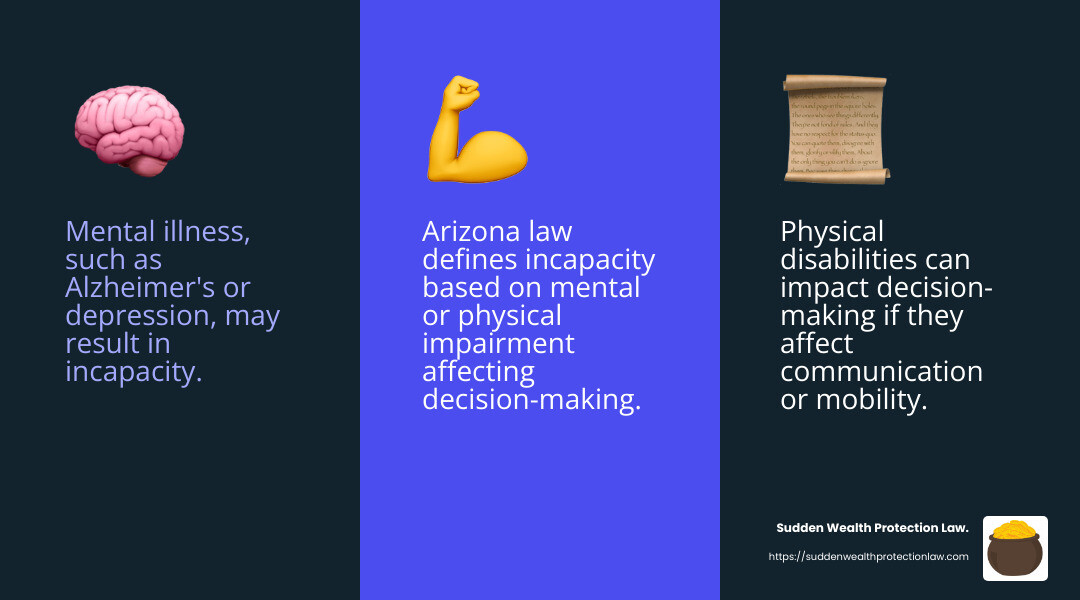
Arizona law defines an incapacitated person as someone who cannot make responsible decisions due to impaired mental or physical abilities. This includes mental illness, physical disability, or other conditions that affect decision-making capacity. The legal definition is important because it determines when someone else can step in to make decisions on your behalf.
Mental Illness
Mental illness can significantly impact your ability to make decisions. Conditions like Alzheimer’s, dementia, or severe depression can lead to a state where you cannot manage your own affairs. In such cases, having a durable power of attorney and other incapacity documents ensures that someone you trust can make decisions for you.
Physical Disability
Physical disabilities can also lead to incapacity, especially if they affect communication or mobility. For instance, a severe stroke might leave you unable to express your wishes or manage your daily needs. In these situations, incapacity planning documents become essential tools to ensure your preferences are respected.
Understanding incapacity helps you prepare for the unexpected. By acknowledging the potential for both mental and physical limitations, you can create a plan that safeguards your interests and provides peace of mind for your loved ones.
Importance of Incapacity Planning
When it comes to Planning for incapacity in Arizona, taking a proactive approach is key. This isn’t just about preparing for old age. It’s about being ready for any unexpected event that might leave you unable to make decisions for yourself.
Proactive Approach
By planning ahead, you ensure that your wishes are respected, even if you can’t express them yourself. This involves setting up documents like a durable power of attorney or a health care proxy. These documents allow you to choose who will make decisions on your behalf. Without them, you leave these critical choices to chance.
Prevent Guardianship
If you don’t have an incapacity plan, a court might step in to appoint a guardian. This process can be lengthy, costly, and stressful for your family. It might also result in someone you wouldn’t choose managing your affairs. By planning ahead, you can avoid the need for court-appointed guardianship and ensure that someone you trust is in charge.
Protect Interests
Incapacity planning protects your interests by ensuring that decisions align with your values and preferences. Whether it’s financial matters or health care choices, having a plan in place means your needs are met according to your wishes. This not only provides peace of mind for you but also reduces the burden on your loved ones.

By understanding the importance of incapacity planning, you can take control of your future. This proactive step ensures that you, your family, and your assets are protected, no matter what happens.
Essential Documents for Incapacity Planning in Arizona
When it comes to Planning for Incapacity in Arizona, having the right documents in place is crucial. These documents ensure that your wishes are followed and that the right people make decisions on your behalf if you are unable to do so.
Durable Power of Attorney
A durable power of attorney is a key document in incapacity planning. It allows you to appoint someone you trust to manage your financial affairs if you become incapacitated. This person, known as your agent or attorney-in-fact, can handle tasks like paying bills, managing investments, and making other financial decisions. The “durable” part means that the power of attorney remains in effect even if you become incapacitated, ensuring continuous management of your financial matters.
Health Care Proxy
A health care proxy, or durable medical power of attorney, lets you designate someone to make medical decisions for you if you’re unable to do so. This person should understand your medical preferences and be able to communicate effectively with healthcare providers. Choosing the right person for this role is vital, as they will be your voice in critical health care situations.
Living Will
A living will is a document that outlines your wishes for end-of-life care. It specifies the types of medical treatment you do or do not want if you are in a terminal condition or permanently unconscious. This can include decisions about life-sustaining treatments like CPR, ventilation, and feeding tubes. Having a living will helps prevent family conflicts by clearly stating your desires regarding medical care.
Revocable Living Trust
A revocable living trust allows you to manage your assets during your lifetime and specify how they should be distributed after your death. Unlike a will, a living trust can help avoid probate, which can be costly and time-consuming. Additionally, if you become incapacitated, the person you appoint as your trustee can manage the trust assets on your behalf, ensuring that your financial affairs continue to be handled according to your wishes.
By putting these essential documents in place, you can maintain control over your financial and medical decisions, even if you can’t make them yourself. This not only protects your interests but also provides peace of mind for you and your loved ones.
Planning for Incapacity in Arizona
When it comes to Planning for Incapacity in Arizona, understanding the key areas where decisions need to be made is essential. This includes financial decisions, health care decisions, and ensuring that all legal requirements are met.
Financial Decisions
Incapacity can strike at any age, and having someone to manage your financial affairs is crucial. With a durable power of attorney, you can appoint a trusted individual to handle important tasks like paying bills, managing investments, and overseeing other financial matters. This ensures that your financial life continues smoothly, even if you’re unable to make these decisions yourself.
Choosing the right person is important. They should have financial savvy and be someone you trust completely. This person will have a fiduciary duty, meaning they must act in your best interest at all times.
Health Care Decisions
Health care decisions are often the most personal and urgent when planning for incapacity. A health care proxy allows you to designate someone to make medical decisions on your behalf if you’re unable to do so. This person should be familiar with your medical preferences and capable of making tough decisions under pressure.
Having a living will complements this by clearly stating your wishes for end-of-life care. This document can specify the types of treatments you want or don’t want, such as life support or resuscitation, providing guidance to your health care proxy and avoiding family conflicts.
Legal Requirements
In Arizona, incapacity planning must meet specific legal requirements to be valid. For instance, a durable power of attorney must be clearly labeled as “durable” to ensure it remains effective if you become incapacitated. Similarly, a living will must be properly executed, often requiring witnesses or notarization.
It’s wise to consult with an experienced estate planning attorney to ensure all documents are correctly drafted and legally sound. This helps prevent any issues that could arise from improperly prepared documents, which might lead to court intervention or disputes among family members.
By addressing these areas, you can ensure that your wishes are respected and your affairs are managed according to your preferences, providing peace of mind for both you and your loved ones.
Benefits of Proactive Incapacity Planning
Taking a proactive approach to incapacity planning offers numerous benefits that can significantly impact your future and your loved ones.
Maintain Control
One of the biggest advantages of planning ahead is the ability to maintain control over your life choices. By setting up the right legal documents, you decide who will make decisions for you if you’re unable to do so. This means your personal and financial affairs will be handled according to your wishes, not left to chance or a court’s decision.
Imagine the peace of mind knowing that your trusted friend or family member, who understands your values and preferences, is in charge. This control ensures that your interests are protected and that your life continues as smoothly as possible, even in difficult times.
Minimize Conflict
Family conflicts can arise when there’s no clear plan in place. Proactive incapacity planning helps minimize these disputes by clearly outlining your wishes. When everyone knows what you want, there’s less room for disagreements or misunderstandings.
By having a durable power of attorney, health care proxy, and living will, your loved ones won’t have to guess what you would have wanted. This clarity removes the burden from them, allowing them to focus on supporting you rather than arguing over decisions.
Privacy and Dignity
Incapacity planning also safeguards your privacy and dignity. Without a plan, your affairs might end up in court, making them public. Court-appointed guardianship proceedings can expose personal details and create unnecessary stress for your family.
By having the right documents in place, like a durable power of attorney and a living will, your matters are managed privately. Your chosen representatives can handle your affairs discreetly, preserving your dignity and ensuring that your personal preferences are respected.
By planning ahead, you can avoid the pitfalls of court intervention and ensure that your life is managed according to your values and wishes, offering peace of mind for both you and your loved ones.
Frequently Asked Questions about Incapacity Planning
What is a durable power of attorney?
A durable power of attorney is a legal document that lets you appoint someone you trust to manage your financial and personal affairs if you become unable to do so. The key word here is “durable,” which means the power of attorney remains in effect even if you become incapacitated.
Imagine you get into an accident and can’t handle your bills. With a durable power of attorney, the person you chose can step in and manage those responsibilities for you. This document is crucial because it ensures that your financial matters are handled according to your wishes, without needing court intervention.
How does a living will differ from a last will?
A living will and a last will serve very different purposes. A living will outlines your wishes for medical treatment if you become unable to communicate them yourself. It covers decisions like whether you want life support or other life-saving measures if you’re terminally ill or in a permanent coma.
On the other hand, a last will deals with the distribution of your assets after you die. It specifies who gets what, appoints guardians for minor children, and can even include funeral arrangements.
Think of a living will as a guide for your health care preferences while you’re alive, and a last will as a plan for what happens after you’re gone.
Why is a health care proxy important?
A health care proxy is crucial because it allows you to designate someone to make medical decisions on your behalf if you’re unable to do so. This person, often called a health care agent, steps in when you’re incapacitated due to illness or injury.
Having a health care proxy ensures that your medical treatments align with your personal beliefs and preferences. It also prevents family disagreements by making your wishes clear. Your designated agent can communicate with doctors and make informed decisions, reducing the burden on your loved ones during stressful times.
With a health care proxy, you can rest assured that your health care decisions are in the hands of someone who understands and respects your values.
Conclusion
Planning for incapacity in Arizona is not just about the legal documents; it’s about peace of mind. At Sudden Wealth Protection Law, we understand how crucial it is to have personalized legal solutions that reflect your unique needs and circumstances. Our expertise in Arizona estate planning ensures that your assets and wishes are protected, no matter what the future holds.
Our goal is to empower you and your family by providing compassionate, expert guidance. We believe in creating plans that not only protect your assets but also empower your children to be responsible stewards of your wealth.
Don’t leave it to chance. Let us help you create a comprehensive plan that respects your wishes and secures your future. Contact us today to get started on your personalized incapacity planning. Together, we can ensure that your interests are protected and your dignity maintained.

