

Arizona elder law attorneys specialize in legal issues affecting seniors and their families. If you’re looking for an Arizona elder law attorney, here’s what you need to know:
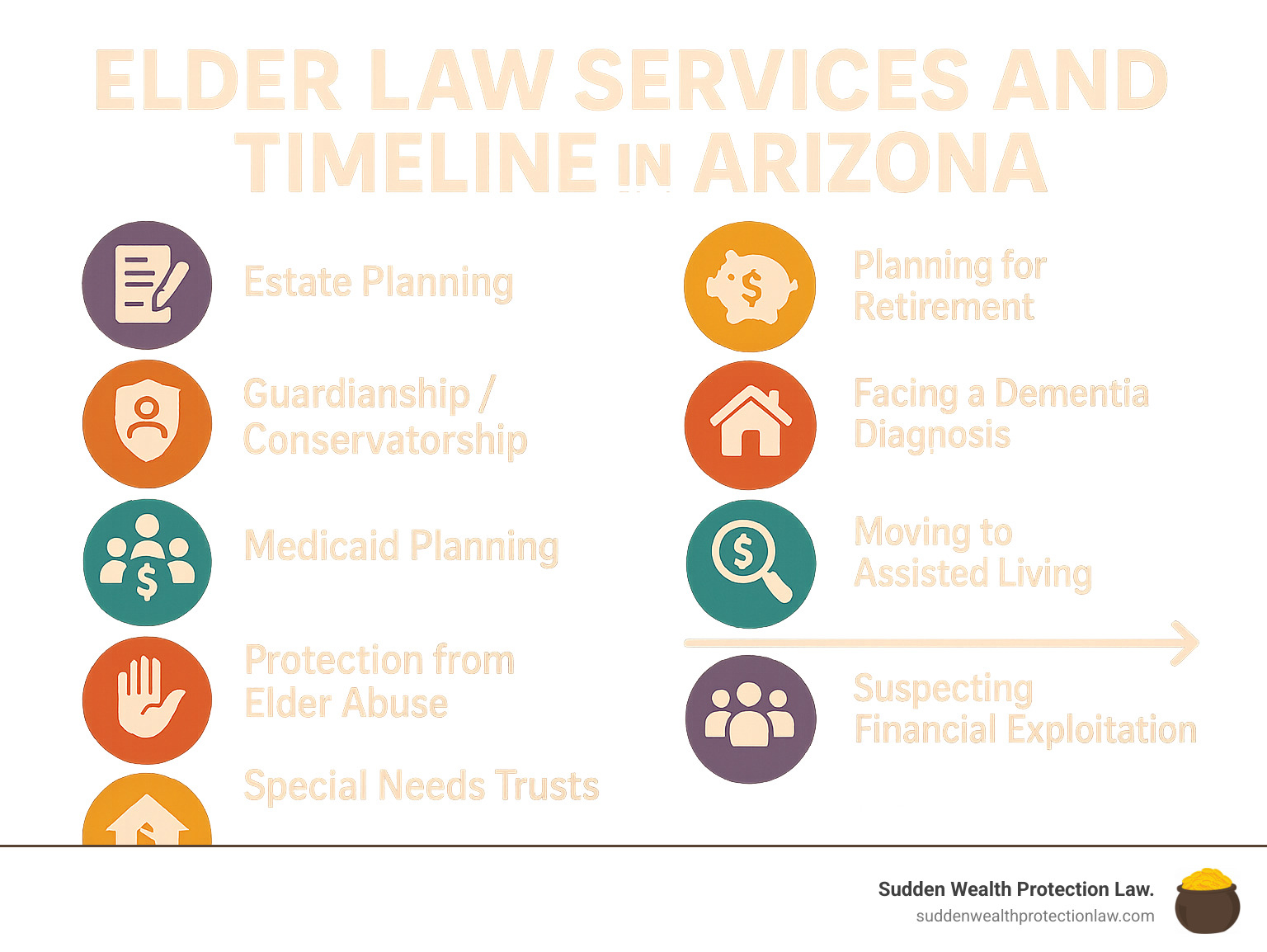
- Services Include: Estate planning, guardianship/conservatorship, Medicaid planning, long-term care strategies, protection from elder abuse, and special needs trusts
- When to Hire: When planning for retirement, facing a dementia diagnosis, moving to assisted living, suspecting financial exploitation, or dealing with complex family dynamics
- Average Cost: $300-$500 per hour depending on complexity, with many offering free initial consultations
- What to Look For: Experience with Arizona-specific laws, compassionate approach, and specialized elder law credentials
Navigating the legal landscape of aging can feel overwhelming. As we grow older, legal needs shift from simple estate planning to more complex matters like long-term care funding, guardianship proceedings, and protection from exploitation. Arizona elder law attorneys provide specialized guidance through these challenges, helping seniors and their families make informed decisions during vulnerable times.
With Arizona’s large retirement population—over 500,000 seniors in Maricopa County alone—the need for qualified elder law counsel has never been greater. The legal issues facing seniors are rarely simple, often involving a delicate balance of healthcare decisions, financial protection, and family dynamics.
I’m Paul E. Deloughery, founder of Sudden Wealth Protection Law, and my experience as an Arizona elder law attorney has shown me how proper legal planning can provide peace of mind during life’s later chapters. My background in probate litigation and asset protection gives me unique insight into helping families steer these complex legal waters.
Arizona elder law attorney terms to learn:
Why You Need an Arizona Elder Law Attorney
When I talk to folks about elder law, I often hear, “Oh, that’s just about wills, right?” Not quite. Elder law is a specialized field that addresses the unique challenges that come with aging – and in Arizona’s retirement paradise, these issues take on special significance.
Think of elder law as your legal roadmap for the golden years. It covers planning for what happens if you can’t make decisions for yourself, creating comprehensive estate plans, figuring out how to pay for long-term care without going broke, and protecting vulnerable adults from those who might take advantage of them.
Arizona has become a retirement hotspot, with snowbirds flocking to our desert oasis for the sunshine and lifestyle. But our state’s unique laws regarding guardianship, conservatorship, and long-term care funding mean you need someone who knows the specific Arizona legal landscape.
I often tell my clients, “Like it or not, aging or disability can rear its ugly head before you know it.” The truth is, planning ahead with an Arizona elder law attorney can save families tremendous heartache, expense, and stress when challenges arise. The time to put protections in place is before you need them – not during a crisis.
More info about Wills and Trusts
What Issues Does an Arizona Elder Law Attorney Handle?
Arizona elder law attorneys don’t just work with documents – we take a holistic approach to protecting seniors and their families. We understand the complex intersection of legal, financial, medical, and social issues affecting older adults.
The scope of elder law is broader than most people realize. Your Arizona elder law attorney can help with estate planning documents custom to Arizona law, including wills and trusts that reflect your specific wishes. We also assist with Medicaid/ALTCS planning to help you qualify for Arizona Long Term Care System benefits while preserving as many assets as possible.
When a loved one can no longer make sound decisions, we guide families through guardianship and conservatorship proceedings. For families with disabled members, we create special needs trusts that provide for their care without jeopardizing public benefits.
Sadly, elder abuse protection is increasingly necessary. We take legal action against exploitation, abuse, or neglect under Arizona’s Adult Protective Services Act, often seeking double damages for financial exploitation. We also provide tax planning to minimize burdens on estates and inheritance, and guide executors and trustees through probate and trust administration duties.
When to Call an Arizona Elder Law Attorney
In my years of practice, I’ve seen how waiting too long can limit options. One client came to me after her mother had already spent $100,000 on nursing home care—money that could have been protected with earlier planning. Don’t wait for a crisis to seek help.
Consider reaching out to an Arizona elder law attorney when:
- You or a loved one receives a diagnosis of dementia or other cognitive impairment
- A move to assisted living or nursing home care becomes necessary
- You notice unusual financial transactions or suspect elder abuse
- Your estate involves complex assets like businesses, multiple properties, or investments
- You’re navigating a blended family situation with children from different marriages
- You need to qualify for Medicaid/ALTCS without impoverishing a spouse
- You’re worried about protecting assets from potential long-term care costs
- A loved one can no longer manage their personal or financial affairs
The best legal protection comes from proactive planning. Just as you wouldn’t wait until you’re in the middle of a storm to buy insurance, don’t wait until you’re in crisis mode to seek elder law guidance. A conversation today could save your family significant stress, conflict, and expense tomorrow.
Guardianship, Conservatorship & Protecting Vulnerable Adults in Arizona
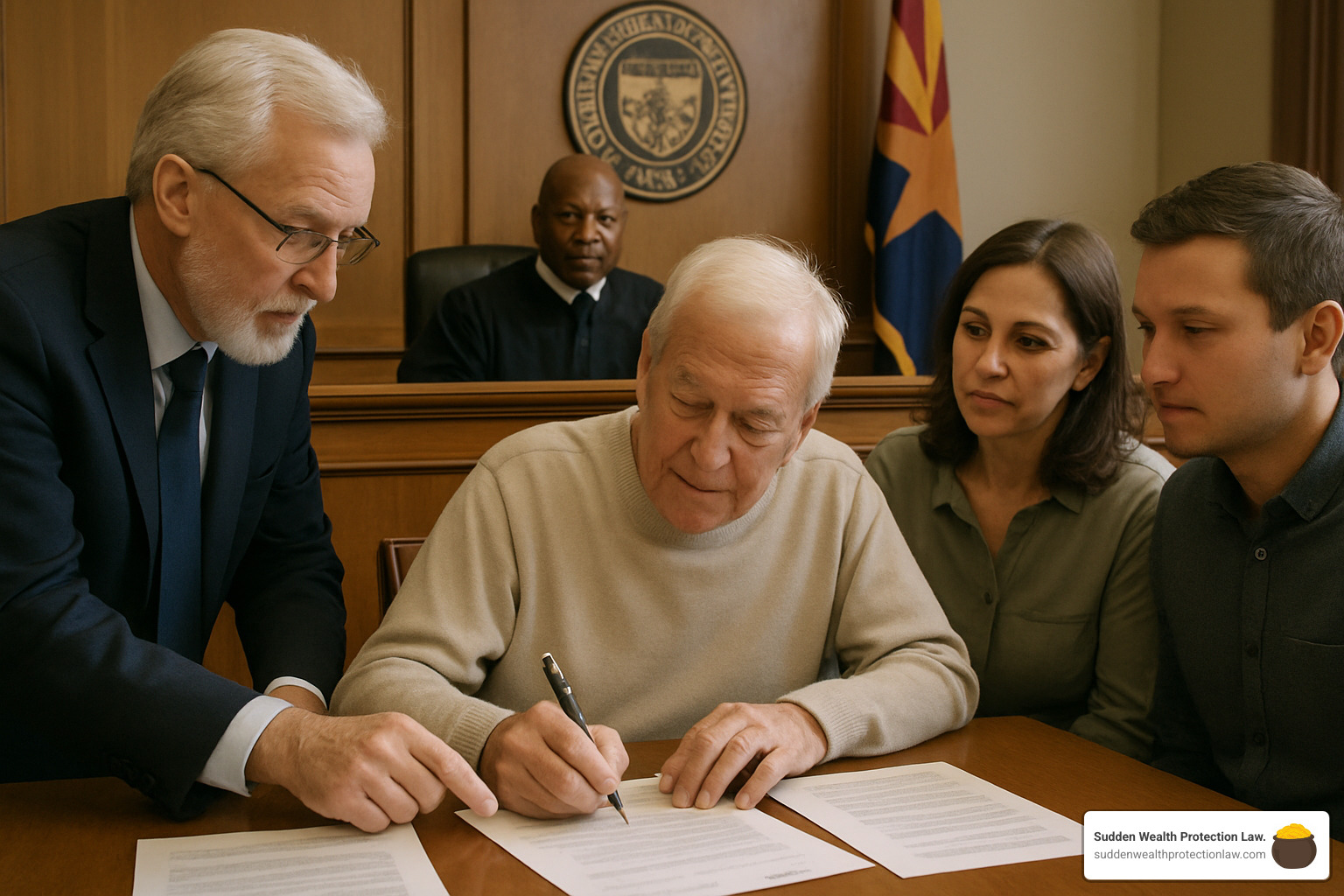
When life takes an unexpected turn and a loved one can no longer make sound decisions about their health, safety, or finances, Arizona law offers protective legal shields: guardianship and conservatorship. As an Arizona elder law attorney, I’ve guided countless families through these challenging waters, and I can tell you – understanding these protections before you need them makes all the difference.
These proceedings fall under Title 14 of the Arizona Revised Statutes and require court involvement because they’re serious business – we’re talking about potentially limiting someone’s fundamental rights to make their own choices.
Think of guardianship and conservatorship as two sides of the same protective coin. Here’s how they compare:
| Feature | Guardianship | Conservatorship |
|---|---|---|
| Purpose | Makes personal/healthcare decisions | Manages financial affairs |
| Legal Authority | Medical decisions, living arrangements | Property management, bill payment, investments |
| Court Requirements | Medical evaluation, best interest finding | Financial inventory, regular accountings |
| When Needed | Cognitive impairment, mental illness | Financial exploitation risk, inability to manage finances |
| Reporting | Annual status reports | Annual financial accountings |
The courts don’t take these matters lightly – and neither should you. These proceedings involve the potential removal of someone’s basic rights, which is why Arizona courts ensure all legal requirements are followed to the letter.
Need more information? Check out our detailed guide on Guardianships and Conservatorships or visit the Arizona courts self-help website for official forms.
Step-by-Step Petition Process
Navigating the guardianship or conservatorship process in Arizona is like walking through a series of legal checkpoints – miss one, and you might have to start over. Here’s the journey:
First, you’ll file a petition with the appropriate court, typically the Probate Court in the county where your loved one resides. Then comes the medical evaluation – a licensed physician, psychologist, or registered nurse must document the person’s condition and limitations.
Next, you must provide proper notice to the person and all interested parties like family members. The court then appoints an attorney to represent your loved one’s interests (yes, even if you’re the one trying to help them). A court investigator will evaluate the situation and file a report with their findings.
Finally, you’ll attend a court hearing where the judge reviews all evidence and makes a determination. If approved, you’ll receive Letters of Guardianship/Conservatorship that define the scope of your authority.
In emergencies where there’s immediate risk of harm, the court may grant temporary authority through emergency petitions while the full process unfolds. I’ve seen these emergency proceedings save lives when time was of the essence.
Having guided many families through this process, I can tell you it’s not something to steer alone. The procedural requirements are strict, and mistakes can mean delays when protection is urgently needed.
Rights & Duties of Guardians and Conservators
Being appointed as a guardian or conservator isn’t just an honor – it’s a serious legal responsibility with ongoing court oversight.
As a guardian, you’ll make decisions according to the “best interest standard,” arrange appropriate living situations, ensure proper medical care, file annual reports with the court, and seek court approval for major decisions. I often tell new guardians, “You’re not just making decisions – you’re standing in someone else’s shoes, trying to walk the path they would choose if they could.”
Conservators have equally weighty responsibilities: creating a detailed inventory of all assets, managing finances prudently, keeping meticulous financial records, filing annual accountings with the court, obtaining a fiduciary bond in many cases, and seeking court approval before selling property or making major expenditures.
The court maintains vigilant oversight throughout the guardianship or conservatorship. This isn’t a “set it and forget it” arrangement – it’s an ongoing responsibility with court supervision to protect vulnerable adults from potential abuse or mismanagement.
Alternatives to Full Guardianship
Before jumping into guardianship proceedings, it’s worth exploring less restrictive alternatives. Arizona law requires using the “least restrictive means” to protect vulnerable adults, preserving as much of their autonomy as possible.
Durable Powers of Attorney allow someone to make decisions if you become incapacitated, while Supported Decision-Making arrangements let the person retain decision authority but receive help understanding options. Revocable Living Trusts can manage assets and provide for incapacity, and Care Agreements formalize family caregiving arrangements.
Other options include a Representative Payee to manage government benefits or a Healthcare Surrogate designated to make medical decisions under specific circumstances.
In my practice, I always explore these alternatives first. Why? Because maintaining dignity and independence matters. I’ve seen the relief on clients’ faces when they realize they can protect their loved ones without completely taking over their lives.
Spotting & Stopping Elder Abuse or Financial Exploitation
Elder abuse and financial exploitation have reached heartbreaking levels in Arizona. As an Arizona elder law attorney, I’ve seen cases that would make your stomach turn – caregivers emptying bank accounts, family members forging signatures on deeds, and “friends” manipulating vulnerable seniors out of their life savings.
Watch for warning signs like unexplained withdrawals or financial activity, sudden changes in estate planning documents, isolation from family and friends, unusual gifts inconsistent with past behavior, unpaid bills despite adequate resources, or new “best friends” who take unusual interest in finances.
Arizona’s Adult Protective Services Act (A.R.S. §46-456) provides powerful remedies for exploitation, including recovery of actual damages, attorney’s fees, double damages in egregious cases, punitive damages, and even forfeiture of inheritance rights for perpetrators.
If you suspect abuse, report it immediately to Adult Protective Services at 1-877-SOS-ADULT (1-877-767-2385). Certain professionals, including attorneys like myself, are mandatory reporters under Arizona law – which means we’re legally obligated to report suspected abuse.
Learn more about protecting your loved ones from financial predators in our guide to Financial Exploitation of Vulnerable Adults.
Long-Term Care & Asset Protection Strategies
Let’s face it—long-term care costs can wipe out a lifetime of savings faster than an Arizona summer storm. With nursing home care in our state averaging over $8,000 per month, many families watch in horror as their nest eggs vanish, leaving nothing for spouses or children.

The good news? You don’t have to choose between quality care and protecting your legacy. As an Arizona elder law attorney, I’ve helped hundreds of families steer these waters successfully.
Several powerful strategies can help protect your assets while securing necessary care:
ALTCS Planning lets you structure assets to qualify for Arizona Long Term Care System (our state’s Medicaid program) without impoverishing yourself or your spouse. VA Aid and Attendance benefits provide additional support for wartime veterans and their surviving spouses—a benefit many eligible Arizonans never claim.
Some clients benefit from long-term care insurance purchased before health issues arise, while special needs trusts preserve eligibility for government benefits for those with disabilities. For maximum protection against creditors and lawsuits, our Asset Vault Trust creates a fortress around your hard-earned assets.
The key to success? Don’t wait until you’re in crisis mode. Many of these strategies must be implemented years before care is needed due to “look-back” periods that can penalize recent asset transfers.
Arizona Health Care Cost Containment System
More info about Arizona Medicaid Asset Protection Trust
Qualifying for ALTCS Without Going Broke
ALTCS provides comprehensive long-term care coverage for eligible Arizonans, but the qualification rules can feel like navigating a legal minefield.
In 2023, you’ll need to keep your monthly income below $2,523 and your assets generally under $2,000 as an individual (with different rules for married couples). What trips up many families is the 5-year “look-back period”—ALTCS examines all your financial transactions during this time and can impose harsh penalties for improper transfers.
I remember a client who gave $50,000 to her daughter two years before needing nursing home care. That well-intentioned gift resulted in a 5-month penalty period during which ALTCS wouldn’t cover her care costs. That’s over $40,000 in out-of-pocket expenses that could have been avoided with proper planning.
Smart strategies for ALTCS qualification include income cap trusts for those whose income exceeds limits but falls short of care costs, and converting countable assets to exempt assets—certain property doesn’t count toward eligibility limits. Caregiver agreements provide formal ways to compensate family members while spending down assets appropriately, and Medicaid-compliant annuities can convert assets to income streams in specific situations.
One of my clients saved over $300,000 through careful ALTCS planning while securing quality nursing home care for her husband. With proper guidance, you can do the same.
Special Needs Trusts: When & Why
Special Needs Trusts (SNTs) serve a vital purpose: providing for loved ones with disabilities without disqualifying them from essential government benefits like SSI and Medicaid.
I often explain SNTs using the “swimming pool” analogy. Government benefits provide the shallow end—basic needs like healthcare and monthly income. The SNT creates the deep end—extras that make life enjoyable and fulfilling, like specialized therapies, electronics, trips, or services not covered by public benefits.
There are two main types of SNTs, and the differences matter tremendously:
First-party SNTs are funded with the beneficiary’s own assets—often from an inheritance or personal injury settlement. These must include provisions to pay back Medicaid after the beneficiary’s death and must be established before age 65.
Third-party SNTs are funded with assets from parents, grandparents, or others. These have no Medicaid payback requirement, making them powerful tools for providing long-term support while preserving public benefits.
Choosing the right trustee is crucial—this person will manage funds and steer the complex rules governing public benefits. The wrong distribution can accidentally disqualify someone from benefits they desperately need.
I’ve seen the life-changing impact of properly structured SNTs. One client’s adult son with severe autism maintained his group home placement through Medicaid while his third-party SNT funded specialized therapies, an iPad for communication, and occasional trips to Phoenix Suns games—creating quality of life that government benefits alone could never provide.
Asset Vault Trust: Fort Knox for Your Nest Egg
When it comes to serious asset protection, our Asset Vault Trust stands head and shoulders above standard planning tools. Unlike basic revocable living trusts—which offer zero asset protection—this specialized irrevocable trust (sometimes called a 541 Trust) creates a legal fortress around what you’ve worked so hard to build.
Think of it as the difference between keeping your valuables in a cardboard box versus Fort Knox. Both hold your assets, but only one can withstand serious threats.
The Asset Vault Trust offers powerful benefits: a robust creditor shield that protects against future lawsuits and claims, special powers of appointment that maintain flexibility while achieving protection, and strategic tax advantages when structured properly. For many clients, it becomes a cornerstone of Medicaid planning, facilitating future ALTCS eligibility while providing legacy protection that ensures assets pass according to your wishes, not a creditor’s demands.
I designed this trust specifically for clients who have concerns about nursing home costs, business liabilities, or potential lawsuits. It’s particularly valuable for professionals, business owners, and anyone with significant assets they want to protect.
One client, a surgeon worried about malpractice exposure beyond his insurance limits, placed his vacation home and investment portfolio in an Asset Vault Trust. Three years later, when faced with a lawsuit, those assets remained completely protected while he steerd the legal storm.
More info about Asset Protection Attorney
Choosing & Working with Your Arizona Elder Law Attorney
Finding the right Arizona elder law attorney isn’t just about hiring legal help—it’s about choosing a trusted guide for some of life’s most sensitive journeys. This relationship often forms during vulnerable times, making the selection process especially important.
When I meet with new clients, I often tell them to consider several key factors before making their decision. Look for specialized knowledge in elder law’s intricate legal landscape. Experience matters tremendously—an attorney who’s guided hundreds of families through similar situations brings invaluable perspective. Pay attention to communication style—complex legal concepts should be explained in terms you can understand without feeling overwhelmed.
Perhaps most importantly, gauge the attorney’s empathy. Elder law touches on deeply personal matters involving family dynamics, aging, and mortality. Your attorney should demonstrate genuine understanding of both the legal and emotional elements at play. Also consider practical matters like availability (will you work directly with the attorney or be handed off to associates?) and transparency about fees.
At Sudden Wealth Protection Law, we’ve walked alongside countless Arizona families through these complex journeys. We understand that behind every legal document is a human story deserving of both expertise and compassion.
More info about Probate and Trust Administration Attorney in Phoenix
What to Look For in Counsel
When evaluating potential Arizona elder law attorneys, certain qualifications stand out from the rest. Board certification as an elder law specialist (through either the State Bar of Arizona or the National Elder Law Foundation) signals advanced expertise and commitment to this practice area.
I’ve found that attorneys who focus exclusively on elder law, rather than practicing it as one of many specialties, typically stay more current with this rapidly evolving field. If your situation might involve litigation—like contested guardianships or financial exploitation cases—courtroom experience becomes especially valuable. An attorney who’s comfortable in trial settings will approach your case differently than one who rarely sees the inside of a courtroom.
Professional networks also matter significantly. The best elder law attorneys maintain strong relationships with geriatric care managers, financial advisors, and healthcare professionals who can provide complementary support. And of course, client reviews offer real-world insight into what working with a particular attorney actually feels like.
Throughout my career, I’ve intentionally built expertise at the intersection of elder law and asset protection. My background handling probate litigation has shown me what happens when planning falls short—insights I now use to create more robust protections for my clients.
Typical Costs & Billing Structures
Understanding how Arizona elder law attorneys charge helps set realistic expectations from the start. Most attorneys use one of several common billing approaches:
Flat fees work well for document preparation like wills, trusts, and powers of attorney—you’ll know exactly what you’re paying upfront. Hourly rates typically range from $100 to $1,000 depending on the attorney’s experience and your case complexity. Some attorneys use contingency fees in financial exploitation cases, taking a percentage of what they recover. Many practices, including ours, use hybrid approaches that combine these methods depending on the service.
I believe in complete transparency about fees. That’s why we, like many reputable attorneys, offer free initial consultations to discuss your situation and provide clear cost estimates before beginning any work. Be cautious of attorneys who seem reluctant to discuss fees upfront—clarity about costs is essential to a healthy attorney-client relationship.
Legal services represent an investment in protection and peace of mind, but you deserve to know exactly what that investment entails before making decisions.
Frequently Asked Questions
How much does an elder law case usually cost in Arizona?
The honest answer is: it varies significantly based on your specific needs. Simple estate planning documents typically range from $1,500 to $5,000 for a comprehensive package. Medicaid planning generally costs between $5,000 and $15,000, with the price reflecting your asset complexity and planning timeline.
Guardianship and conservatorship proceedings usually run $3,000 to $10,000 for straightforward, uncontested matters. When family members disagree or complications arise, costs can increase substantially.
At our firm, we provide clear fee estimates during your initial consultation. We also offer various payment options because we understand these expenses often come during already challenging times.
Can guardianship be avoided with proper planning?
Absolutely—and in most cases, it should be. With thoughtful advance planning, including comprehensive powers of attorney, detailed healthcare directives, and well-structured trusts, families can often sidestep guardianship proceedings entirely.
The critical factor is timing. These documents must be created while you still have legal capacity to sign them. Once cognitive impairment advances, it may be too late to execute valid legal documents. This reality is why I gently push even my healthiest clients to address incapacity planning early.
I’ve seen the profound difference this foresight makes. Families who plan ahead avoid not just the financial cost of guardianship proceedings, but also the emotional strain and public nature of court involvement. The peace of mind this provides is truly invaluable.
What’s the difference between an Asset Vault Trust and a basic revocable trust?
The fundamental difference comes down to protection. A basic revocable living trust offers convenience and probate avoidance, but provides zero protection from creditors, lawsuits, or long-term care costs. Since you maintain complete control, those assets remain legally yours—and therefore accessible to anyone with a claim against you.
An Asset Vault Trust creates a genuine legal barrier between your assets and future creditors. As an irrevocable trust with special provisions (including what’s known as a special power of appointment), it offers significant protection while maintaining reasonable flexibility.
This specialized trust proves particularly valuable for professionals concerned about malpractice claims, business owners with liability exposure, individuals planning for potential long-term care needs, and parents wanting to protect inheritances for their children from divorce or creditors.
The Asset Vault Trust represents one of the most powerful tools in our asset protection arsenal—offering both security and adaptability that basic estate planning simply cannot match.
Conclusion
Life’s golden years should be filled with dignity, security, and peace of mind—not legal confusion and financial worry. Throughout Arizona, seniors and their families face unique challenges that require specialized legal guidance to steer successfully.
I’ve seen how proper planning creates a shield of protection around what matters most. Whether it’s preserving hard-earned assets from the staggering costs of long-term care, preventing exploitation by those who would take advantage of vulnerability, or ensuring your healthcare wishes are honored when you can no longer speak for yourself—the right legal framework makes all the difference.
Arizona elder law isn’t just about paperwork—it’s about creating safety nets that support your values and protect your legacy. It’s about ensuring that the wealth you’ve built over decades benefits those you love rather than being consumed by preventable expenses or legal complications.
The most common regret I hear from families who come to me in crisis? “We wish we’d started planning sooner.” The truth is, the best time to address these matters is always now, before urgency forces hasty decisions or limits your options.
At Sudden Wealth Protection Law, we bring decades of experience helping Arizona families steer these complex waters. From straightforward estate planning to sophisticated Asset Vault Trusts, from guardianship proceedings when necessary to litigation when a loved one has been exploited—we provide the comprehensive counsel needed to protect what matters most.
I founded this practice with a simple belief: that everyone deserves compassionate, expert guidance through life’s most challenging legal transitions. Our approach combines technical expertise with genuine understanding of the emotional aspects of aging and family dynamics.
Don’t leave your future—or your family’s wellbeing—to chance. Reach out today for a consultation, and let’s create a roadmap that protects your dignity, your assets, and your peace of mind for the journey ahead.
More info about comprehensive estate planning

